
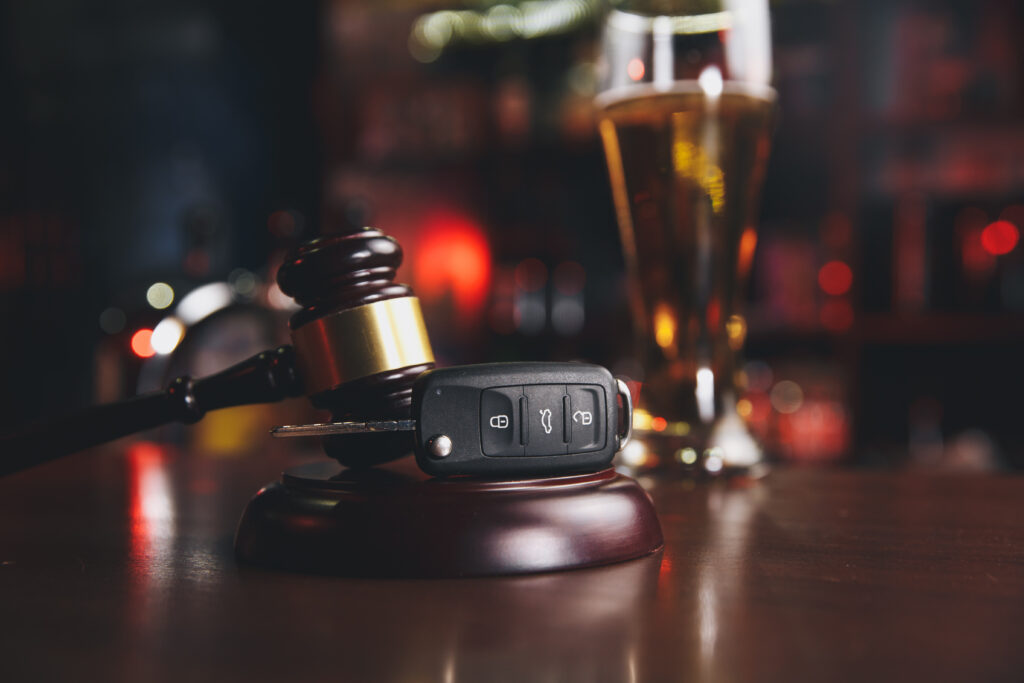
The Immediate Roadside Prohibition regime in British Columbia was introduced with fanfare as a swift and severe method to tackle impaired driving. The government heralded it as a groundbreaking solution to make roads safer and reduce the prevalence of drinking and driving.
But over a decade later, does it actually work?
The recent Saanich Police report of a record-breaking number of impaired driving stops in Saanich in 2024 paints a different picture—one that suggests the system may not only be failing but may even be contributing to recidivism.
The Illusion of Deterrence
Proponents of the IRP scheme argue that its immediate consequences—vehicle impoundment, hefty fines, and license suspensions—send a clear and powerful message to would-be offenders.
Yet, the staggering rise in impaired driving cases in Saanich calls this into question. If the system is so effective at deterring impaired driving, why are we seeing a record number of prohibitions?
The reality is that IRPs function more as administrative punishments than meaningful deterrents. By design, they sidestep the criminal justice system, allowing drivers to avoid the stigma and long-term consequences of a criminal record. A lecture from a BC Provincial Court judge in front of a courtroom full of people hits home in a way that two blue pieces of paper don’t.
This decriminalization effectively tells the public that impaired driving isn’t a “serious” crime—it’s just another ticket to pay, another administrative hoop to jump through.
Decriminalization and the Message It Sends
By moving impaired driving enforcement out of the courts and into the hands of administrative tribunals, the government has eroded the gravity of the offence. Drivers subjected to an IRP face penalties that, while immediate and inconvenient, lack the social and legal weight of criminal sanctions. Unlike court appearances and a criminal record, an IRP is private. There is no public hearing, no accessible list of who has been served a prohibition, and nothing beyond an entry on the driving record.
This approach may inadvertently foster a mindset that impaired driving is a lesser offence, akin to speeding or running a red light. In fact, given that an IRP is not even an offence in law, it is technically less serious than speeding or red light running.
The consequences of this are particularly concerning when viewed alongside national statistics on youth and alcohol use. Youth consumption of alcohol remains a persistent issue in Canada, but is decreasing. Youth attitudes about impaired driving are that it is less socially acceptable, and yet BC appears to buck the trend through the normalization of impaired driving as an administrative violation rather than a criminal act.
This seems to have the effect of potentially emboldening young drivers to take risks they might otherwise avoid. For impressionable drivers, the IRP regime may signal that impaired driving is not only survivable but almost routine.
A System That Encourages Recidivism?
One of the most glaring criticisms of the IRP system is its failure to address the root causes of impaired driving. Under the criminal system, drivers convicted of or charged with impaired driving often engaged in or were sentenced to counselling, rehabilitation, or monitoring programs, which targeted the underlying behaviours that led to the offence. In contrast, the IRP system imposes financial penalties and vehicle restrictions but does little to encourage behaviour change.
The Responsible Driver Program is completed online, and is completed months after the incident took place, separating the significance of the information from the conduct.
In practice, this means that drivers who receive an IRP may go right back to drinking and driving once their license is reinstated. Without mandatory education or rehabilitation, the cycle continues, creating repeat offenders. Worse still, the administrative nature of the process means fewer opportunities for drivers to reflect on the serious consequences of their actions.
The Bigger Picture: National Trends and Local Failures
Saanich’s impaired driving statistics should be a wake-up call. Instead of celebrating the “efficiency” of the IRP system, we should be questioning whether it achieves its intended goals.
Decriminalizing impaired driving sends a clear message: this is not a priority. For those impacted by impaired driving—the victims of crashes and their families—this message is insulting. For drivers, particularly young ones, it creates confusion. If impaired driving isn’t criminal in British Columbia, why should they take it seriously?
A Need for Change
If we want to reduce impaired driving and the devastating consequences it causes, we need to move beyond the shallow punishments of the IRP system. This requires more than immediate fines and suspensions—it requires a commitment to education, rehabilitation, and real consequences that reflect the severity of the offence. These have consistently been demonstrated as providing the most effective means of changing behaviour.
It’s time to rethink the IRP system and confront the uncomfortable reality: decriminalizing impaired driving may have made enforcement easier, but it has not made our roads safer.
In fact, it may be doing the opposite.