
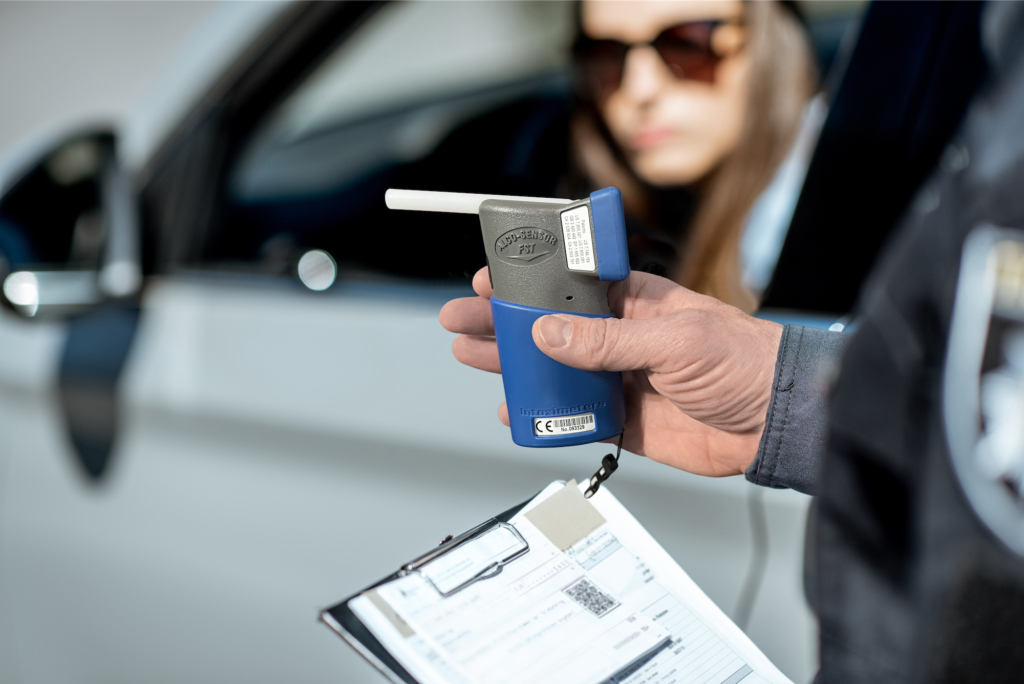
One of the most common things people say after an IRP or DUI charge is “the reading must have been wrong.” In some cases, they’re right. Breathalyzer devices, including the Approved Screening Devices (ASDs) used at roadside, are not infallible. Understanding how they can fail is important if you’re considering challenging a result.
What Is an Approved Screening Device?
An Approved Screening Device is the portable breathalyzer that police use at the roadside to get an initial reading of your blood alcohol level. Common models used in BC include the Dräger Alcotest 6000 and the Alco-Sensor FST. These devices must be approved by the federal government and also approved by the provincial Lieutenant Governor in Council before they may be used.
The ASD gives a quick result: a numerical passing reading, a Warn, or a Fail. It is not the evidentiary-quality breath test used to obtain readings for criminal proceedings. That happens at the police detachment on a larger breathalyzer known as an Approved Instrument. But the ASD result is what triggers an IRP, so its accuracy matters a great deal in the provincial context.
How Approved Screening Devices Can Produce Inaccurate Readings
There are several documented ways ASD breathalyzers can produce readings that don’t accurately reflect your true blood alcohol level.
Mouth alcohol is one of the most common sources of error. If you’ve recently burped, belched, or vomited, even without being aware of it, alcohol from your stomach can remain in your mouth and cause the device to register a much higher reading than your actual blood alcohol level.
If this happens, police are supposed to observe you for a 15-minute period before administering a roadside test to ensure this isn’t a factor. If that observation wasn’t done properly, it’s a significant issue. And oftentimes police do not notice whether someone is burping or belching.
Certain medical conditions can interfere with readings. People with diabetes, in a state of ketosis, or with certain gastrointestinal conditions can produce compounds that some breathalyzer types misread as alcohol. Gastroesophageal reflux disease (GERD) in particular has been documented as a potential source of false positives.
Residual mouth alcohol from products other than alcoholic drinks is also a factor.
Mouthwash containing alcohol, certain medications (including some inhalers), and even some foods can affect readings if consumed recently and if fifteen minutes has not passed before the test is conducted.
Temperature matters too. ASDs are designed to work at certain ambient and breath temperatures. Extreme cold weather, which is not uncommon in Canada, or extreme heat can affect the reliability of readings. Similarly, if your breath temperature is elevated either due to having an object in your mouth or a fever or medical issue, the result can be increased.
Device calibration and maintenance are ongoing concerns. ASDs need to be regularly tested and calibrated. Records of this maintenance must be kept. If a device has not been properly maintained or has gone beyond its calibration or service expiry dates, results from it can be challenged. There are also different protocols used for checking calibration and recalibration that also have their own expiration periods and requirements, so reviewing those details can help demonstrate why a result was not accurate.
The Difference Between ASD Results and Evidentiary Samples
It’s important to understand that the ASD reading is not the number used to prove a criminal charge in court. In a criminal prosecution for being “over .08,” the Crown relies on evidentiary breath samples taken at the detachment on an Approved Instrument. Those instruments are more sophisticated… but they still have their own reliability concerns.
However, for the purposes of an IRP, the ASD reading is exactly what matters. It’s the only thing the officer bases their decision to issue you the prohibition on. Challenging the accuracy of an ASD result is a key component of many IRP review applications. And our office knows the hundreds of ways the ASD can be wrong.
What Can You Do If You Think the Reading Was Wrong?
If you believe the ASD reading was inaccurate, you have options. The primary avenue is the IRP review process. You have only 7 days to request a review with the Superintendent of Motor Vehicles. As part of that review, you can present evidence and arguments about the reliability of the reading, including medical evidence, evidence about the observation period, and questions about device calibration records.
You should not do this without a lawyer. The process is difficult and meeting the standard of evidence required by the tribunal to prove the reading was wrong is complex. A lawyer is in the best position to advise you on what is needed to succeed.
You should receive the ASD calibration records through the review process. These records are kept by the police agency and must be disclosed.
The IRP review is an extremely limited process — you won’t appear in person before a decision-maker. The hearings are either by telephone or in writing. The quality of your written submission and evidence in support of your case matters enormously. This is another reason why getting legal advice before the 7-day window closes is so important.
The Honest Assessment
Not every claimed breathalyzer error will be sufficient to overturn an IRP. The review process sets a threshold. But genuine errors do occur, and legitimate defences based on device unreliability have succeeded. If something didn’t feel right about the roadside test, or if you burped, if you had reflux, or if the officer didn’t observe you properly, these are worth exploring with a lawyer.