
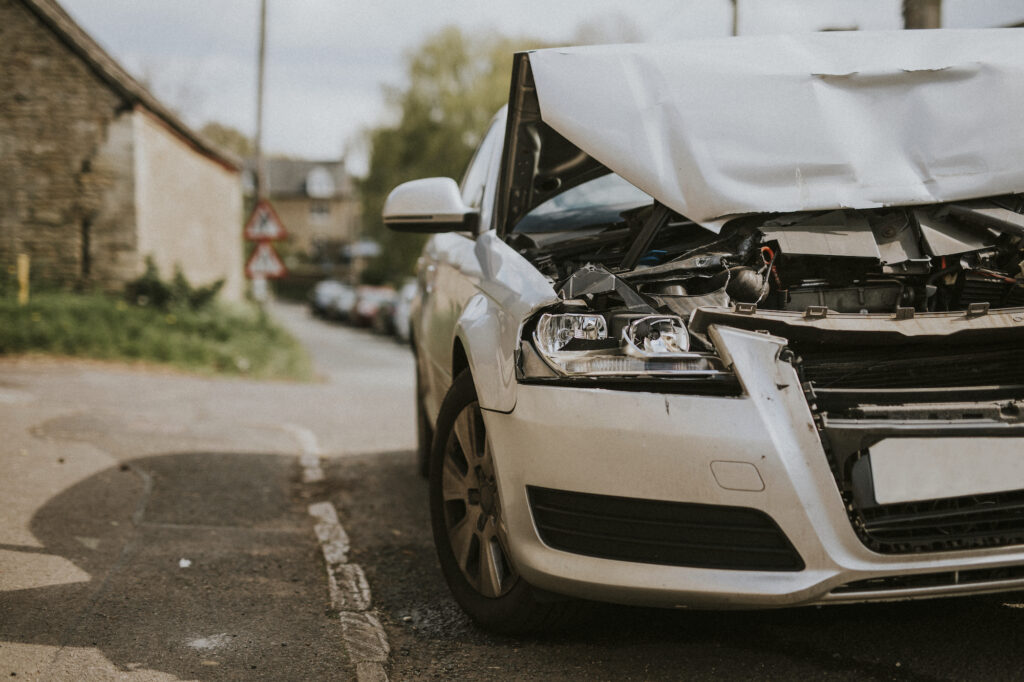
When the IRP legal scheme was introduced, to say this law could be characterized as being within their legislative power, one point the government advanced was that it would not be used in cases where there was an accident. The issue was whether the province had the power to make laws in an area that had for decades been the pure authority of the federal government, i.e. criminal law. To persuade the courts and the people of BC that they had this power, they indicated that in accident cases, which were more concerning than a simple pull over, the IRP law would not be used.
Then when it came time for the first big legal challenge in 2011, the government lawyers assured the Court that people would not be issued IRPs in accident cases. They stood before the Court and said no driver would be issued an IRP if there was an accident or if the driver had a previous drinking driving offence on their record.
None of this was correct.
We were actually there in court when the lawyers answered questions from the judge on this issue and gave those answers. We wondered if they were misinformed by their client (the BC government) or if this was just their story and they were sticking with it. By that time we already had a lot of experiences defending IRPs and we had a number of cases where there were accidents. But the time in the court hearing to collect and submit evidence was already complete so there was no challenge to this assertion. On that issue, whether the province had the authority under the constitution to create the IRP laws, the government succeeded.
Problems with an IRP in an accident case
Because the IRP law was written to get the court to agree it has this power, the law was not written to easily apply to accident cases. It does not have easy steps to track back to the time of driving. It does not create in law evidentiary shortcuts regarding who was driving or their blood-alcohol content relative to the time of driving.
Because the government maintains this assertion that IRPs are not issued in accident cases, the forms do not properly contemplate how the individual was identified as a driver. They do not prompt for any substantial evidence to determine continuity of the subject or whether post-driving consumption came into play. They do not indicate the time the subject was detained for investigation, the time the police arrived on scene or the time they observed symptoms that might justify the demand to blow.
All of this comes into play because these days Charter rights are supposed to matter in the context of 90-day DUI driving prohibitions.
Engaging the Charter
For over a decade, the Superintendent of Motor Vehicles took the view that the Charter of Rights and a driver’s rights were not their problem in cases where the driver blew Fail on an Approved Screening Device. It meant a lot of people had their rights significantly violated, but the government supported that. Interestingly, in Alberta the tribunal recognized that rights need to have meaning to be rights. In BC our government took the position that the police could violate rights and there would be no remedy from their tribunal, so long as the driver blew Fail.
Then, in the important case of Gordon v. British Columbia (Superintendent of Motor Vehicles), 2022 BCCA 260, the Court said that when Charter rights are violated in an administrative DUI, the tribunal needs to consider whether it would be fair to consider the police evidence. This was a seminal change in the law, although in practice the tribunal still often makes decisions that suggest Charter rights are low on their radar.
The Charter in play in IRP accident cases
To determine whether Charter rights have been complied with, it is necessary to know when the police arrived, when the subject was detained, when and how the police made observations that turned it into a DUI investigation, and the circumstances of any statements made by the subject. None of this information is sought on the forms the police use. One possible reason for this is that the government still wants to hide any evidence that IRPs are issued in accident cases.
If you were issued an IRP in an accident case, the arguments may be fundamentally different than in a roadblock or simple police stop. Of course, the ICBC insurance consequences are another big issue when you are issued a 90-day IRP after an accident.
If you have been issued an IRP, get in contact with us right away. There are strict timelines and there is no time to waste.