
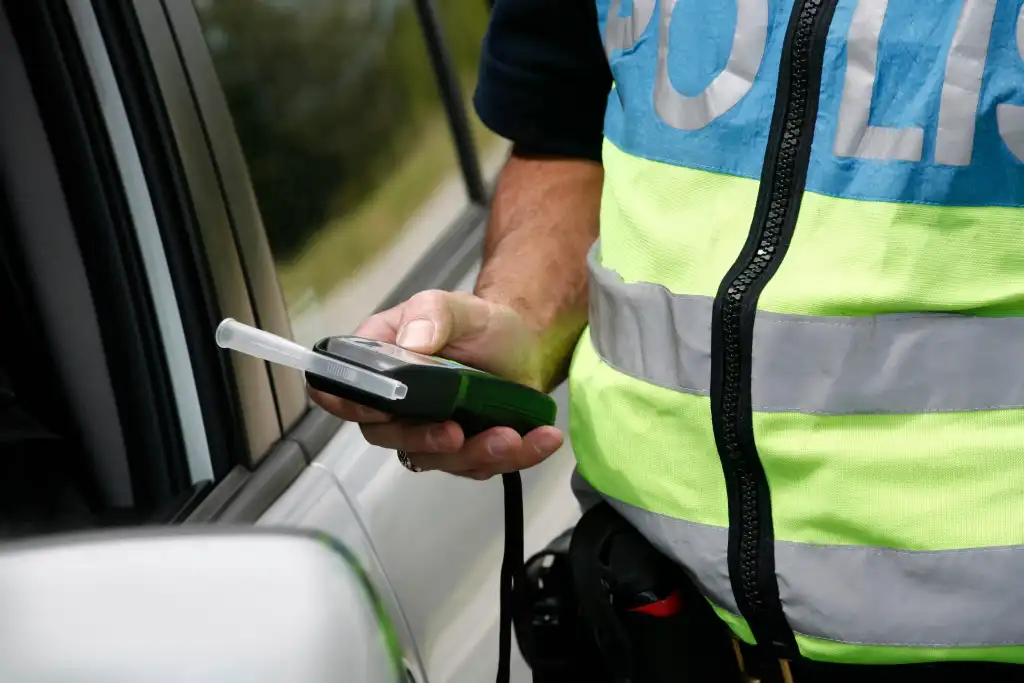
If you have been pulled over in British Columbia in the past year or two and asked to blow into a small handheld device at the roadside, there is a good chance that device was federally approved under an updated Canadian regulation that most drivers have never heard of. One of the newest approved devices, the Alcotest 6000 , was added to the list in 2024, and it is about to be active use across the country.
Understanding which device was used, how it is supposed to operate, and where its limits lie is often the first real step in defending a BC impaired driving file.
The 2024 modernization of Canada’s approved screening devices list
The legal foundation for roadside screening in Canada is the Approved Screening Devices Order, a ministerial order made under the Criminal Code. The original Order dated back to 1985 and, over decades, had accumulated outdated statutory references and a patchwork of approved instruments.
In May 2024, the federal government revoked the 1985 Order and replaced it with a modernized version. The new Order, published in the Canada Gazette, did two things:
- It carried over all 12 previously approved screening devices; and
- It added the Alcotest 6000, manufactured by Dräger, as an Approved Screening Device (ASD) for use under the Criminal Code.
Officers in British Columbia can lawfully use the Alcotest 6000, and many detachments have adopted it as their primary or secondary roadside unit.
ASD vs. AI: two very different devices
A lot of confusion about breath testing comes from drivers assuming there is one “breathalyzer.” In fact, Canadian impaired driving law distinguishes between two categories of instruments:
- An Approved Screening Device (ASD) is a handheld device used at the roadside. A “fail” reading is not, on its own, proof of a BAC over 80 mg%. It is a screening tool that gives officers grounds to demand a more accurate breath test.
- An Approved Instrument (AI) is a larger, stationary device used at the detachment under controlled conditions by a qualified technician. It produces the evidentiary BAC readings that are used to support the “over 80” (now 80 mg per 100 mL) charge.
The Alcotest 6000 is an ASD. A fail on a roadside Alcotest 6000 is not itself a conviction. It is the doorway to further investigation.
Mandatory Alcohol Screening changed the landscape
Before 2018, an officer had to form a reasonable suspicion that a driver had alcohol in their body before demanding a roadside breath sample. That threshold is gone for drivers at the wheel of a motor vehicle.
Under section 320.27(2) of the Criminal Code, an officer who is in the lawful exercise of their duties and who has an ASD with them may demand a breath sample from any driver, without needing any suspicion at all. This is Mandatory Alcohol Screening (MAS), and it is constitutional, at least according to most lower-court rulings to date.
The practical effect for BC drivers is that the first line of defence, that the officer had no reason to demand a sample, has largely disappeared at the roadside. That makes what happens after the demand much more important.
Where Alcotest 6000 (and every ASD) cases can be challenged
The device itself is only one part of the equation. The defensible issues in a typical ASD file tend to cluster around three areas.
1. The “immediacy” requirement and R. v. Breault
A roadside breath demand must be complied with immediately. In R. v. Breault, 2023 SCC 9, the Supreme Court of Canada held that where an officer makes an ASD demand without having the device immediately available, the demand is unlawful and the driver’s refusal cannot support a refusal charge.
The principle cuts in both directions. If the officer has the Alcotest 6000 with them and ready to go, the demand is valid. If the device is back at the detachment, in another cruiser, or still being warmed up for a long period, the demand itself may be open to challenge — which in turn puts any fail reading, or any refusal, in play.
2. The fifteen-minute observation period and mouth alcohol
Every ASD, including the Alcotest 6000, is susceptible to mouth alcohol. This is residual alcohol from a recent drink, a breath spray, mouthwash, regurgitation, or reflux. A reading contaminated by mouth alcohol can produce a falsely high result.
Good police practice (and the manufacturer’s training materials) calls for an observation period before the test to make sure the driver has not put anything into their mouth, burped, or regurgitated. Roadside testing rarely fits that ideal, and the shorter the observation, the more room there is for a defence to raise doubt about the reliability of a fail.
3. Calibration, maintenance, and operator training
Like every breath instrument, the Alcotest 6000 needs to be calibrated and maintained on a schedule set by the manufacturer and the force. Defence counsel routinely request:
- Calibration logs for the specific device;
- Service and repair history;
- Records showing that the testing officer was trained and certified on the device; and
- Any known malfunction reports.
Gaps or irregularities in this paperwork will not automatically win a case, but they can seriously weaken the reliability of a fail reading and, in the right circumstances, help exclude the result.
Access to counsel and Immediate Roadside Prohibitions
A “fail” on the Alcotest 6000 in BC often results in an Immediate Roadside Prohibition (IRP). This is a 90-day driving prohibition, vehicle impoundment, licence reinstatement fee, and mandatory Responsible Driver Program and Ignition Interlock Program, all administered outside the criminal courts.
IRPs are reviewable, but the timeline is short: a driver has just seven days from the date of service to apply for review with RoadSafetyBC. At the review, targeted issues, including whether the device was reliably operating, whether the officer followed the statutory protocol, and whether the fail reading accurately reflected the driver’s BAC can be raised in writing or orally, or both.
The bottom line
The addition of the Alcotest 6000 is part of a broader trend toward more sensitive, more portable, and more widely deployed roadside alcohol screening in Canada. For BC drivers, that means an encounter with an ASD is increasingly likely, and a lawful refusal-on-principle at the roadside is almost always a mistake.
What it does not mean is that a fail reading, or an IRP, or a criminal charge, is an open-and-shut case. The science is challengeable. The procedure is challengeable. The paperwork is challengeable. And the deadlines, especially the seven-day IRP review window, reward drivers who get experienced counsel involved quickly.
If you have received a fail reading on an Alcotest 6000 or any other ASD in the Vancouver area, the most useful thing you can do today is write down everything you remember about the stop, save any receipts or messages that show where you had been and what you had consumed, and book a consultation before your review deadline closes.