
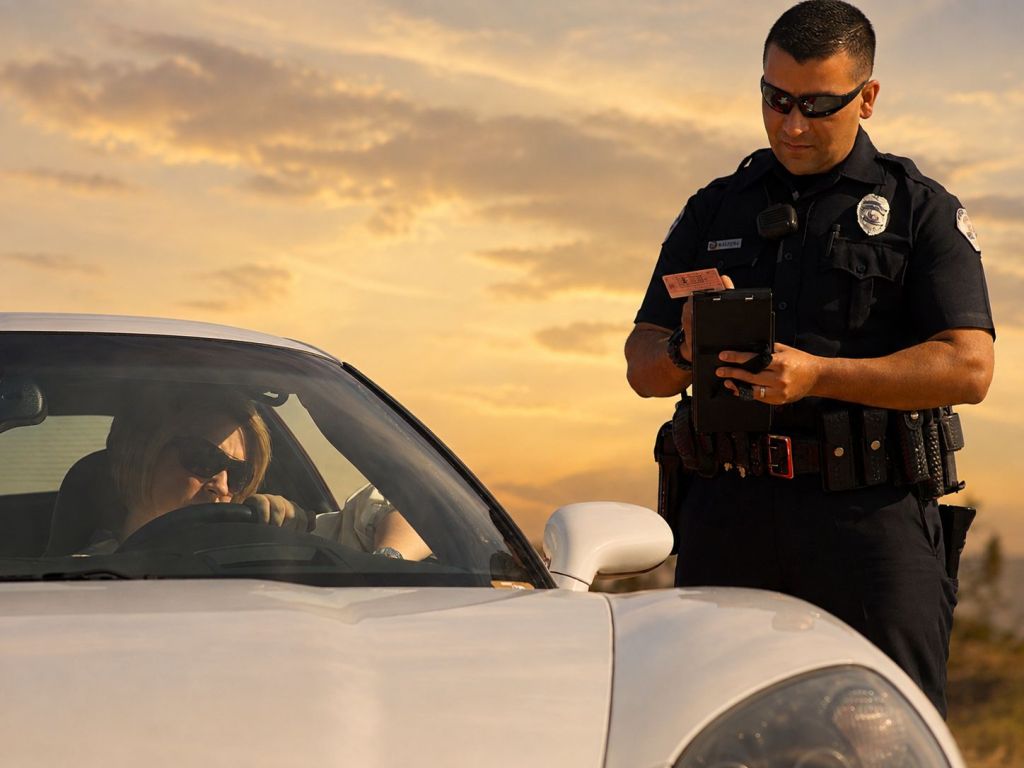
The Immediate Roadside Prohibition system can feel like a black box. Police take your licence, hand you paperwork, and you’re left trying to understand what just happened and what comes next. Here’s a clear, step-by-step explanation of how the system actually works from beginning to end.
Step 1: The Roadside Stop
It begins when a police officer stops your vehicle. They may have pulled you over for a traffic violation, for driving behaviour that raised concern, or as part of a roadblock. Or they may have found you parked on the roadway and stopped to check your sobriety. On other occasions, police may attend the scene of an accident.
Once stopped, if the officer notices any indicators of alcohol consumption, even just the smell, they can move to the next step. Or, they can decide to make a mandatory ASD demand which does not require any grounds whatsoever.
Step 2: The ASD Demand
If an officer wishes to do so, they can demand a breath sample into an Approved Screening Device (ASD). This is the handheld breathalyzer. The officer must have the device available and must make the demand and conduct the test immediately, subject to necessary delays for mouth alcohol or other contaminants.
The ASD produces one of three results: Pass (a numerical reading under 50mg%), Warn (50–99mg%), or Fail (100mg% or higher).
Step 3: The Second Test
If the result is Warn or Fail, you have the right to request a second test. The police must inform you of that right before giving you the driving prohibition documents. Your second test is required to be conducted on a different device, and the lower of the two results governs for the purpose of determining the length or imposition of the prohibition.
Step 4: The IRP Is Issued
If the result is Warn or Fail or if you refuse to provide a sample, the officer proceeds to issue an IRP. The tier depends on the result and your history. A Warn reading results in a 3-day IRP for a first incident, 7-day for a second within 5 years, and 30-day for a third in 5 years. A Fail reading or refusal results in a 90-day IRP.
The officer completes the IRP Notice and serves it on you. Your driver’s licence is physically seized. The prohibition begins immediately.
Step 5: Vehicle Impoundment
For a 30-day and 90-day IRP, your vehicle is impounded for a month. The officer calls a tow truck, and the vehicle is taken to a storage facility. You are responsible for all towing and storage costs. For shorter IRPs, impoundment may or may not apply. It is up to the discretion of the officer.
Step 6: The IRP Notice and What It Contains
The IRP Notice you receive contains important information: the reason for the prohibition, the duration, your review rights, and the deadline to request a review (7 days). Read it carefully.
Step 7: The 7-Day Review Window
From the moment the IRP is issued, you have 7 days to request a review with the Superintendent of Motor Vehicles. This is done through RoadSafetyBC. The review is either an oral or a written process.
There are fees associated with requesting a review (currently in the range of $100 for a written review, and $200 for an oral review). These fees are non-refundable regardless of whether you win, lose, or cancel your hearing.
The grounds for review are specific to the type of prohibition you were issued. For example, in a refusal prohibition you can argue the demand was not valid. This is not a ground of review in a prohibition for failing or getting a warn reading.
Step 8: The Review
Your review will take place on the date and time scheduled for the hearing. If you intend to submit evidence or material in advance, this must be done before the close of the hearing window. Late submissions are not considered.
The review process for Immediate Roadside Prohibitions (IRPs) differs in important ways depending on whether the prohibition is based on a “fail” result or a “warn” result. The distinction affects both the scope of the evidence and the procedural protections available to the driver.
For oral IRPs, which arise from “fail” readings on an Approved Screening Device, the review is conducted as an oral hearing before an adjudicator of the RoadSafetyBC. The driver or their counsel may make submissions and challenge the reliability and sufficiency of the evidence. The adjudicator considers the sworn report of the police officer, any supporting documentation such as calibration records, and viva voce evidence if permitted. The oral format allows for real-time clarification of the evidence and gives the driver an opportunity to respond directly to concerns raised by the adjudicator.
For written IRPs, which typically arise from “warn” readings, the review proceeds entirely on written submissions. There is no hearing. The adjudicator reviews the police materials alongside any written evidence and argument provided by the driver or counsel. This includes affidavits, witness statements, and documentary evidence. Written legal argument is capped at 30 pages in length.
In both processes, the adjudicator’s role is not to determine guilt in a criminal sense, but to assess whether the statutory criteria for revoking the prohibition have been met. The process is administrative rather than criminal, with relaxed evidentiary rules and a focus on efficiency. This structure places significant weight on the police narrative and documentary record, particularly in written reviews where there is no opportunity to clarify any questions an adjudicator may have.
Step 9: The Review Decision
A delegate of the Superintendent reviews the written materials submitted, your evidence, and the police report. In an oral hearing they will also consider the oral submissions. The review decision is typically issued within 21 days of the date the prohibition was issued. The prohibition remains in effect during this period.
If the review is successful, the IRP is rescinded, your licence is reinstated, and the vehicle is released from impoundment.
If the review is unsuccessful, the prohibition continues. You may be able to apply for a further review in the BC Supreme Court through judicial review, though this is a more complex and costly process.
Step 10: After the IRP — Meeting Reinstatement Requirements
When the prohibition ends, you must take several steps before driving again. You need to pay a licence reinstatement fee.
You may also need to complete the Responsible Driver Program, an educational course about driving and alcohol, if you received a 90-day prohibition or if you have a relevant history in the past 5 years. For repeat offenders, you will need to enrol in the Ignition Interlock Program and have an interlock device installed in any vehicle you drive.
Step 11: Long-Term Impact
An IRP will appear on your driving record. ICBC uses this when calculating your insurance premiums, and the impact can be significant. Premium increases can last for years. The IRP is also visible to police when they check your driving record at future stops.