
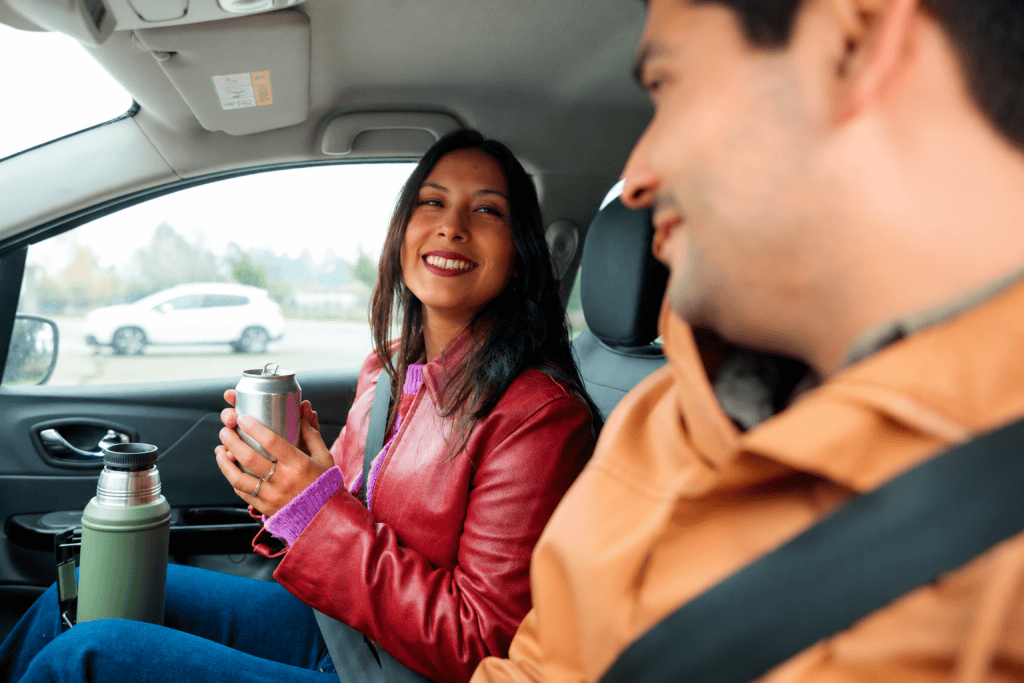
The BC government quietly slipped a new rule into the Motor Vehicle Act regulations on October 19, 2026 requiring that anyone supervising a learner driver must stay awake and maintain the ability to lawfully operate the vehicle at all times. In plain English, when there is a class 7 learner driver at the wheel, the person sitting in the passenger seat must be sober enough to drive.
On the surface, that sounds like common sense. In practice, it is a legal mess built to solve a problem that barely exists, and it is going to drag police, passengers, and teenagers straight into court.
No lawful way to test a passenger
The Regulation sets up the driver to be ticketed if the supervisor is not lawfully permitted to be behind the wheel because they’ve been drinking or they were asleep. The basic problem that whoever drafted this regulation seems to have overlooked is that the police have no legal authority to demand a breath sample from a passenger. A breath sample is a warrantless search and a warrantless search is only permissible if it’s authorized by law. The law authorizing the police to compel drivers to provide a sample of their breath arises from the Criminal Code. There is no such provision with respect to passengers nor could there be.
Under the Criminal Code, an officer can only demand a breath sample from someone who is operating a vehicle, or who had care or control of one within the previous three hours. BC’s Immediate Roadside Prohibition scheme applies to drivers and itself has no provisions to demand a sample of breath. Neither law lets an officer stick a screening device in the face of someone sitting in the passenger seat, and a provincial regulation cannot override federal criminal law or invent new police powers out of thin air.
So how is an officer at the side of the road actually supposed to prove that a supervisor could not lawfully drive?
Without a breath sample, all the officer has is what they saw and smelled. A police officer cannot compel a passenger to undergo sobriety testing of any sort.
Put yourself in the shoes of a police officer at a roadside check who smells alcohol coming from the passenger seat. That officer is going to be sorely tempted to demand a breath sample anyway and let the lawyers sort out the legal authority later. If they do, a passenger forced to blow into a machine has grounds to sue the police for an unlawful search and detention. If they don’t, and they write a ticket to the class-7 driver based purely on their subjective opinion that the passenger looked off, every learner who gets that ticket has every reason to dispute it. Either way, we are headed for litigation.
The case that bothered the police
We know how this plays out because we watched it over the decades it.
Years ago, we defended a grandparent who had been supervising their teenage grandson, who held a learner’s licence. Police pulled the car over. The grandson was behind the wheel, and he was completely sober. The officer then turned to the grandparent in the passenger seat, demanded a breath sample, and issued an Immediate Roadside Prohibition based on the result.
It was entirely unlawful. The grandparent was not driving, and the police had no business demanding a sample from a passenger in the first place. The case made the news at the time, and it clearly stuck in the craw of some police officers for the last decade.
The learner takes the hit
The way the government wrote this rule makes it even worse. Because the province cannot legally prosecute a passenger for drinking, they attached the rule as a condition on the learner’s licence. The supervisor faces no penalty whatsoever. If the supervisor has been drinking, it is the sober class-7 learner driver who gets the ticket and takes the hit on their driving record.
Think about what happens in the real world on a Friday night. A family is leaving a restaurant. The parent had two glasses of wine with dinner, and their teenager with a learner’s licence had water. The safest, smartest choice is obvious: let the sober learner drive home.
Under this new rule, doing the responsible thing puts the learner at risk of a ticket and a banged-up driving record. So what is the parent going to do? They are going to take the keys back and drive themselves. That parent might be under the legal limit, or right on the edge of it, and they are definitely not the best person to be behind the wheel. A rule designed in the name of road safety ends up pushing people who have been drinking back into the driver’s seat.
One case, a new law
If you spend enough time in criminal defence, you notice a pattern: a single, bizarre case convinces the police that a massive loophole is about to be exploited by the public, and before you know it, the law is rewritten around the outlier.
Look back at October 2008. Off-duty RCMP Corporal Monty Robinson crashed his Jeep into a motorcyclist in Tsawwassen, killing 21-year-old Orion Hutchinson. Robinson left the scene, walked home, and later told investigators he had downed shots of vodka at his kitchen table after the crash. He was eventually convicted of obstruction of justice. It turns out that he had trained police officers prior to this incident and one of the things he told them was that this was the way to beat an over .08 charge.
That single case sparked a moral panic that drivers everywhere would start chugging vodka after accidents to beat impaired driving charges. So in 2018, Parliament rewrote the Criminal Code. Today, it is a criminal offence to have a blood alcohol concentration at or over 80 mg or more within two hours after driving. You can drive home stone-cold sober, pour yourself a scotch in your own living room, and technically be guilty of a crime unless you can prove you had no reasonable expectation of being asked for a breath sample. An absurd, sweeping law was born out of one infamous case.
The sober supervisor rule follows the same playbook.
As far as we know, there has been only one case like the grandparent we defended, and it happened more than ten years ago. It bothered the police enough that they kept lobbying for a fix. Once again, the fix is a botched fix. It creates more problems than the initial concern.
Still, this is how regulatory creep works in British Columbia. The police press the bureaucrats, the bureaucrats draft an amendment, and the rule slips into law without most elected politicians even knowing it is there. This particular change took effect five days before a provincial election, quietly buried inside a package of amendments that the government only bothered to publicize as the elimination of the second road test for “N” drivers.
We try to keep up with every clever or not so clever little change we see in the laws and regulations when it comes to drivers in BC. If you’ve received a driving prohibition or been compelled to provide a breath sample, give us a call as soon as you can after the incident took place. We’ll see if we can help you out.