
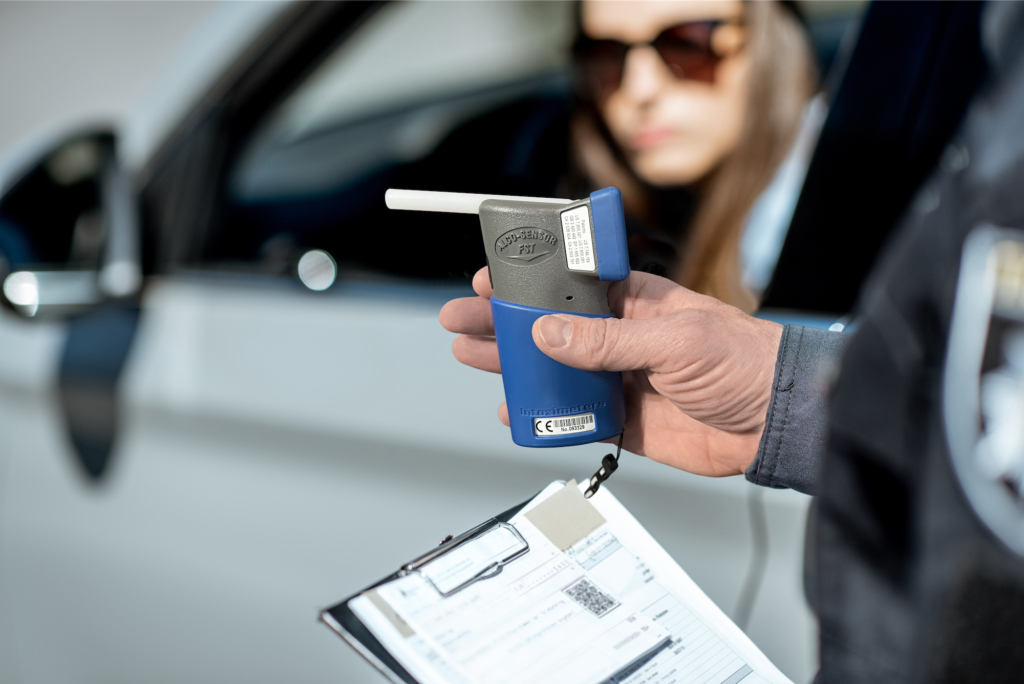
It’s one of the most common questions people ask – is there a way of beating a roadside breathalyzer. It’s always asked hesitantly, as though simply asking the question is revealing something tawdry. The question itself reveals something. That people ask whether they can beat a roadside breathalyzer tells you people have questions about the robustness of the results. Simply put, many people question the reliability of alcohol breath testing. And they are right to be concerned.
One of our primary concerns when defending DUI charges is the reliability of the tests. There are countless reasons that the breath test may be unreliable, starting with the underlying fact that breathalyzers don’t measure the alcohol in blood but rather the alcohol is breath. And of course, the police use an electro-mechanical device that, like any complex devices, may simply not function properly. Add to that the fact that every person is physically unique, and you start to realize that breath readings will not reflect an actual blood alcohol concentration.
Peanut butter and a penny
There is always discussion on the internet about having peanut butter in your mouth or a penny when you blow into the breathalyzer at a DUI stop. Let’s think about this starting with the penny.
Of course, we don’t have pennies in Canada any longer. You might have some in your sock drawer, but they have been out of circulation for several years. Back in the day, pennies were made of copper. When copper became prohibitively expensive (each penny had more than a penny’s worth of copper) the mint began to make pennies from an alloy of a similar colour. Modern pennies are not actually copper. But copper has some fantastic qualities.
Copper is used in distilling for two primary reasons: heat conductivity and removing impurities from alcohol in the distilling process.
Copper has an unusual capacity to conduct energy. Run your hot water tap and then find the hot water pipe under your sink. If you touch a copper pipe, you may burn yourself. The heat transfer is dramatic. If your pipes are plastic, you might not even feel the heat. In distilling copper pipes are used to transfer the heat energy from the near-boiling alcohol to cooler water in the condenser reservoir. This cools the alcohol vapour and turns the alcohol vapour into liquid alcohol.
As the vapour interacts with the copper, a certain amount of impurities stick to the copper. This is why a copper still is preferable to a stainless steel still for making spirits. But does either of these features of copper change the breathalyzer result?
Well, the reason people considered the penny is because they assumed some alcohol would stick to the penny. Or alternatively, because breath temperature is key to alcohol breath testing, the assumption might have been that the energy conductivity would somehow alter the tests.
Of course, neither of these things are true. Copper in your mouth will not take away impurities and indeed alcohol passes freely by it. And the capacity to pass energy means any penny your mouth will match your mouth temperature nearly perfectly within seconds.
A penny in your mouth for a breath test will make no difference. Oh, and to be thorough, we tried it and confirmed that it doesn’t.
Can you beat a breathalyser with peanut butter? There is nothing special about peanut butter. It has no capacity to absorb alcohol in air. There is no theoretical or scientific reason why peanut butter would lower a breath test result. Again, to be thorough we tested peanut butter and it had no effect.
The one way that you may lower your breath test result
Breath testing operates on numerous presumptions that may or may not apply to you. For example, the DUI breath testers we use in B.C. assume that 2.1 Liters of your breath will have the same amount of alcohol as 1 cubic centimeter of your blood. That’s programmed right into the breathalyzer. But it’s not accurate.
This ratio does not apply to you. Ever. It will always be on one side or the other depending on many factors. One factor is shallow breaths.
When they design breathalyzers, they test them on people. The people they test are not terrified at the roadside, holding their breath. They are in a nice clean well-lit lab with their colleagues and enjoying a drink or several at work. They are not holding their breath in the hopes of not smelling like liquor.
As a result, they are breathing normally. That’s not the case for most people at the roadside. Most people at the roadside are taking shallow breaths because they are scared. That’s what people do when they’re scared.
When you take shallow breaths, stale alcohol collects in the lungs. It may sit in the lungs. When it comes time to empty your lungs as you blow into the breathalyzer, you will have inadvertently increased your breath-alcohol concentration. Shallow breathing can make your breath test read higher.
What, then, is a better way? Simple: breathe deeply as the police are preparing the breathalyzer and then take several deep breaths in and out before blowing. Arguably this is the safest way to test someone.
Some police officers may think that you are attempting to beat the breathalyzer, but it doesn’t matter what they think. What matters is the reading on the device. And if you lower your reading by breathing deeply, you may get a closer measure to your actual blood-alcohol concentration than you might have without doing so.
If you find yourself in trouble with the police, you can call or text us. Our job is to figure out why the breath tests were not reliable in your case. This is a job that we’re uniquely equipped to do.