
We have discussed many times issues that can cause artificially elevated breath samples. Last week we started to address breathing and your breath samples. We know that hyperventilating can generate an erroneously low reading on an Approved Screening Device (ASD). In our own tests we were able to knock off about .014% BAC from the reading by hyperventilating just before blowing. But what about shallow breathing and holding your breath? Could this cause the roadside breathalyzer to give an erroneous high breath reading?
People stopped by the police are invariably nervous. It’s very rare that a traffic stop ends without at least a ticket or a lecture. And there is the very real chance that you might end up in big trouble. If you try to explain yourself, you may find yourself in more trouble for talking back. And we know first hand that some cops are absolutely nuts. So it makes sense that people are nervous dealing with the police.
If you’ve had anything to drink, chances are you’re even more nervous. You may be well below the legal limit, but having had anything to drink you can expect probing scrutiny by the police. And besides, although you may be under the limit, you can never know what their machine might say.
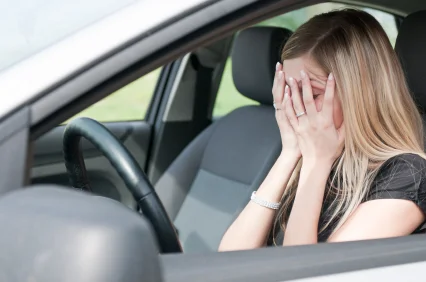
When you get stopped by the cops it feels like your heart has stopped. Most people experience this sensation when they are nervous. What happens is your breathing becomes shallow and you don’t bring in enough air to replenish your lungs. Sometimes your voice quivers because you have so little air to facilitate speaking.
When we realized that we could lower our reading by hyperventilating, we started thinking about the reverse. In our blog post we put it like this:
But what about the people at the roadside? Will short breaths give a reading that does not concur with the actual blood-alcohol content? Could it not provide an artificially elevated reading, particularly on a roadside ASD? Could this be one of the reasons so many people who are tested later using a BAC Datamaster provide readings so much lower than the ASD reported?
Of course, we wanted to find the answer. Before we were lawyers we were all scholars, so we started to do our research. What we found has important implications for anyone disputing a 90-day Immediate Roadside Prohibition in BC.
Studies published in the 80s and 1990 confirm our findings regarding hyperventilating. It has been reported in the scientific literature that you can cause a breathalyzer to give a reading up to 20% lower by hyperventilating. More shocking, however, is that shallow breathing or holding your breath can cause a breathalyzer to report your blood-alcohol content up to 15% higher than the actual concentration.
You may want to read that last sentence again.
If you are pulled over, you are nervous. If you are nervous, your breathing becomes shallow. If you are asked to blow into a roadside breathalyzer (an ASD in BC), the readings could be high by up to 15% because you were not breathing normally.
When functioning properly, the actual ASDs themselves have a margin of error of 10%. Add to that the 15% elevated reading because you were nervous. That takes a person from a Warn to an inaccurate Fail and from a pass to an inaccurate Warn.
So, to answer to the question we posed on October 15 concerning breathing and your breath samples, yes shallow breathing can cause you to have an inaccurate reading on an ASD. If you are not breathing normally because you are nervous, the reading on the ASD machine can be expected to be higher than your actual blood-alcohol content.
Without a doubt innocent people have received IRPs because they were nervous when they blew into the ASD. And there is nothing in the review procedure that would help you on a review because as we’ve said so often, the Government doesn’t care if you are innocent.
But we care. So we’ll keep researching this and other issues that we’ve been thinking about because, among other things, breathing and your breath samples is very important if you’ve received an IRP.