
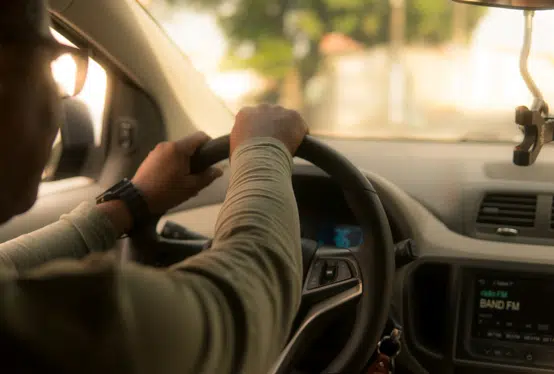
Many people who are charged with driving offences ask us ‘can I drive while my case is before the courts?’ The answer to this question is usually yes.
In most cases, after you’ve been arrested for a driving offence, you are released with a court date in the future. There are usually no conditions placed on your ability to drive.
It is, however, open to the police or the courts, through a bail hearing, to compose conditions on you that restrict or prohibit your ability to drive pending the outcome of your case.
These conditions are rare and if you’re ever uncertain about whether you have been given a bail condition or police undertaking not to drive, you can contact a lawyer to sort this out.
One common situation that prevents people from driving after having been charged with a driving-related criminal offence is a driving prohibition that flows from the same conduct that forms the basis of the criminal offence.
For example, an Administrative Driving Prohibition, under section 94.1 of the Motor Vehicle Act, is commonly known as an ADP. In most cases where a person is charged with impaired driving, they are also issued a 90-day ADP.
You cannot drive unless you successfully dispute the 90-day ADP or the 90-days come to an end and you properly reinstate your license.
In order to determine whether you have an ADP, you should look at the paperwork the police gave you. Usually, if you’ve been charged with a driving-related criminal offence, you’ll receive a piece of paper with your court date and a date, typically, to attend for fingerprinting.
You may also receive a blue piece of paper, that says at the top ‘notice of driving prohibition.’ If you received that document, that is a 90-day ADP or IRP, and it must be disputed. You have only seven days from the day you receive that to dispute it, so it is important you contact us as soon as possible.
However, once the 90 days are up, and you’ve complied with any other conditions the Superintendent of motor vehicles puts on your ability to have a license, the criminal charge does not prevent you from driving.
It is, in our opinion, often in our client’s interests to reinstate their license at the first available opportunity, to comply with any remedial program referrals, including the responsible driver program and Ignition Interlock device, and to demonstrate that they are capable of driving safely and lawfully after the incident takes place.
Reinstating your license can go a long way, in demonstrating that you are interested in complying with all of the road rules. As a result, if you are eligible to drive, there is no good reason why you shouldn’t drive, if your case is before the courts.
Courts also can not give you credit for the time that you choose not to drive, and it doesn’t change the sentence the court must impose for your prohibition.
While your time not driving may be for notable reasons, it will be used as a factor to lessen the sentence that you would otherwise receive if you were convicted of the criminal offence.
Ultimately the decision not to drive may have persuasive values with prosecutors, but in our experience, it has generally been the case that it is more persuasive to demonstrate that you are capable of complying with all of your licensing requirements and completing
any remedial programs that are imposed on you.
If you are uncertain about if you can drive, there are steps you can take to figure it out. The first step that we recommend is to call ICBC and determine if you have a valid license.
If you do not, you cannot drive. You should ask them what you need to do to determine whether you can obtain a valid license and if there are steps ICBC says you have to take, take them.
If you are still unsure, contact a lawyer, and have your paperwork with you, so your lawyer can ask you questions about all of the paperwork you received, and help to determine whether or not able to drive. Don’t hesitate to reach out at any time, we’re always happy to help.