
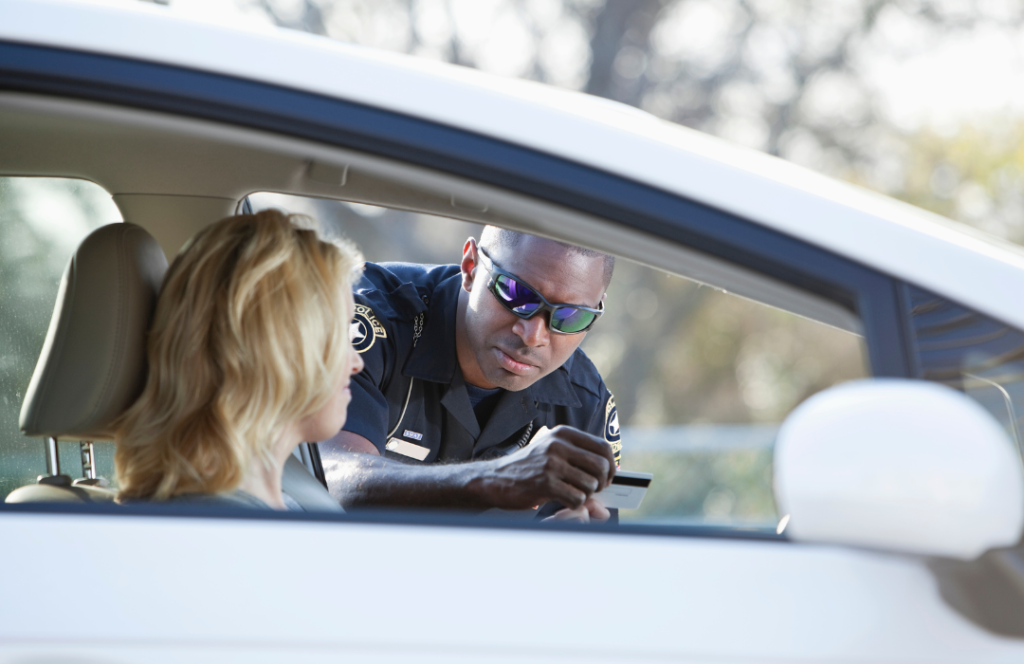
It’s not uncommon for us to read in a police report that the driver in a DUI investigation tried to talk their way out of a DUI. Of course, if we’re reading the file it means the driver was not successful. But it’s a good question. Has anyone ever successfully talked themselves out of a DUI? What are the chances and, if you’re in that circumstance, should you chance it?
Some background is required to answer this question.
In BC the Immediate Roadside Prohibition law came into effect in September 2010. Before that, if the police pulled over a suspected DUI driver and they blew a Fail roadside, the only option for further consequences was to arrest the driver, take them back to the police station and have them tested on a big breathalyzer known as an “Approved Instrument.”
It was not uncommon for drivers to blow Fail roadside, have no symptoms and be taken back to the station where they would then blow well under the limit. If they blew over the limit, the police officer would need to prepare a bunch of forms, release the person and then write a detailed narrative of what took place. The officer would then prepare a package of material to be sent to a prosecutor to review with the view of approving criminal charges. If the driver disputed it and a trial took place, the officer would likely have 20-30 hours of paid labour in that file.
As you can imagine, that’s not something many officers were enthusiastic about doing. A few were much faster, but most officers were not wanting to go through all of that effort, particularly when, in the end, they might end up with a lawyer like Kyla Lee cross-examining them at the trial.
On busy nights one big issue was having the police resources, i.e. the officers available to take themselves away from other duties to devote 4 hours to an impaired investigation. What happens when you’re on your way to a theft call-out and see an impaired driver? In those cases, particularly on busy evenings, the time taken by the investigation was a problem.
The police resources problem was often significant. In places like Vancouver, before the IRP law was introduced, police officers would often consider other pressing police tasks and, rather than arrest the driver and investigate them for criminal DUI, they would release the person with a mere 24-hour driving prohibition.
There were other considerations too. Sometimes the police violated Charter rights in the investigation, or the evidence of some key point was weak. In the end, however, the result was something drastically less than a criminal DUI charge. People who got 24-hour prohibitions in that circumstance really dodged the bullet and likely had no sense of the nightmare they avoided.
There were lots of problems with this approach, including that it is a perverse incentive. If a person drives while flat-out impaired and the only consequence is a 24-hour prohibition, what is there from discouraging them from repeating the same conduct again and telling their friends there is low risk if they drive over .08?
Occasionally we would hear of this. A police report would indicate that the suspect told the police they should be given a 24-hour prohibition because their aunt told them that’s what she got, or they got one a few weeks earlier and they were much drunker then.
Did any of these people talk their way out of a DUI? No. But what about the people who were issued only 24-hour prohibitions? Well, they didn’t talk their way out of it. Usually, as indicated, it was a decision made by the officer based on resources and time at that moment, or for some other reason that had nothing to do with asking.
So asking for a 24-hour driving prohibition was not the reason officers issued them in circumstances where there wasn’t an impaired arrest.
What about today?
The legend of people succeeding in talking their way out of a DUI still floats around out there these days, but even with resource issues, with the current legal scheme, nobody ends up with just a 24-hour prohibition. The reason for this is simple.
With Immediate Roadside Prohibitions, there is very little work an officer needs to do to issue a 90-day prohibition with a 30-day impound. Moreover, the time committed to the investigation is almost always less than an hour including issuing the prohibition, towing the vehicle and preparing the report. And of course, with an IRP, the officer does not appear for the hearing. IRPs are easy for the police and never have a significant impact on police resources.
We have never seen a driver talk their way out of an IRP. There may be reasons the police discontinued the investigation, but not because the driver said something that caused them to reconsider issuing an IRP or arrest someone for a criminal DUI.
It doesn’t hurt to ask, right?
We can’t think of a single case where, in the history of our office and beyond, a driver talked their way out of a DUI. But we’ve seen a lot of people try and it doesn’t go well for them.
Often the police will record in their 90-day IRP report that the driver begged for a 24-hour prohibition. If the driver disputes the IRP or DUI, you can imagine how that plays out when the hearing takes place. It comes across as an admission of guilt. It comes across as a consciousness of having done something wrong. It makes the driver look like a person who drinks and drives all of the time and now they are attempting to use the get-out-of-jail-free card that they assume exists because they somehow got away with it for so long.
A smarter course of action
If you are stopped and think you are under investigation for a drinking-driving offence, state your name when asked and after that, remain silent. When told about your right to speak to a lawyer, say yes – you want to talk to a lawyer.
Beyond that, keep your mouth shut. You can’t talk your way out of a DUI and everything you say is likely to be used against you.
If you are issued an IRP or criminal DUI charge, call us right away. We have been successfully defending DUI cases for decades. It’s what we do and we’d be happy to help you.