
If you can recall the wording of your Immediate Roadside Prohibition review decision, and you remember the phrase “clerical error” or some such dismissive comment used by the OSMV tribunal to suggest that a police officer simply made a mistake when completing his or her evidence, you may want to pull that decision out and read it in light of the Modhgill decision.
In Modhgill the calibration expiry date was so far down the road that you could not say that the ASD was being properly calibrated. The service expiry date may have been correct or it may have been inadvertently switched with the calibration expiry date. In any event, it was clear that the calibration expiry date was not reliable. This was the evidence before the tribunal.
When Mr. Modhgill’s counsel conducted the hearing, they argued that the evidence before the tribunal clearly indicated that the date was months in the future. Rather than accepting this conclusion on the face of the evidence, the tribunal went into speculation mode. The adjudicator concluded that it would make no sense for the police to be wrong. In rejecting the application for review the adjudicator concluded that, “As it would make no sense for the annual “service date” to be 5 months before the monthly “calibration date”, I am satisfied that Constable Coon simply made an error in the IRP Report by putting the two dates in the wrong boxes.”
We have seen this a number of times since the IRP scheme first came into effect on September 20, 2010. Usually this sort of substantive defence on the face of the police evidence is dismissed as a mere “clerical error.” Sometimes the decision uses that very phrase, or it will state that “it makes no sense” for the police officer to have done something that is recorded on the face of the police evidence.
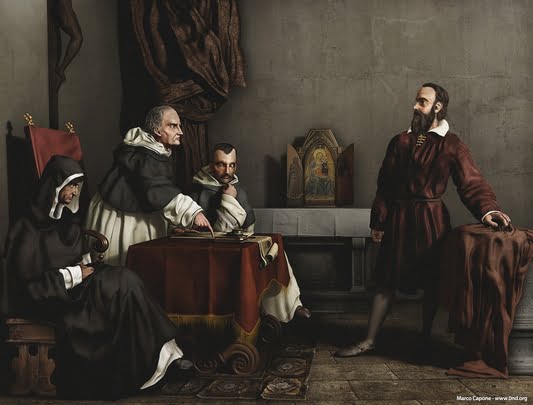
There are all sorts of different types of clerical errors. The Inquisition was a clerical error. For a few centuries heretics, i.e. people who did not abide by the doctrine of the church, were hauled before an ecclesiastical tribunal. The outcome was typically predetermined because for the authorities the accusation itself was enough for the tribunal to justify the punishment. Victims of the inquisition would typically face torture and execution, what was known as purgatorias exigentia. The Catholic church now recognizes that this was a mistake made by the clergy, i.e. a clerical error.
Another type of clerical error refers to mistakes in books. Before the printing press was invented, books, and in particular Christian religious texts, were hand copied by members of the clergy, i.e. clerics. Working by candle light, with poor eyesight and often in a cold room, clerics would try to copy word for word the information in one book onto pages that would be bound into another book. Inevitably they made mistakes. Sometimes the mistake and what should have been written is clear on the face of the document. Later readers would chalk it up as a clerical error, i.e. a member of the clergy having recorded something incorrectly that is obviously incorrect.
When it comes to IRPs, unlike the Inquisition you are not permitted to face your accuser. Oral hearings are done over the phone and the police officer does not testify. So the only evidence of the accuser is in the form of the police officer’s Report to Superintendent.
What this means is that there can be no inquiry into the evidence beyond how it appears on the face of the document. To do so would be to speculate as to the evidence.
The OSMV tribunal has rendered hundreds of decisions in which they concluded there was a clerical error made by the police officer. They have speculated that the latter of the two types of clerical errors referred to above can explain away dates and times that “don’t make sense,” cases where the officer records using one Approved Screening Device yet provides evidence for a different device, IRPs where the officer describes the ASD giving readings that indicate it was malfunctioning, etc.
The Court in Modhgill says that the adjudicator “rearranged the facts” to support her assumption. Her finding that the evidence concerning calibration was simply an error made by the officer was, according to the Court “unreasonable and was not within a range of possible acceptable outcomes defensible in respect of the facts and law.”
In other words, you cannot simply assume a clerical error. Like it or not, the OSMV tribunal cannot speculate or guess that the police officer simply made a mistake.
Your IRP Review Decision:
If you think the adjudicator used the words “clerical error” or “makes no sense” in your review decision to excuse away an error on the face of the Report to Superintendent, give us a call and we’ll look at your case to see if we can get the decision overturned.
Because the law is changing so fast at the moment, many early review decisions and even decisions rendered as recently as last week, can be successfully appealed to BC Supreme Court. If you have one of the decisions where the adjudicator speculated about what the police officer’s evidence might have been, we may be able to have your IRP overturned quickly.
Look at your your IRP review decision first. If you see this type of reasoning, give us a call.