
One thing that the government of British Columbia has never spent much time on during the pandemic has been dealing with the issue of breath testing for people who have decreased lung capacity as a result of having had COVID-19 and COVID-19 long haulers.
Of course, we know this would have never come up or even thought of before the pandemic, but now that we are two years into it, we know about the significant number of people who have long COVID-19 symptoms.
But it seems to us that the BC government just doesn’t care.
We have been seeing an increase in the number of people who are getting 90-day IRPs, for refusing to provide a sample. When the truth is, they are trying to blow, but they aren’t able to produce the required amount of air, or blow continuously, as a result of the fact that they have a diminished lung capacity.
And in some ways, this could be a human rights issue.
Human Rights Issue
People who have symptoms of long COVID-19, now have a form of disability, that hinders them from being able to provide full breath samples, and instead of the government recognizing this and addressing the concern, they are punishing these people with IRPs.
We would like to see the government amend the IRP legislation to increase the number of defences that exist in refusal cases, as a result of the increase of COVID-19 long hauler cases.
Defences in a refusal to blow
Right now, the only defences that exist in a refusal to blow case are that you were not given a valid demand, or that you didn’t refuse without reasonable excuse.
The medical system currently doesn’t have any answers for people suffering from long COVID-19 and there is no definitive answer to what causes it, so they don’t necessarily know how to diagnose someone as a COVID-19 long hauler.
Because it has been so hard for so many to access resources and be diagnosed as a COVID-19 long hauler, it has proven a lot more difficult for people to meet their burden of proof to fit within the category of not refusing without a reasonable excuse.
Difficulty getting a diagnosis
One of the reasons why it is so hard for people to get a diagnosis is that all of the clinics that deal with the long-haul systems, require a positive COVID-19 test.
And a big problem with that is, that you can’t get one of those COVID-19 tests in BC anymore.
For the first several months of the pandemic, testing was limited, where you could only get a test if you were a health care worker, extremely vulnerable, or a frontline worker. There were limited categories of people who were eligible for the test.
Then, when the Omicron wave began towards the end of 2021, they started limiting testing again. So once again, people couldn’t get a test unless they fell within those specific categories. If they didn’t, a person would be sent home with a rapid test.
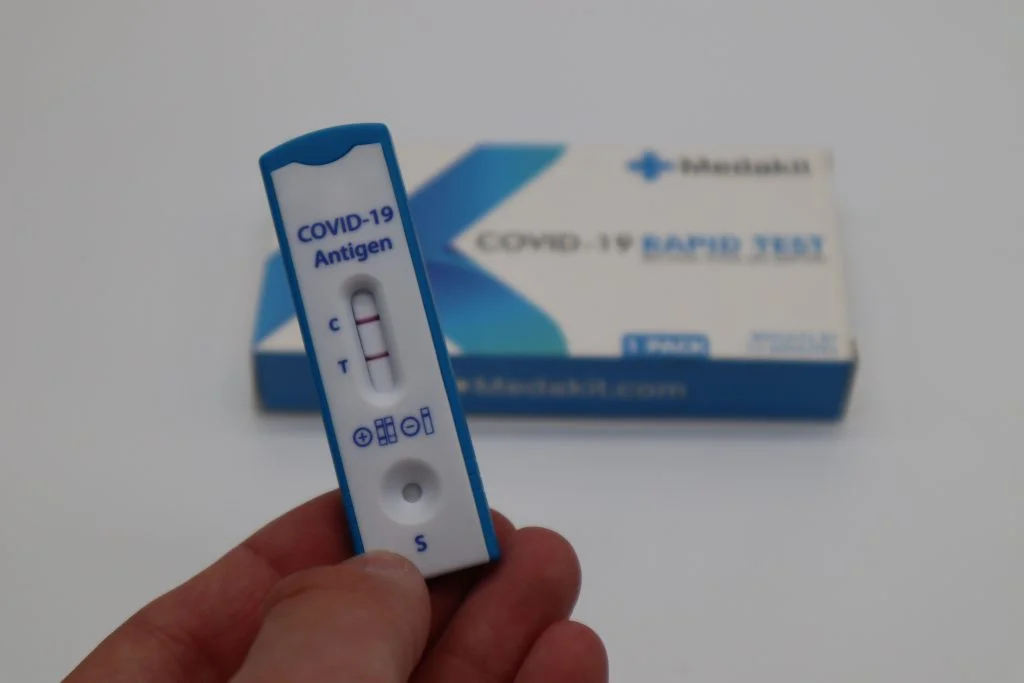
A rapid test is useful in situations for a person to know if they have COVID-19, to be aware of isolation times and how long. But it is not good because of the fact that now you have no medical record or history that you had COVID-19. And therefore, unable to be diagnosed with long COVID-19.
It puts you in a situation of not being able to get into the support and the resources available for COVID-19 long haulers. A large number of people in BC who have long-haul symptoms, have never had a positive test and now can’t prove it if they ever end up getting an allegation that they refused to blow.
Guilty until proven innocent
This is one of the big problems with the IRP scheme because with the burden of proof being on the driver, and the evidence in some circumstances being impossible to obtain to be able to prove their case, people are guilty until proven innocent, and then unable to prove their own innocence.
It’s wrong, it’s discriminatory, and it means there are people out there who probably have to live in fear of ever going through a roadblock because they might be asked to blow.
A lot of people say the answer to this is don’t drink and drive, but that’s not the answer at all. Police don’t have to have grounds to ask you to do a roadside breathalyzer, they can ask you to do the test even if you appear to be completely sober.
And as a result, you can end up with an IRP and all the associated consequences for having done nothing wrong except not being able to provide enough breath as a side-effect of COVID-19.