
The provincial Justice Minister is standing by the province’s drunk-driving laws despite increasing criticisms of the program over the review process for roadside prohibitions, and concerns about unreliable screening devices.
This week, the B.C. Supreme Court quashed a ban that had been upheld after review, because the government had relied on a report that should have been inadmissible in the review process. The ruling could lead to many more bans being overturned, depending how often the inadmissible report had been used.
But the program continues to prompt questions. Drivers hit with an Immediate Roadside Prohibition – which can include a driving prohibition of up to 90 days, the vehicle being impounded on the spot, substantial fines and an ignition interlock device installed in the vehicle – are not told if the screening device used to test them is later found to be giving falsely high readings, according to documents disclosed in a freedom of information request.
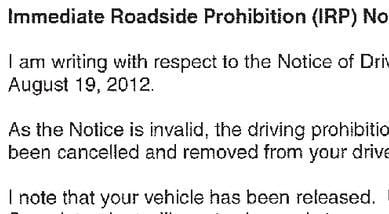
Instead, drivers are mailed a letter informing them their prohibition has been cancelled because the “Notice of Driving Prohibition” has been found invalid, with no mention of any specific reason. The cancellation comes weeks after the vehicle has been impounded and the driving licence suspended.
The documents highlighting the practice were requested by the Acumen Law Corporation, which has been a consistent opponent of the Immediate Roadside Prohibition program since it came into effect.
“The letter seems to indicate that somehow the Notice of Prohibition that was served on you was defective,” said Acumen lawyer Paul Doroshenko. “It doesn’t tell you the device was later found to be defective. That has a lot of implications because there’s liability issues here. You might be in a position to sue. You’ve been wrongfully punished, but you don’t know that. You think you’re getting off on a technicality.”
Mr. Doroshenko said drivers deserve better than a vague letter when the device used on them is later found to give false readings. “I cannot fathom a reason to do that that stems from fairness,” he said. “The only reason I can think of is to try to obscure, or not make public, the fact that this happens.”
Read More: Critics of drunk-driving laws take aim at screening devices
http://www.theglobeandmail.com/news/british-columbia/critics-of-drunk-driving-laws-take-aim-at-screening-devices/article13807057