
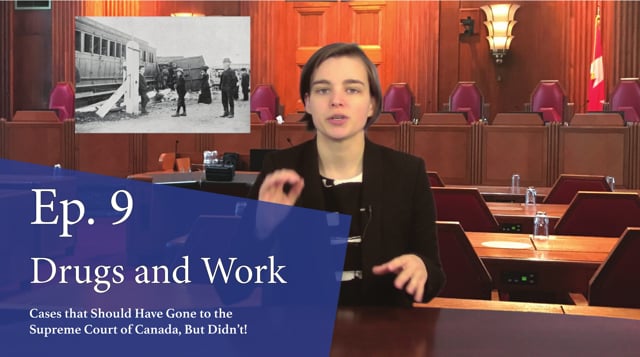
Welcome to Cases That Should Have Gone to the Supreme Court of Canada, But Didn’t! This week, lawyer Kyla Lee discusses how the law should treat working individuals who have legitimate medical conditions related to drug use, especially relevant with the upcoming legalization of marijuana in Canada.
Acumen Law Corporation lawyer Kyla Lee gives her take on a made-in-Canada court case each week, and discusses why these cases should have been heard by Canada’s highest court: the Supreme Court of Canada.
The Teamsters Canada Rail Conference v. Canadian Pacific Railway Company decision is very interesting. One of their employees derailed a train through the course of his job. Drug testing protocol – standard every time you crash a train – was done. The employee was discovered to have cocaine in his system, enough of the drug that the test indicated he had consumed cocaine within 24 hours of the accident.
However, the employee argued he shouldn’t be terminated because he had an addiction, and he had a mental health issue that prevented him from being accommodated by his employer. This case went all the way to the Court of Appeal, and perhaps surprisingly, the court upheld that he should keep his job.
So where do we draw the line? What about the soon-to-be-legalized marijuana? We sure could have used some clear directions from the Supreme Court of Canada about how drug use, particularly where drug use is associated with medical disability, interacts with employment law.