
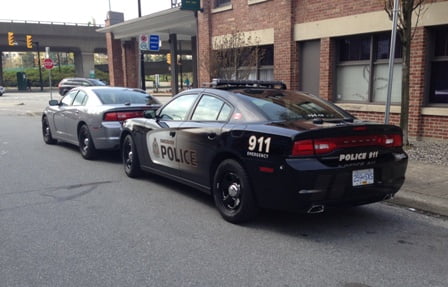
We know the locations of the DUI roadblocks. It’s not that we spend our time listening to our police radio scanner, or that we follow the twitter account revealing the locations of roadblocks in BC. It’s just that we’ve read so many police reports from all around the province, and we keep a database including information about specific police officers and detachments. About a year ago we noticed that we could predict the most probable times and locations of the DUI roadblocks on any given day and it turns out that we’re usually right.
The implications are interesting. First of all, it exposes a major flaw in policing. The idea of DUI roadblocks is to create fear and awareness. The hope is that the public should fear that if they drive while impaired or with an unlawful blood-alcohol level, they face a significant likelihood of being caught.
The intention of the fear is to dissuade people from drinking and driving in the first place. In law we call that general deterrence. In practice it’s that decision to get into a taxi and leave your car at home. Usually that’s a good idea.
But what is the effect if people start to see the pattern and, like us, already know where the DUI roadblocks are likely to be? Some will conclude that they can take another route and the risk of being stopped will be lower. Others, including people who regularly drive after drinking, will calculate how to avoid the roadblock, swerving through side streets and putting the public at great risk.
Simply put, predicable roadblocks may have the effect of facilitating some people to drive after drinking, which is contrary to the intention of the roadblocks themselves.
The other interesting thing is that the police are really predictable. Police departments are large bureaucratic organizations that thrive on schedules, patterns and predictability. One consequence is that they set up DUI roadblocks in ways that we can predict. Another consequence is that they tend not to be very dynamic; there is very little evolution in the structures and methods of policing and for many officers very quickly it becomes a job lacking any intellectual challenge.
Where are the DUI roadblocks?
In some US states the police are required by law to announce the locations of the DUI roadblocks days in advance. The newspapers then publish the locations, or the general locations of the roadblocks.
On the one hand you might think that it’s plain stupid because the drunks will then know exactly the locations to avoid. But on the other hand, this could be very effective for general deterrence.
Say, for example, on Tuesday you read in the paper that on the following weekend the police planned to set up six major DUI checkpoints in the Lower Mainland. You read that there will be one in Vancouver, one in Burnaby, two in Surrey and two in Richmond. Would this encourage you to get out there and take a chance after having a few drinks?
Probably not. The discussion of this in the newspaper is likely to raise your awareness of the fact that it’s unlawful to drive after consuming too much alcohol. By the time the weekend comes along, and you’re planning to head out, it’s more likely that the knowledge that there are DUI roadblocks out there may be enough to dissuade you from drinking and driving.
What works to deter people from driving after drinking too much?
Impaired driving offences were on the decline before the IRP scheme came into effect, and during the 6 months that it wasn’t enforced, DUIs in BC were down. So Immediate Roadside Prohibitions don’t deter people from DUI driving. What does, however, is the frequent reminders that we all consider it wrong to drive while intoxicated and that the police are on the lookout for DUI drivers.
We know this works because it’s been studied. And we’re not talking about some politically-motivated Government study; there is social science to back this up. When new DUI laws are announced, the number of DUI drivers declines for a while because of public awareness. This is what is known as announcement effect. After a while the numbers usually revert to the average because people forget and don’t think about it when the times comes.
Do the police deter drunk driving?
If you’re a cop, catching people driving drunk is a lot more fun than standing at a roadblock all night and finding no DUI drivers. For cops, it’s like fishing. And the terms and phrases that the police use often reveal that they experience it this way. Also, cops become cops so they can “make a difference.” If you don’t catch any bad guys, you’re not going to “make any difference.” So for the police, catching people at DUI roadblocks is more attractive than deterring drunk drivers.
Moreover police departments that can demonstrate a need for resources (i.e. money) to deal with a social ill, such as a major problem with DUI drivers, can get the politicians to kick in with your tax dollars. If they deter drunk driving, they can’t lobby for more money to deal with a drunk-driving problem.
Unfortunately, deterring drunk driving isn’t in the best interest of the police. And being dynamic and changing their patterns and methods isn’t the way they operate. So we can’t count on the police to deter drunk driving.
A better way to deter drunk driving:
If the Government is serious about deterring drunk driving, we think they should take advantage of announcement effect and make frequent announcements about the locations of DUI roadblocks. We’re not suggesting that they provide streets, avenues, times and specific dates. If however, they made it their practice to publicly announce the resources they will use in DUI enforcement for the coming week, and did this regularly, it would stay in the public mind and deter drunk driving.
For example, the Surrey RCMP could announce on Wednesday that during the coming weekend they plan to have 2 DUI roadblocks on major thoroughfares, 3 smaller ad hoc DUI roadblocks as well as roving DUI patrols.
If you read this in the paper on Wednesday, would you consider chancing it after a few drinks on the weekend in Surrey? Not a chance. If you noticed it in the paper every week for three months, would you have this in mind before you went our drinking? Absolutely.
There is a better way to deter drunk driving in BC. We need to start by recognizing that it’s not in the interest of the police to deter drunk driving. In fact, the police can win prizes if more people drive drunk. So we need to re-evaluate the role of the police in deterring drunk driving.
Moreover, the methods and the messages that we use to communicate to prospective drunk drivers about the likelihood of being caught need to change. We need to consider frequently telling the public about the general location of DUI roadblocks and the resources that the police are putting into DUI enforcement at any time. In our view, as DUI lawyers, we think this could be very effective in keeping the message in the forefront of the minds of people who might take the chance to drive after drinking too much.
Even though we’re DUI lawyers, we would prefer that people don’t drive drunk. We don’t need taxpayer handouts. As super-skilled lawyers we could always move into other areas of the law.
We didn’t become lawyers to win prizes. We became lawyers to do good work for our clients. Along the way we discovered that we know the locations of the DUI roadblocks in BC. How about that?