
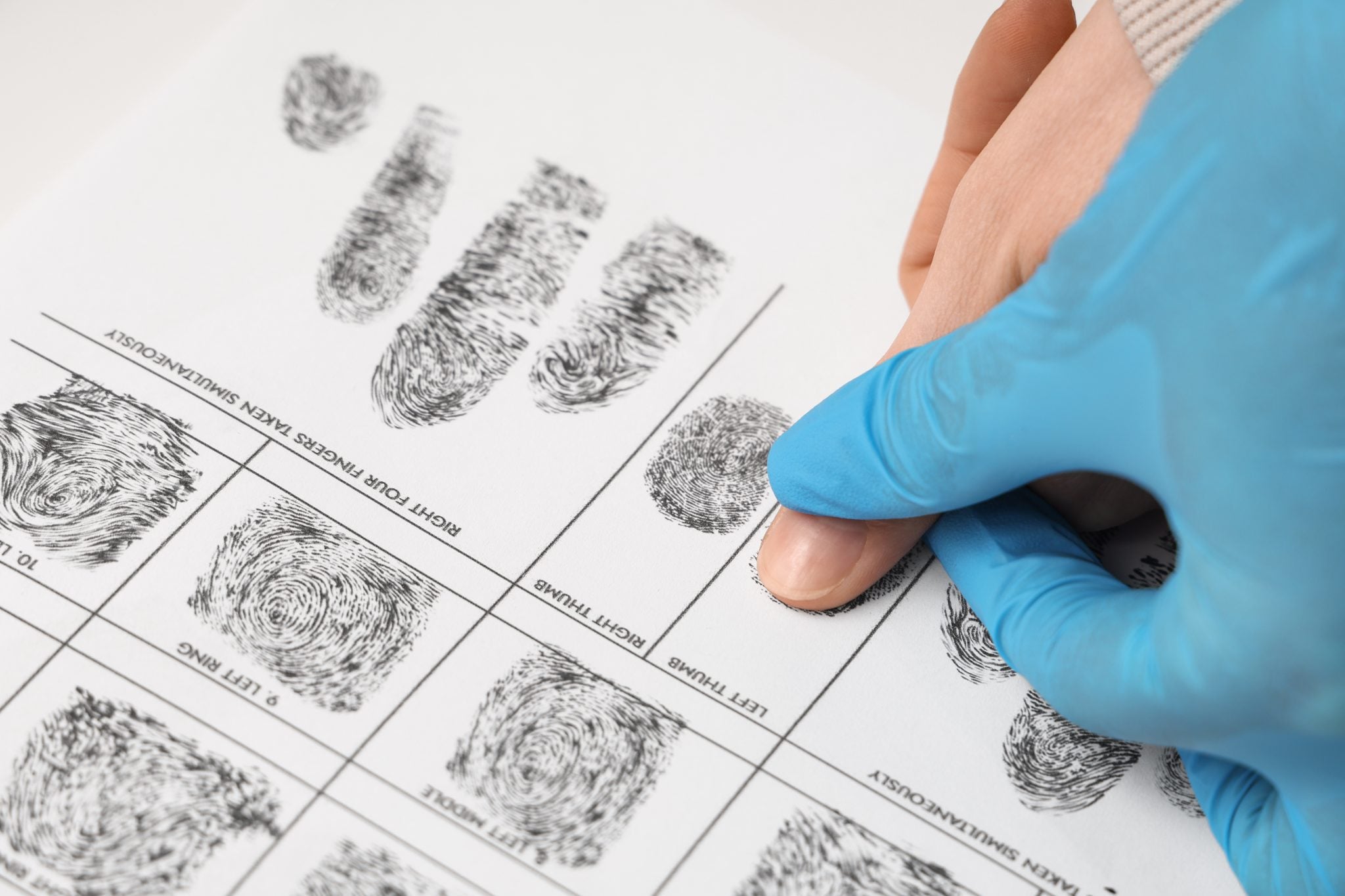
If you’ve ever been charged with a criminal offence in British Columbia, you were probably fingerprinted and photographed by the police. Even if your charges were later dropped or you were found not guilty, those fingerprints and photos don’t automatically disappear. Many people are surprised to learn that these records stay on file with the RCMP and can show up in police information checks even when there’s no conviction. Fortunately, there’s a legal process to request that they be destroyed.
First, Why Were Your Fingerprints Taken
Under Canada’s Identification of Criminals Act, R.S.C., 1985, c. I-1 (the “Act”), police are authorized to take fingerprints and photographs from anyone who is charged with or convicted of an indictable offence. Alternatively, an officer may also give notice to attend for the purposes of identification under the Act upon release of an accused. The law allows for the collection, but it doesn’t require automatic destruction once the case is over. That means your fingerprints can remain in the national RCMP/ police database until you apply to have them removed.
Who Can Apply for Fingerprint Destruction
You may be eligible to request destruction of your fingerprints, photographs, and related records if your case ended without a conviction. Specifically, you can apply if: your charges were withdrawn or dismissed, your charges were stayed (after one year), you received an absolute discharge (after one year), you received a conditional discharge (after three years), or you were acquitted (found not guilty). If you were convicted, you are not eligible for fingerprint destruction. However, you may qualify for a record suspension (pardon) through the Parole Board of Canada.
When You Can Apply
Different case outcomes have different waiting periods before you can make your request:
Case Outcome | Waiting Period
Charge withdrawn or dismissed | Immediately (some police agencies prefer 30–90 days)
Stayed charge | 1 year after the stay date
Absolute discharge | 1 year after the court date
Conditional discharge | 3 years after the court date
How to Apply for Destruction
The process begins with the police agency that took your fingerprints—for example, the Vancouver Police Department, Surrey RCMP, or another municipal force. Each agency has its own request form, but you’ll generally need to provide: a completed “Request for Destruction of Fingerprints and Photographs” form, government-issued photo ID, court documents confirming how your case ended (e.g., a Notice of Withdrawal or Disposition Sheet), and in some cases, a small administrative fee. Once you submit your application, the police will review your file and decide whether to approve destruction. If approved, the request is sent to the RCMP in Ottawa, where your fingerprints, photographs, and related identifiers are permanently removed from the Canadian Criminal Real Time Identification Services (CCRTIS) database. If your request is denied, you can ask for written reasons and may reapply later, especially if more time has passed or circumstances have changed.
What Law or Policy Governs This?
Unlike a criminal conviction appeal, fingerprint destruction isn’t set out in a single piece of legislation. It’s governed by a combination of law, policy, and case law: Identification of Criminals Act – Authorizes fingerprinting but is silent on destruction. RCMP CCRTIS Policy Manual – Establishes national procedures for retention and destruction of non-conviction records. Privacy Act (R.S.C., 1985, c. P-21) – Requires that personal information be kept only as long as necessary for the purpose it was collected. Canadian case law – Courts have held that retention after non-conviction must be reasonable and proportionate (e.g., R. v. D.M. (1999), R. v. Dore (2002)). Police have discretion, but they must use it fairly. If your charges were resolved in your favour, you have a strong argument that your identifying records should be removed.
How Long Does It Take?
Processing times vary by police agency. Once approved locally, the RCMP typically takes 8–12 weeks to confirm national destruction. You’ll usually receive a written letter confirming completion.
Why This Matters
Even though a withdrawn charge isn’t a conviction, it can still appear in a vulnerable sector or police information check, especially for jobs, volunteering, or immigration purposes. Having your fingerprints and photos destroyed helps ensure that your record truly reflects your clean legal history. If you’re unsure whether you qualify or how to apply, an experienced criminal defence lawyer can help you. At Acumen Law Corporation we regularly assist clients across British Columbia with record suspensions, destruction requests, and clearing non-conviction histories. Contact us today at 604-685-8889 for a confidential consultation and start the process of clearing your record.