
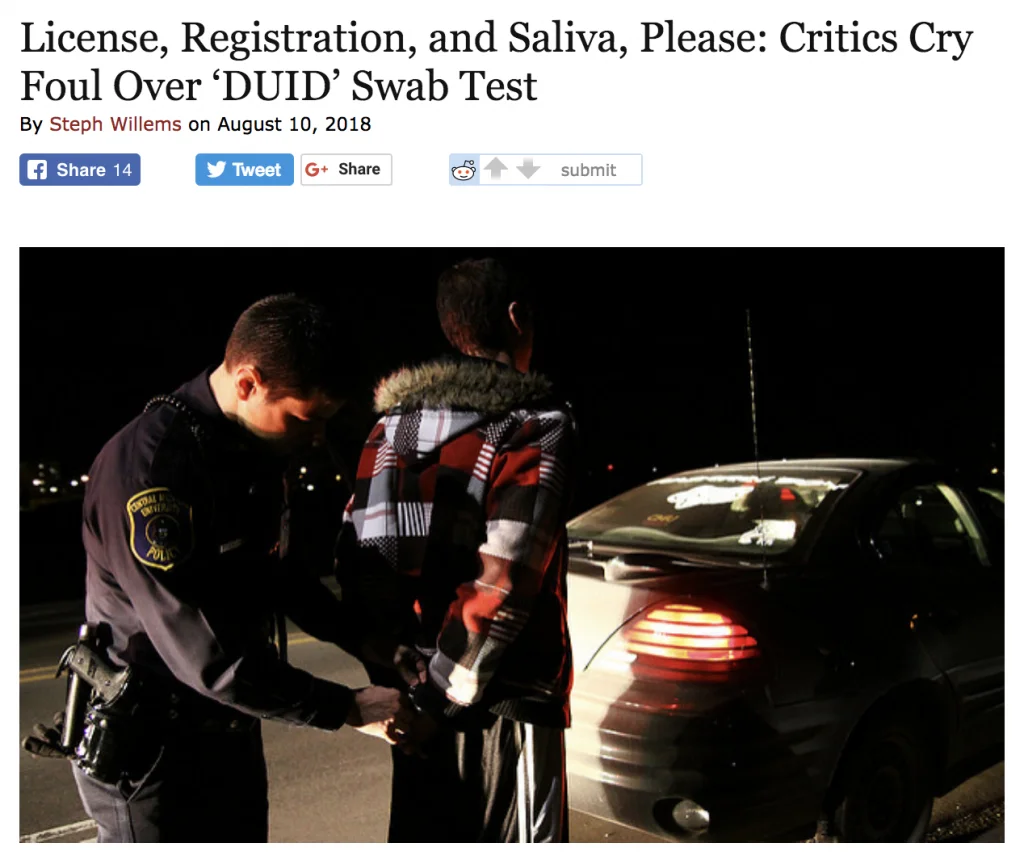
As jurisdictions across the continent prepare to legalize the consumption of marijuana, assuming they haven’t already, the methods of testing for drug-impaired driving haven’t advanced quite as rapidly as legislation.
While breathalyzers are a mainstay of the law enforcement toolkit, getting an accurate reading of just how impaired a drug-using driver really is isn’t an exact science — despite some claims to the contrary. Blood tests for THC, the active ingredient in marijuana, are often misleading. Actual impairment really comes down to the user, not the blood reading. A driver’s buzz could easily have worn off long before getting behind the wheel, despite the elevated presence of THC in their bloodstream.
…
“It’s inevitable that we’re going to see constitutional challenges as soon as this device hits the roads,” said Kyla Lee, a criminal lawyer focused on roadside impairment testing. “This is something that is a significant departure from what the Supreme Court of Canada has authorized, and what police has been doing thus far.”
Read the full article here.