
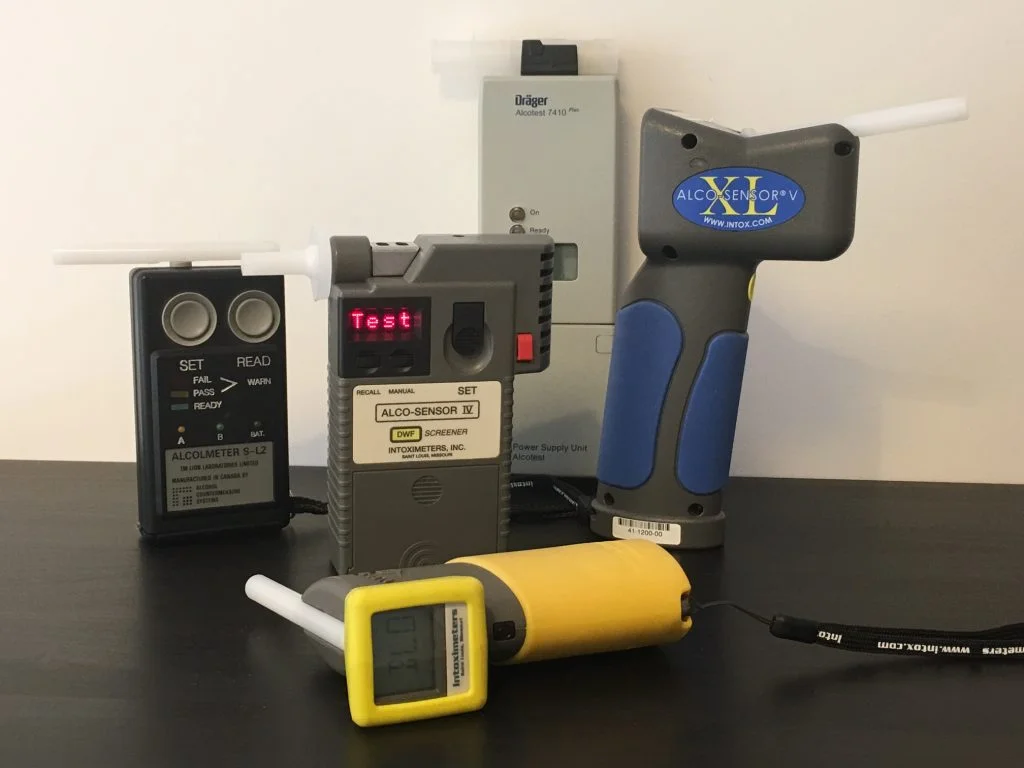
What if you refused to blow outright without knowing if the police officer had a functional Approved Screening Device (ASD) to test you?
This has been a constant issue in Immediate Roadside Prohibition “refusal” cases from the start. The general rule is that the officer can demand a driver to blow into an ASD in certain circumstances, but it must be a lawful demand.
There are two types of demands: one made on reasonable suspicion of alcohol in the driver’s body and one made upon a lawful stop, provided the officer has the ASD with them at the time.
In most cases, it’s assumed that the officer has a functioning device with them.
If a driver refuses outright, i.e., says they aren’t going to blow, there has been no expectation that the police would need to provide evidence about the functioning/calibration of the ASD. Why would it matter if the subject’s lips never touched the breath tube? If the person says, “no, I’m not blowing,” should there be any inquiry into the functioning of the ASD?
Importance of a functional ASD
This makes a lot of sense, but a recent BC Supreme Court decision may have changed the law.
In Sandhu v. British Columbia (Superintendent of Motor Vehicles), The Honourable Mr. Justice Edelmann’s decision was released late last week; and the Court opened the door for an inquiry into the device’s functioning in outright refusal cases.
In Sandhu, the driver refused to blow. When it came time to submit the evidence for the hearing, the officer submitted a copy of the Certificate of Qualified ASD Calibrator, which was not a required document in the case.
Importantly, however, it showed that the ASD the officer possessed was beyond its calibration period.
Why should this matter if Mr. Sandhu refused outright? In most cases of outright refusal, the calibration evidence isn’t submitted and is not relevant.
In the Sandhu case, it was impossible to ignore one important thing: the officer could not fulfill the prerequisite of a lawful demand because the evidence before the tribunal was that they could not take a lawful test.
In fact, the device should not even accept a sample if it is beyond its calibration period. It simply shouldn’t work at all.
No official change yet
The Court in Sandhu doesn’t take it to the final step because the decision is an appeal of an adjudicator’s decision. The Court is merely reviewing the decision and determines that the adjudicator did not properly consider the issue and, in fact, basically skipped over it.
So although there is a hint here that the law is changing, the Court sent the matter back for a re-hearing with the direction that the adjudicator grapple with this issue, meaning we do not get the clarity in the law we would like to see.
Does the officer need to have a functional ASD readily available in an outright refusal case? If the evidence shows that the device they have is beyond its calibration date or otherwise non-functional, that may be a defence to an outright refusal in an Immediate Roadside Prohibition case.