
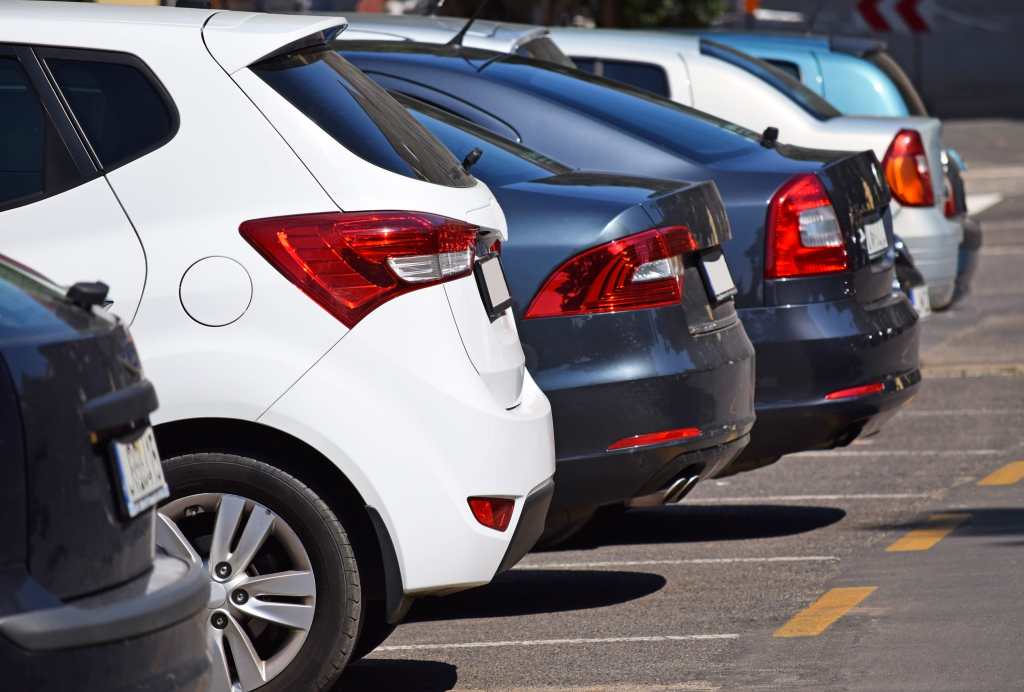
We are often contacted by people who want to fight tickets that they were issued in private parking lots. We don’t deal with these cases because it never makes sense to hire a lawyer for a parking ticket. As well, unlike traffic tickets or driving offences, there is no dispute provision written into law. If the police issue you a ticket, that’s the type of case where you want to have a lawyer.
We are driving lawyers, not parking lawyers. But questions arise about the legal relationship you have when you park in a private parking lot. We thought it would be useful to explain the legal arrangement you have when it comes to parking in paid parking lots to hopefully answer questions some of the legitimate questions people have. And we’re always here to help.
Do you lease a parking space?
You park your car on the lot and you pay in the machine for a certain amount of time. It’s almost like you’ve leased that space.
In some respects it’s similar to a lease, but it’s not a lease because you don’t have exclusive possession of the premises. The operator retains ongoing control over the lot and the purpose is narrow, merely for storing a vehicle. So if it’s not a lease, what is it?
What we’re really talking about is a contractual agreement, that is contractual permission to park. So when you enter the parking lot, you enter with the intention of parking. If you enter with the intention of driving through or for some other reason, you are likely considered a trespasser. Entering the lot to park your car is a clear intention to form a contractual agreement and you accept the agreement by simply entering the lot. You then must fulfill the terms of the agreement, which is paying, in circumstances where it’s a paid parking lot.
Components of the contract
Then there’s consideration: you give money and in exchange for that they give permission to occupy that space for the purpose of parking a vehicle only for that period of time. Although it’s a contract, there’s no signature or anything like that. All you need is offer, acceptance, and the expectation of performance for it to be a contract and entering the lot with the intention to park is point the contract is formed. When the contract is formed you essentially have a license to park.
So legally you’re a licensee by contract and if you ignore the terms of the agreement, typically spelled out in the signage, you are a trespasser.
Now the expectation is, as spelled out by the signage, that you have to pay before you walk away. This is an assumed condition of the contract. The expectation is that you pay the parking at the soonest available time and that’s your contractual obligation. Then you have the right to occupy that space for the period for which you paid. You can exclude others from occupying that space in the practical sense. You have a reasonable expectation of care and safety and that your vehicle will be undisturbed, absent any breach for safety needs.
The parking lot operator has some rights too. If you fail to meet your conditions of the contract (that is, paying for the time period), they can tow your vehicle or ticket your vehicle consistent with the agreement. There may be other terms or conditions of the contract that they try and impose with signs, but generally speaking if you over extend or park without paying, you are a trespasser and they have the option of removing your vehicle from the lot.
So essentially paying to park creates a short-term contractual license to occupy private land for the limited purpose of storing a vehicle, subject to conditions set by the landowner, without creating tenancy rights.
Open, but only open to those who intend to park
A parking lot where you pay to park is open but limited in the sense that you cannot enter the parking unless you intend to fulfill your terms of the agreement. By entering the parking lot, you are accepting the agreement. You may have a right still to decline it if you determine that the terms are not acceptable. You can decline the terms once you are fully informed by driving out. Nevertheless, you are already forming the agreement by entering the parking lot and you have a contractual obligation at that point. Otherwise you are a trespasser. It is only an invitation to the people who enter the parking lot for that lawful purpose, not the general public.
Trespass in a parking lot
Although people may go walking through parking lots all the time, they are trespassers.
If you fulfill the terms of the contract, you may park there but that is not open to the general public. There are many circumstances where the general public may assume they may lawfully enter a parking lot but they are nevertheless not permitted to be there because it is not open to them.
The classic example is parking without paying. If you drive in and don’t pay, this is trespass because the invitation is only to enter and park if you pay and comply with the terms. If you park without paying, you are occupying the land without permission, and that is trespass.
If you stay after the paid time expires, this too is trespass. Your license to occupy has expired, and from that point on you’re physically present on private land without permission.
If you enter the lot for purposes other than parking, such as a shortcut to avoid traffic or to make a phone call, this is trespass because the invitation is purpose limited. You may only enter for the purpose of parking under the stated terms. If you use the lot as a shortcut or a hangout spot that is outside of the license. Even short-term parking when you don’t intend to pay is trespass.
If you park in prohibited areas within the lot, such as fire lanes or loading zones or reserve stalls or any area marked no parking, this would be trespassing as well because the license is only to park in permitted areas.
If you’ve been explicitly banned from parking there for whatever reasons, that too would constitute trespass if you were to try and park there.
Paid parking lots are for the purpose of parking so you’re not permitted to hang out on the curb or meet your friends there even if you paid to park. You can’t go skateboarding in the parking lot even if you paid to park because there are very strict rules.
The purpose is:
1. Enter the parking lot because you are forming an agreement.
2. Parking your car and then fulfilling your obligations under the agreement, which is paying.
3. Your car can remain there.
4. There’s nothing governing it to say that you can’t remain in your car because that is encompassed in the idea of parking.
5. You don’t have to leave your car but you can’t hang out in the parking lot.
Theft is a crime. So is trespass.
There are circumstances where trespassing may be a crime but you will likely never see anyone ever charged with such an offence for simply being in a parking lot without paying. But what happens if you park your vehicle fully intending not to pay? Is that a crime?
Some people don’t want to pay. They’d like to be able to go in stores and just take what they want. They’d like to get a haircut and walk out without paying for that service. They think that something that belongs to somebody else can be taken for themselves just because. In these circumstances the law considers such acts theft. And if you seek to obtain services without any intention of paying, your actions may constitute a fraud.
Fraud and theft are crimes. So if you park in a private parking lot that is clearly one where you are intended to pay and your intention is not to pay, you have technically fulfilled both the actus reus (the prohibited act of occupying the space without payment) and the mens rea (the guilty mind or specific intent to deprive the owner of their service fee), which are the requisite elements of a criminal offence. In the eyes of the law, the confluence of these two elements creates the foundation of criminal liability. Has anyone ever been charged for theft of parking under these specific principles of criminal jurisprudence? Probably not. We’ve never seen it.
If no one is ever investigated or charged, why does it matter?
The Complexity Caveat
The governance of these lots exists within a complex jurisdictional maze as well. While your relationship is primarily a private contract, various municipal bylaws or provincial consumer protection statutes may intermittently intersect with these agreements. However, navigating the overlap between common law trespass, the provincial Personal Property Security Act (regarding towing), and local administrative regulations creates a labyrinthine specialty that remains entirely outside the scope of our criminal and motor vehicle practice.
Determining which specific regulatory framework applies to your specific $75 ticket is a task that would require a level of legal research that far exceeds the value of the fine itself. Simply put, provincial governments write legislation that affects contractual relationships. Municipalities create bylaws that overlap, are often poorly written, are uncertain about their application, and seem designed to be confusing. Do any of them apply to your parking ticket? Few lawyers would be interested in investigating this, bearing in mind the hundreds of hours of legal research you could spend and still not find sufficient answers.
Our goal with this post is to explain the legal relationship you have when you park in paid parking. Really what we’re anticipating here is parking your car, paying at a pay station, and leaving your vehicle there because this is a contractual obligation. It’s worthwhile understanding your relationship in the contract. Contracts for small amounts of money, such as parking, almost never end up in court. If, however, a matter ended up in court, a consideration of the moral culpability of intentionally parking without paying could be an issue one may have to address.
Some advice about dealing with a parking ticket from a paid parking lot
As we said at the outset, we do not defend parking tickets. If you received a parking ticket, please do not call us for advice. But here is some advice you can use for free.
Take a photograph of any sign that you see that has conditions on it with respect to parking in that lot. Take a photograph of your vehicle relative to that sign if possible. Then remove your vehicle from the lot as quickly as you can.
Your next step should be to take some notes. Before you even drive away too far, stop and note anything that you can think of that may be relevant. Absolutely ensure you record the time and date that you arrived, the time that you paid to park, the time that you returned, the time you found out you received a ticket and the time you left.
When you get home put the ticket on your kitchen table and read it very carefully. Then look at the photograph you took of the sign and read it very carefully. Try to determine on your own whether or not you were in violation of the contract. The ticket is a demand to pay money. It may be possible to negotiate some other settlement for less money or to persuade the company that issued you the ticket that you did not violate the terms of the contract.
One of the lawyers in our office was issued a ticket when they were five minutes over the time period, upon a close read of the ticket, the license plate recorded was incorrect. That was an easy one because that lawyer could simply ignore the ticket. So our advice is to read the ticket, read the sign, and keep in mind your contractual obligations. At that point your next steps should be easier for you to determine.
Good luck. Try not to get parking tickets. Don’t call us if you’ve got a parking ticket. We are criminal lawyers who also handle driving offences. We do not defend parking tickets.
Frequently Asked Questions
- Q: I have read this entire article and I truly believe my specific parking ticket situation is unique, legally fascinating, or based on a grave injustice. Can I call your office to discuss it?
- A: No. As mentioned, we are criminal and driving offence lawyers. We do not handle parking tickets under any circumstances. If you call, our staff will kindly refer you back to this article.