
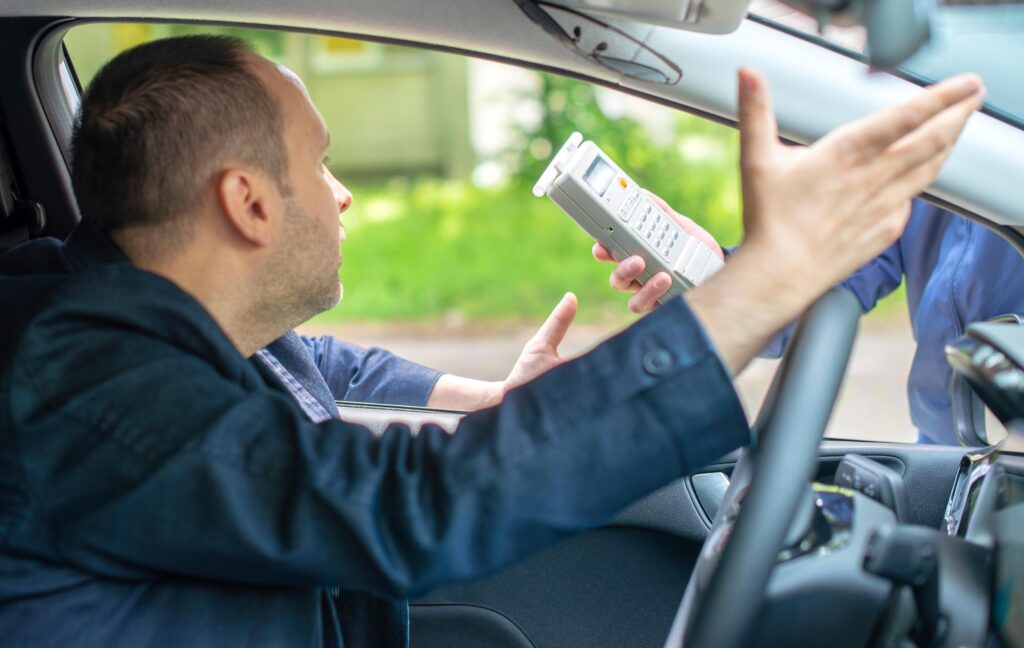
Alcohol breath-testing machines, commonly called breathalyzers, are used across Canada to estimate blood-alcohol concentration (BAC). Police rely on them daily, courts admit their results, and lives are shaped by the numbers that appear on the screen. Yet these results are only estimates, and what the machines measure leaves out a large part of what is really happening inside the body.
Background
Breath testing is built on the assumption that alcohol in the blood and alcohol in the breath have a fixed relationship. The machine converts a breath sample into an estimated BAC using a “partition ratio.” That ratio is standardized, not individualized. Everyone is treated as though their physiology fits the average. That assumption introduces considerable uncertainty. The standardized ratio is based on an average. What happens if you are not average? What happens if you are on the wrong side of the average? For roughly half the population, the results will be an over-estimation.
There are two types of machines. Approved Screening Devices (ASDs) are portable roadside devices. Approved Instruments are larger evidentiary instruments kept at police stations. The Approved Instruments use infrared spectroscopy and fuel cells. They are designed for court, but that does not make them infallible. Operator mistakes, environmental conditions, and the unique physiology of each person all play a role in whether the number reflects reality.
ASDs use an electrochemical fuel cell to measure breath alcohol concentration. Fuel cells lose calibration, they can be damaged by other substances being tested on them, and they may detect other organic compounds in the body and report them as alcohol.
Physiological Mechanisms
Absorption and Distribution
Alcohol enters the body through the stomach and small intestine. Food slows the process while an empty stomach speeds it up. Once absorbed, alcohol is distributed according to body composition and water content. Two people who drink the same amount may have very different blood alcohol levels.
Many unquantifiable factors impact absorption and distribution. The type and amount of food in the stomach, whether the individual has been smoking, or whether the person has been in a car accident are examples. These are factors that tend to slow absorption. In a lab, some factors can be measured. In the real world they cannot be quantified, which means they create reasonable doubt.
Metabolism
Most alcohol is broken down in the liver by enzymes. Genetics, sex, and health conditions influence how quickly this occurs. Functional tolerance allows experienced drinkers to mask signs of impairment, but it does not lower BAC.
Respiratory Health
Breath testing assumes normal breathing and healthy lungs. Conditions such as asthma, COPD, or even temporary hyperventilation can change results. Hyperventilation reduces oxygen delivery to the brain, impairing reflexes and reaction time, while also altering breath samples. Roughly fifteen percent of the population experiences chronic hyperventilation symptoms.
Limitations of the Machines
Machine-Based Flaws
Breathalyzers require regular calibration. They are sensitive to radio interference and lack the safeguards expected in a scientific laboratory. They are dropped and handled roughly. They may be used hundreds of times between calibration checks. During that time people may blow into them with cigarette smoke, raw alcohol, or other substances that damage the sensors.
They are electromechanical and electrochemical measuring devices. Each one contains systems such as the power supply, flow sensors, processors, switches, displays, and the fuel cell. Any of these systems can fail or malfunction.
Operator Error
Police are supposed to follow strict protocols, including a deprivation period to prevent mouth alcohol from contaminating the sample. In Canada, no observation period is done before ASD testing. Without it, the results are highly questionable. It has been recognized since 1927 that mouth alcohol poses the greatest risk to reliable breath testing.
Police can also affect the readings, intentionally or unintentionally, by the way they operate the device. This is not commonly documented because of concerns that people could learn to deliberately increase their results.
Physiological Influences
Residual alcohol in the mouth, acid reflux, medication interactions, or hormonal changes can all affect results. Women often show higher BAC readings than men after drinking the same amount due to differences in enzymes and body composition. GERD (gastroesophageal reflux disease) is especially common in people starting in their thirties. If alcohol has been consumed in the previous hour, stomach contents can travel up the esophagus and contaminate the breath sample.
Challenges in Court
Canadian courts treat breath test results as reliable if the device is approved and operated correctly. Yet the unknowns remain. Defence lawyers challenge readings based on machine flaws, operator mistakes, and physiology. Expert testimony is often needed to explain why the number may not reflect the true BAC. Police officers are limited to lay observations. They cannot interpret the science.
In 2018, the Criminal Code was rewritten to severely restrict the evidence that can be called to challenge breath test results. This change opened the door for wrongful convictions when breath tests fail to reflect actual blood alcohol concentration.
Public Safety and Legal Fairness
The purpose of impaired driving enforcement is to protect the public. The role of the courts is to ensure fairness. Breath testing sits at the intersection of these two values. The machines produce numbers, but they do not explain the full story of what happens inside the human body.
If you have been subject to a police breath test, call us. We have the same breath testers used in British Columbia and some that police have not yet received. We are involved with research and studies that continue to identify more problems with breath testing. Contact us now so we can get started on your case.