
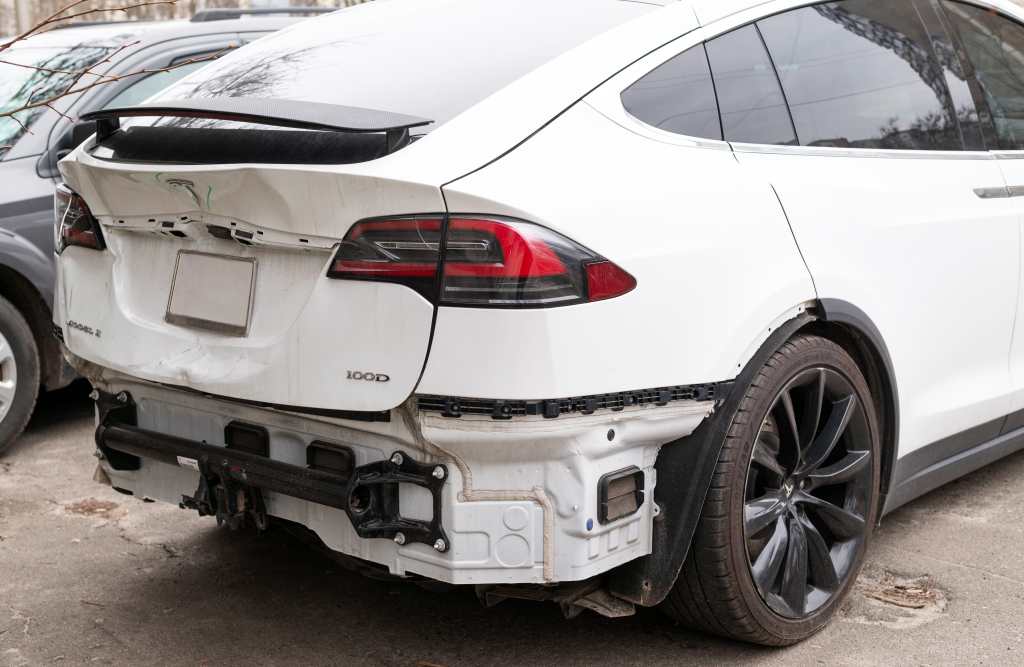
Sometimes the law hits close to home. Yesterday, just two blocks from our office in Richmond, I watched a Tesla being loaded onto a flatbed, badly smashed, It wasn’t remarkable in the abstract. What made it striking is how unremarkable it has become. We see this more and more, and increasingly, we see what comes next: the fight with ICBC over whether the driver is actually covered.
An epidemic hiding in plain sight
British Columbia has among the highest rates of EV adoption in Canada, and Teslas are everywhere on Metro Vancouver roads. EV adoption is mostly a good thing. Nobody wants to discourage the switch away from fossil fuels, and neither does ICBC. But the financial reality is this: Teslas are very expensive to repair. Their aluminum construction, integrated battery systems, and proprietary parts mean that what might be a fender-bender in a conventional car can become a write-off in a Tesla. ICBC, as a publicly owned insurer, spreads those costs across all ratepayers and those costs have been climbing.
When we look at the cases where ICBC is actively working to deny or dispute coverage, Teslas come up more than any other vehicle. (Second on the list is Dodge pickups.) The common thread is cost. When a claim is expensive enough, ICBC looks harder for a reason not to pay it.
Eyes closed, hands crossed, doing 100 km/h in the rain
This week, a story circulated that captures the Tesla moment perfectly. RCMP members of the B.C. Highway Patrol ticketed a woman who appeared to be asleep at the wheel on Highway 1 during the morning rush hour in Coquitlam. An officer pulled up beside the Tesla and observed the driver with her eyes closed and arms crossed while the vehicle was moving through rainy and slippery conditions. The driver claimed she had zoned out but insisted she was alert with her hands on the wheel. The police claim that dashcam footage did not support that account.
She was ticketed for speeding and driving without care. Tesla’s Autopilot and Full Self-Driving features, whatever their marketing names suggest, do not make the driver a passenger. The law, and your insurance contract, still expect a human being to be in control.
What ICBC is actually looking for
When an accident involves an expensive vehicle and a significant claim, ICBC does not simply cut a cheque. It investigates. And there are specific circumstances where it will allege a breach of the insurance contract and deny coverage entirely.
The most common grounds we see include: driving after consuming alcohol or drugs, leaving the scene of an accident, making a false statement to ICBC about how or where an accident occurred, using the vehicle for a purpose not disclosed on the policy (for instance, driving for Uber on a personal-use policy), allowing an excluded driver to operate the vehicle, and, increasingly relevant, conduct so reckless it crosses into criminal territory.
That sleeping Tesla driver? If she’d been in an accident, she’d be staring down multiple grounds for a coverage dispute simultaneously. A traffic ticket for driving without due care is one thing. But if ICBC could argue that operating a vehicle while asleep constituted criminal dangerous operation, or that the driver made misrepresentations about how the vehicle was being used, the coverage picture gets complicated fast. What happens if the driver intentionally decided to sleep behind the wheel? Certainly ICBC would look to deny coverage in such circumstances.
When ICBC denies coverage, the consequences are severe. The driver becomes personally liable for third-party damages, meaning they have to pay out of pocket for damage to other vehicles, property, and any personal injury claims. ICBC may also come after the driver to recover everything it paid to other parties. The result can be a massive personal debt, and serious consequences for their licence and insurance going forward.
Sometimes you need a lawyer to deal with your insurance company
ICBC’s incentives are not perfectly aligned with yours. As a crown corporation absorbing enormous repair and write-off costs it has every reason to scrutinize Tesla claims closely. That doesn’t mean every denial is justified, and in our experience, many are not.
We’ve seen ICBC deny claims based on speculation about vehicle data it couldn’t actually access. In one notable Civil Resolution Tribunal case, ICBC alleged a Tesla driver lied about how his vehicle was damaged, but the tribunal found that ICBC’s arguments about data the vehicle might have recorded were speculative, that there was no evidence about what Tesla’s sensors actually detect and store. The driver won.
That’s what good representation looks like. ICBC has lawyers. It has adjusters. It has investigators. From the start, you should have someone in your corner who knows this territory.
Our firm has handles ICBC breach cases and we have a strong track record of success. If you’re a Tesla driver, or honestly if you drive any vehicle in BC and Your spider senses tell you that your coverage is in question, don’t assume ICBC has the final word. They often don’t.