
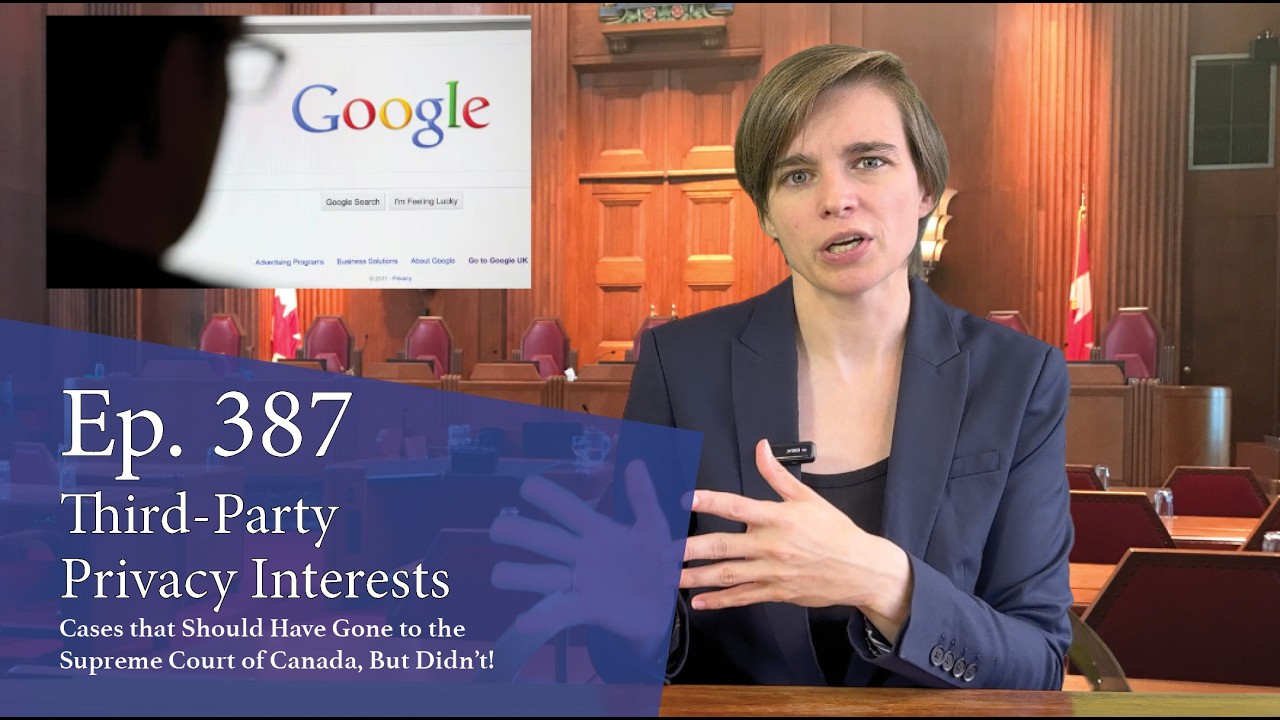
Welcome to “Cases That Should Have Gone to the Supreme Court of Canada, But Didn’t!”
In this episode, Kyla Lee from Acumen Law Corporation examines the tension between an accused person’s right to disclosure and the privacy interests of third parties whose personal information may be contained in digital evidence. The case involved forensic images of computers held by police that contained information relating not only to the accused, but also to third parties who had used the computers or communicated with their users. It raised an increasingly important question: when potentially relevant evidence contains another person’s private information, how should courts protect that privacy while preserving the accused’s right to make full answer and defence?
Key Points Discussed
– An accused person is generally entitled to disclosure of relevant evidence in the Crown’s possession
– The case involved forensic computer images containing information connected to third parties
– A third party sought standing to address disclosure and alleged violations of their privacy rights
– The case raised questions about how third-party privacy interests should be protected when records are already in police possession
– Existing procedures address some third-party records, but digital evidence can create more complicated situations
– Courts must balance privacy interests against an accused person’s right to make full answer and defence
– The growing volume of digital evidence makes this issue increasingly significant
Why This Case Matters
Phones, computers and online accounts can contain enormous amounts of personal information about people who have nothing to do with an alleged offence. Search histories, messages, call logs, photographs and other digital records may reveal information about numerous third parties when a device is forensically examined.
At the same time, an accused person’s ability to obtain relevant evidence is fundamental to a fair criminal trial. The challenge is determining how courts should protect the privacy of people who are not accused of anything without improperly restricting access to evidence necessary for a defence.
Missed Opportunity for a National Standard
The Supreme Court of Canada could have clarified:
– What standing third parties should have when their private information is contained in evidence held by police
– How courts should balance third-party privacy with an accused person’s right to make full answer and defence
– When redaction or other privacy protections are appropriate
– How existing third-party records procedures apply when records are already in police possession
– How these principles should apply to increasingly large and complex collections of digital evidence
Need for Clarity and Accountability
Digital evidence has changed the scale of the privacy problem. A single device can contain years of communications and information involving countless people who are not parties to a criminal proceeding.
Clear guidance could help courts protect legitimate privacy interests while ensuring that accused persons continue to receive the disclosure necessary for a fair trial. It could also provide third parties with greater certainty about what steps are available when their personal information becomes part of a criminal investigation.
Topics Covered
– Third-party privacy interests
– Disclosure in criminal cases
– Right to make full answer and defence
– Digital evidence
– Forensic computer imaging
– Third-party records