
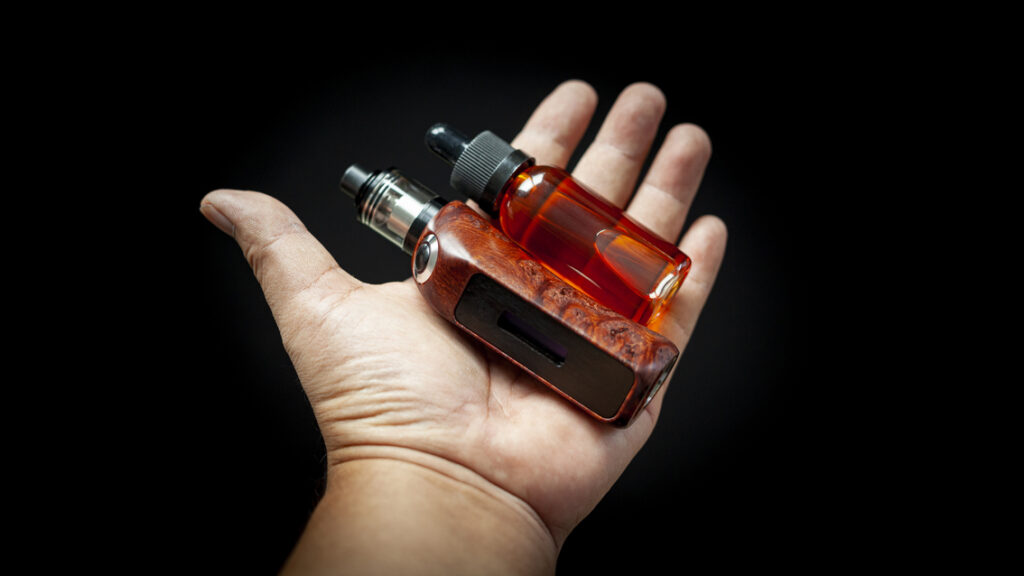
In British Columbia most DUIs are 90-day Immediate Roadside Prohibitions, which are issued based on a roadside breath test taken with a hand-held breathalyzer. In one of Kyla Lee’s recent TikToks she explained why you can get a DUI in BC if you use a vape. We thought we should tell you what the government doesn’t want people to know about vaping and DUIs.
The model of breathalyzer that we use in BC is an Alco-Sensor FST. It has no capacity to detect the source of the substances tested. In other words, it does not know whether it is measuring alcohol (or some similar substance) from the lungs combined with alcohol in the blood, or alcohol (or some similar substance) in the mouth which does not correlate with the blood. What that means is a substance in the mouth may contaminate the breath sample which brings us to the concerns about vaping and DUIs.
The relative novelty of vaping
Electronic cigarettes / e-cigarettes / vaping has been around for about 2 decades. At this point on a global scale, it’s more than a $20 billion per year industry and hundreds of millions of people vape. Because it grew so fast, regulators have been slow to recognize the need to regulate and the industry has pushed back against regulation, claiming it’s a way to wean oneself off cigarettes, and should be relatively free from regulation.
In addition, it’s a large industry with large and small players who introduce new e-liquids (vape juice) and change recipes with little government oversight. Although there are regulations in place, it’s questionable whether regulatory bodies check the ingredients of the vape juices. So what is in these vape juices?
If you read the ingredients, you will often see listed polypropylene glycol and ethanol. One study found ethanol in most of the vape juices tested despite ethanol not being listed in the ingredients.
Why does this matter in the context of breath testing for alcohol to screen drivers?
Ethanol is alcohol. What about polypropylene glycol? In liquid state and gaseous state, it has similar properties to ethanol and is used in certain food applications, to de-ice aircraft and the production of certain plastics. When alcohol or polypropylene glycol are blown into a breathalyser, it will indicate an alcohol concentration. So even if you didn’t drink, you can blow a Fail or some other reading on a breathalyzer, such as the FST, if you have been vaping.
Imagine getting a DUI with little or no alcohol in your body just because you vaped? This is a real, legitimate, live issue that the government is aware of but that they won’t discuss publicly.
Complicating factors in DUI breath testing
When it comes to vaping and DUIs, the police in Canada have not made public any studies they have undertaken. We know the RCMP does secret studies and keeps the results to themselves because we caught them. But so far we have not come across any RCMP studies, but it’s reasonable to assume they’ve done them. And they’re hiding the results. And what would the results reasonably be?
How dangerous is vaping when it comes to DUI investigations?
The police are taught that their breathalyzers will test “deep lung air” and that this is purportedly the best sample to extrapolate a blood-alcohol concentration. Unfortunately, this is mere speculation, outdated and unreliable but persistent because it’s published in all of the police training material.
The simple fact is there is no way to test if this is the source of the alcohol being tested. It’s a guess that seemed to make sense. But then a renowned scientist, Professor Michael Hlastala, turned his mind to some of these assumptions and posited a better explanation, that alcohol exchanges in the mucus of the upper airways. This makes more sense. It doesn’t change that much if we’re only dealing with alcohol that has been consumed, however. The simple fact is that blood drawn at the same time will closely reflect what comes from the breath in normal circumstances based on a somewhat reliable range.
Dr. Michael Hlastala and vaping
Professor Hlastala passed away in 2022. After years of research, in 2010 he wrote an article thoughtfully calling into question many of the assumptions we have about alcohol breath testing. His point about mucus in the lungs and upper airways raises a significant concern for vaping. If, in fact, alcohol is transferred to the mucus and then exhaled with breathing, then it’s reasonable to assume alcohol or other substances that are inhaled can also be trapped in the mucus and then later exhaled in the breath.
When you finally see the problem, it throws breath testing into question. Simply put, we know that there is ethanol (alcohol) and polypropylene glycol in vape juice. It’s reasonable to assume that this is pulled into the mouth and lungs. A 15-20 minute deprivation period is probably safe when it comes to any alcohol or polypropylene glycol in the mouth, but how long must one wait after vaping before we can safely say that these substances are cleared from the lungs and upper airways?
Where is the research?
We know that the RCMP know about this problem. People have been vaping for 20 years and a significant portion of the population vapes. We’ve been using our collection of material for the purpose of defending our clients to argue that it’s unreliable to breath test subjects who have recently vaped. The question now is where is the RCMP research?
The Alco-Sensor FST manual
The Superintendent of Motor Vehicles along with the RCMP and other municipal officers get together to decide what’s in the Alco-Sensor FST training manual for British Columbia users. We got a hold of some of their emails. It turns out that they don’t want to make changes to the manual because they are worried they’ll lose credibility before the court.
At the beginning of 2023 they produced a revised version of the manual. You know what’s not in it? Vaping.
We have huge concerns with the FST manual which we generally reserve to defend our clients, but as far as we’re concerned the decision to ignore the existence of vaping is professionally negligent. The manual simply doesn’t acknowledge any concerns about vaping and in fact, no words associated with vaping are anywhere in the manual. This oversight is tantamount to dishonestly and it undermines the credibility of the manual generally. It is a material concern omitted from the manual to hide the concern from the public and the courts.
Of course, as Aldous Huxley is oft quoted, “Facts do not cease to exist because they are ignored.” But the RCMP and the government seem perfectly content to ignore facts.
How long is safe after vaping?
And so, the question is, how long after vaping can you take a breathalyzer test that is not contaminated by vape juice? The simple fact is we don’t know. One can reasonably assume that less than 15 minutes is unsafe.
But it is entirely possible, based on the facts Hlastala identified, that alcohol or polypropylene glycol remain in the mucus in the lungs and upper airways for a longer period.
Simply put, with no alcohol in your blood, not having had a single drink, you may blow a positive reading on a breathalyser after vaping and the RCMP and the government are pretending this isn’t an issue. They are simply ignoring the facts in the hopes that they cease to exist. And 15 minutes may not be enough time to ensure all of the alcohol and polypropylene glycol have been expelled from the lungs.
Call us if you have a DUI driving case
We spend our time researching many of these issues right in our office. We’re also regularly in touch with the leading experts researching issues with respect to alcohol breath testing. If you have a DUI in BC or the Yukon, call our office and let’s see what we can do to help you.