
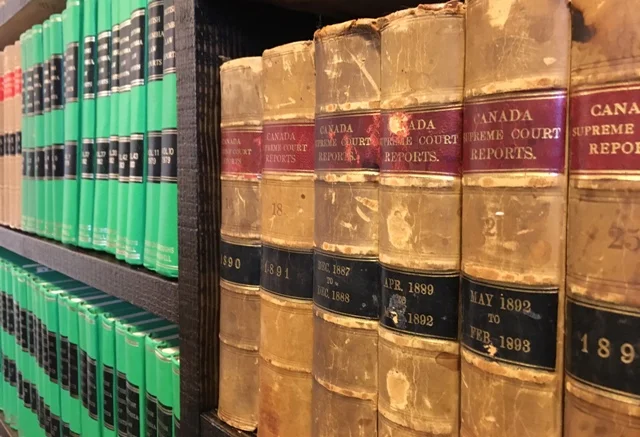
When we walked out of the Supreme Court of Canada in May we talked for a moment about how we got there. We became involved with the case after the BC Court of Appeal overturned the BC Supreme Court decision. So we came in late in the day and did the best we could with what we had. We wanted to make sure that we learned as much as we could from Wilson. And we learned a lot.
We didn’t trust the Government and we were right. When RoadSafetyBC received unsworn Report to Superintendent documents, they upheld the IRPs ignoring the spirit of the law and taking advantage of the ambiguity
Getting leave to the Supreme Court of Canada
The thing about the Supreme Court of Canada is that usually they only allow matters of national importance to come for a hearing before them, and then only if they want to say something about it. So a significant number of decisions from the Supreme Court of Canada reverse the decision of the lower court. Some observers have noticed that over 50% of all cases appealed from the BC Court of Appeal are overturned if granted leave to the Supreme Court of Canada.
In order to get your case to the Supreme Court of Canada, you need to seek leave to appeal. This is a complex process. Ultimately the Court renders a decision on the leave application. This is the first ruling you receive at the Supreme Court of Canada.
The first IRP decision at the Supreme Court of Canada
Strangely, the very first IRP case at the Supreme Court of Canada was the BC Government’s appeal of the Murray decision at the Court of Appeal. Murray dealt with an apparent deliberate ambiguity written into the second version of the IRP law.
We’ll appeal any decision made by the RoadSafetyBC tribunal if we think it’s wrong in law.
When the second version of the IRP law was introduced, the Justice Minister at the time said one of the changes they were making to improve the IRP law was to require the police to swear or affirm their evidence. Then when they introduced the legislation, it was clear to us that it was ambiguous so as to permit the police to provide an unsworn report.
We didn’t trust the Government and we were right. When RoadSafetyBC received unsworn Report to Superintendent documents, they upheld the IRPs ignoring the spirit of the law and taking advantage of the ambiguity. We predicted it here on our blog and that’s exactly what RoadSafetyBC did.
In Murray the lawyers who dealt with the case appealed their decision to BC Supreme Court and won. The Court held that the change to the law intended to address the failings identified in Sivia and the requirement to swear the report must stand. The BC Court of Appeal upheld the decision.
On a side note, it’s important to look at the behaviour of the BC Government for a moment. The Minister said that it was a requirement to swear the Report under the new law. Then when the law was in place, her Ministry did the opposite. Then when they were exposed, they spent your tax money appealing the court decisions. And of course the court decisions were merely holding the Ministry to the Minister’s word.
We were surprised when the BC Government sought leave to appeal the Murray decision to the Supreme Court of Canada. The lawyer handling the case was working with G. Jack Harris who has since passed away. At the time the lawyers from Murray were overwhelmed with other legal work and they didn’t have the resources to fight the case for a third time.
Kyla was in contact with G. Jack’s office throughout this time. Because we have so many resources committed to challenging IRPs, we decided to take it on. When it came time to write the submissions opposing the Government’s leave to appeal, Kyla put the bulk of it together and with G. Jack’s office we sent off our submissions.
The Supreme Court of Canada ruled in our favour. We won at the first IRP case at the Supreme Court of Canada.
Bringing us to Wilson
The Wilson case had some similarities to Murray. The BC Supreme Court judge found the law ambiguous and resolved the ambiguity in favour of the driver. The Government appealed.
Like Murray, we started talking to the lawyers for the driver long after the hearing and just in advance of the hearing at the BC Court of Appeal. And like Murray, we were in the position to take it further.
There was one major difference and that was that the facts in Wilson were subject to different interpretations. In Murray there was no dispute about the fact that the Report wasn’t sworn. Wilson could have had better facts to more clearly make out the argument.
Given the problems with Wilson, we were surprised that the Supreme Court of Canada granted Kyla’s leave to appeal. The Wilson leave was the second IRP case at the Supreme Court of Canada and again the Court sided with us. And then ruled for the Government at the hearing. Which leaves us to wonder why they allowed the leave application.
What we learned from Wilson
Given where we came into the case, there was nothing significant that we would change about how we handled it. Kyla did a fantastic job arguing before the Court. We wouldn’t change anything about how we dealt with it. What we learned from Wilson is that it all comes down to the facts.
When we deal with 90-day driving prohibition hearings, either Immediate Roadside Prohibitions or Administrative Driving Prohibitions, we try to ensure that we identify the facts we need thinking about how the Court would see the case if it is later appealed. We’re thinking less about the hearing before the RoadSafetyBC tribunal than we are about how the decision making process in that tribunal would appear to the Court on review.
We’ll appeal any decision made by the RoadSafetyBC tribunal if we think it’s wrong in law. What we learned from Wilson is that if we wish to change the law we need to ensure that the facts that support our position are all before the tribunal when we conduct the hearing.
Confirmation of our process
Usually we don’t need to appeal IRP review decisions to BC Supreme Court because we succeed a great deal. In July and August 2015 we succeeded in over 150 IRP reviews – more than 10 times as many as the next most successful law office disputing IRPs. So we’re doing some things very well. Nobody else employs our methods and so far nobody else comes close to our record of success.
Appeals of IRP decisons
The other thing we learned from Wilson is that we’ve got the stamina to take matters to the highest court in the land if necessary. We’ve done it once and we’ll do it again if we’ve got a case with the right facts.