
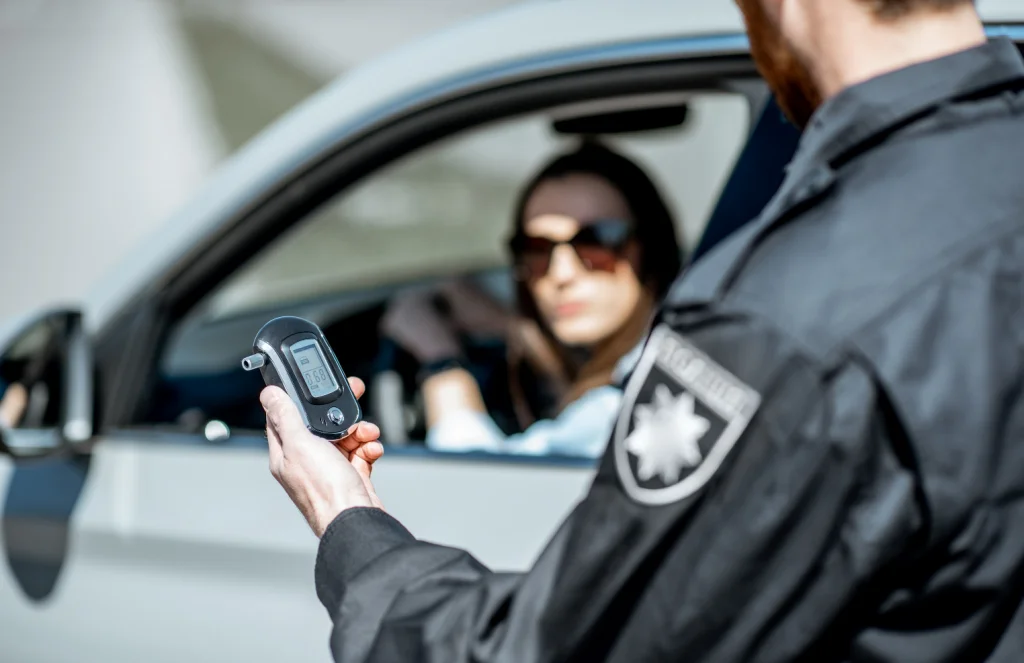
People are often concerned about who knows whether they have a DUI. Will your boss get notice? What about your parents or ex-spouse? Will your DUI end up on some gossip website? The question of who knows about your DUI depends a little bit on what type of DUI you’re facing. More on the types of DUIs in BC can be found here.
Some DUIs are relatively private. Some are full-on in the public view. A good place to start is Criminal DUI charges.
Who knows about your criminal impaired driving / DUI charge?
A criminal DUI impaired driving charge is quite rare in BC these days. When the government introduced 90-day Immediate Roadside Prohibitions in 2010, criminal DUIs dropped in number. The reason for this is the police usually issue an IRP instead of a criminal DUI.
Criminal DUIs are only supposed to be prosecuted now in BC if the driver has a previous DUI, there was an accident, or the driver is apparently so impaired as to make a roadside test unnecessary. In almost all other cases, a 90-day IRP is issued.
But when the driver is subject to a criminal DUI, it is a public record.
What happens is the driver is issued the court paperwork. At that point, it is assumed that a charge has been approved or is likely to come. The information may be available on the government’s court website. If it is not right away, it will be available on the published court list or the court website before the first court appearance.
At that point, it is a public document. Some reporters monitor the court website or sit in court all day to see who is charged with a criminal offence. Occasionally this gets on the news.
We know that Google may report appearances of accused people on the day of the court appearance but often it will drop from Google shortly thereafter when the daily court list changes.
Aside from that, it’s rare for a simple criminal DUI to make the news. Most of the time it’s not worthy of reporting, but there is nothing stopping it from gaining life on the internet.
Administrative DUIs
90-day Immediate Roadside Prohibitions and 90-day Administrative Driving Prohibitions (IRPs and ADPs) are the most common DUIs in BC. They are both considered “Administrative” when it comes to the law that applies to them. They are issued under the authority of the Superintendent of Motor Vehicles and the jurisdiction over the remains in their tribunal.
The interesting thing is that, because it remains in that tribunal, the Government, quite rightly in our view, keeps them private. They don’t report the people’s names. They don’t report the fact of the people having a hearing. They don’t publish the results of the hearing.
We have a lot of complaints about the IRP and ADP legal schemes, but this isn’t one of them. We think this is on balance the correct approach. But don’t assume they do this to be fair.
Think about this. The tribunal only considers the carefully choreographed evidence of the police which omits a huge amount of what takes place. They scrutinize the evidence of the driver to a degree that sometimes verges on silly. The forms are written by the same government office that adjudicates the cases. If the government loses, they need to pay for the towing and storage of the vehicles.
The government wrote their own rules and they change them as necessary to give the police an advantage.
This is not ideal but at the very least, in acknowledgment of the flawed system, they keep the fact of these prohibitions private. They know their system is not designed to be fair – it is designed to be easy for the police and the government. The one thing they do is reduce the stigma by not publishing people’s names.
That sounds nice, we know, but there is a contrary position. We think that if people in BC knew how this system works, they would be less likely to support it. Not publishing names allows them to avoid scrutiny because people don’t speak out when they feel they have been dealt with unjustly. The government’s system may be shameful (at least in our view) but not such that most people are willing to go public and reveal that they got caught up in it.
This is an issue of balancing personal shame against the government’s problematic system.
Criminal DUIs are public and Administrative are…
Criminal DUIs are available for the public to view and administrative are not unless you make the difficult decision to appeal to BC Supreme Court.
If you receive an IRP or ADP 90-day driving prohibition DUI, then you can dispute it (talk to an IRP lawyer first!) but if you lose the dispute review hearing at the RoadSafetyBC tribunal, then you may want to appeal to the court.
Whether you can successfully appeal to BC Supreme Court is another issue entirely. But if you appeal, there is one big catch: Your 90-day DUI then becomes a public matter.
To appeal a losing decision from the RoadSafetyBC tribunal, you need to draft and file court documents. Once it’s in court, it’s public.
You may be innocent and never get justice. You may have a great argument, yet your name gets publicly sullied. The court is a public arena where people seem to take pleasure in humiliating others. It is, strangely, a lot like the Roman arena of old. It’s all public and people take delight in your humiliation rather than coming to your defence.
Will they call my boss? My family?
The primary concern in this regard is the police. With some regularity, we see young police officers who decide to start telling people that a person received an IRP or ADP. They might tell parents or a spouse on the day of the incident.
It seems that they do this to try to humiliate the person they caught. It’s rare that the police will inform an employer, but if the vehicle the driver was driving is owned by the employer, then that’s different. Sometimes they will mention it casually to colleagues or friends and it becomes more publicly known as a result.
It seems this arises because of the police attitude toward people they stop in DUI cases. Some younger police officers seem to have a desire to humiliate the person.
Many police officers are taught that the public is generally bad, and they are part of a “thin blue line” protecting society from anarchy. This attitude is not healthy for our society in our view but it explains why more and more we see police behaving like they are the dispensers of justice.
Keeping it low key and minimizing the damage
A DUI of any sort might seem like the end of the world. It’s not. If you have a DUI, hold it together and give us a call.
We have been defending all types of BC DUIs for a few decades now. We only need three things to get started with your case. Of course, we don’t charge for a consultation over the phone. We’re the type of lawyers who help people just like you. Give us a call.