
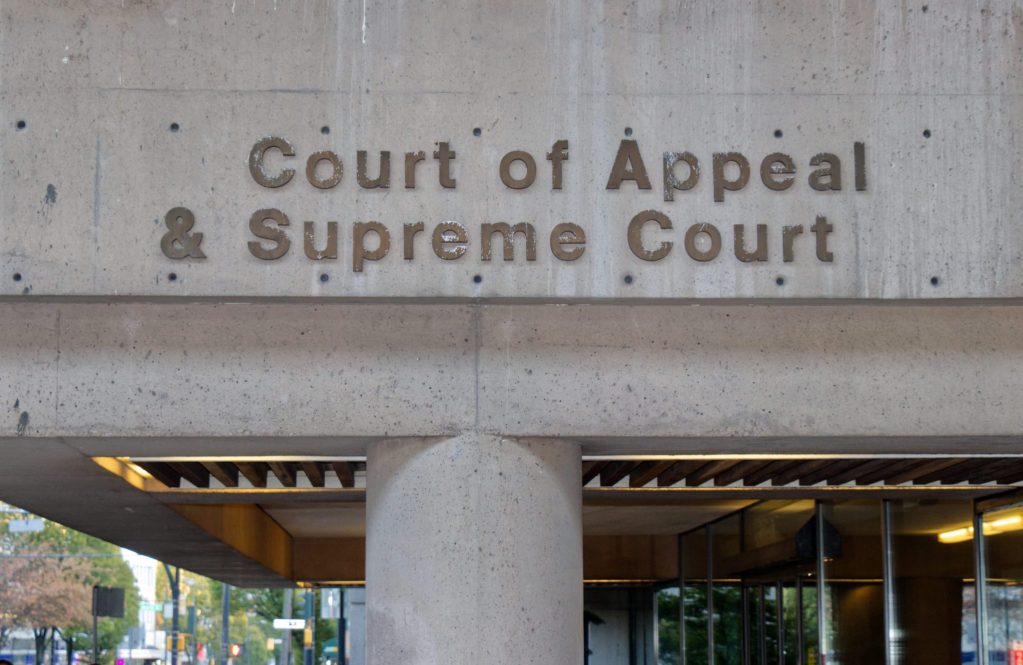
When a BC Court of Appeal panel led by Chief Justice Leonard Marchand recently reduced the life sentences of two teens convicted of the 2019 killing of South Surrey mechanic, the reaction was understandably painful. The victim’s family said they were shocked and disappointed, and no written judgment, however carefully reasoned, can ease the grief at the heart of a case like this.
But the decision matters, and it matters beyond one tragedy. The Court’s ruling reflects a fundamental principle of Canadian criminal law — a principle the Supreme Court of Canada reaffirmed in July 2025 and that now reshapes how young offenders are sentenced across British Columbia: adult sentences are the exception, not the rule, even for the most serious offences.
What the Youth Criminal Justice Act actually says
The Youth Criminal Justice Act (YCJA) governs how the law responds to people who commit offences before they turn 18. Its opening principles emphasize that young people are not simply small adults. Their decision-making, impulse control, and moral judgment are, by law, treated as developmentally different. The YCJA’s stated purposes include rehabilitation, reintegration into the community, and the use of measures proportionate to a young person’s diminished moral blameworthiness.
For most offences, a young person receives a youth sentence. They are typically shorter, more rehabilitative, and with a strong component of community supervision. For certain serious crimes, including first-degree murder, the Crown may apply for an adult sentence. But the YCJA presumes against it. The Crown carries the onus of showing that a youth sentence would not be long enough to hold the young person accountable.
What the trial judge did and why the Court of Appeal disagreed
In this case, the trial judge found the presumption displaced and imposed adult life sentences on the two young offenders. The BC Court of Appeal reviewed that analysis and concluded the judge had erred. Drawing on a July 2025 Supreme Court of Canada decision that tightened the framework for adult sentencing of youth convicted of first-degree murder, the Court of Appeal substituted the maximum youth sentence available under the YCJA: seven years, composed of four years in custody followed by three years of conditional supervision in the community.
The two young people will receive credit for time already served since their 2022 sentencing.
Why the 2025 Supreme Court decision changed the calculus
The 2025 SCC ruling, which now binds every sentencing judge in Canada, made clear that the Crown’s burden to displace the youth sentencing presumption is a heavy one. It is not enough to show that the crime was serious, or that the young person’s actions were adult-like in their planning or execution. The Crown must show, with evidence, that a youth sentence of sufficient length is genuinely not available to hold the young person accountable. Where that case is not made, the YCJA’s presumption stands.
The Court of Appeal applied that framework faithfully. It is not a statement that the offence was less grave. It is a statement that the law treats young offenders differently because, as a matter of both science and principle, they are different.
What this means for youth facing serious charges in BC
For families in British Columbia whose children are facing serious criminal allegations, this decision is a reminder that the sentencing stage is often where the most consequential work happens. Adult sentencing applications require specialized defence, detailed evidence of the young person’s development and rehabilitation prospects, and expert reports that address moral blameworthiness in a developmentally appropriate way. Parents should not assume that because a charge is serious, an adult sentence is inevitable. The law assumes the opposite.
For the broader public, the decision is harder to absorb because grief does not bend to legal principle. But the YCJA’s preference for rehabilitation is not a loophole. It is a considered policy choice backed by decades of evidence about what works and what does not when the criminal justice system intervenes in young lives.