
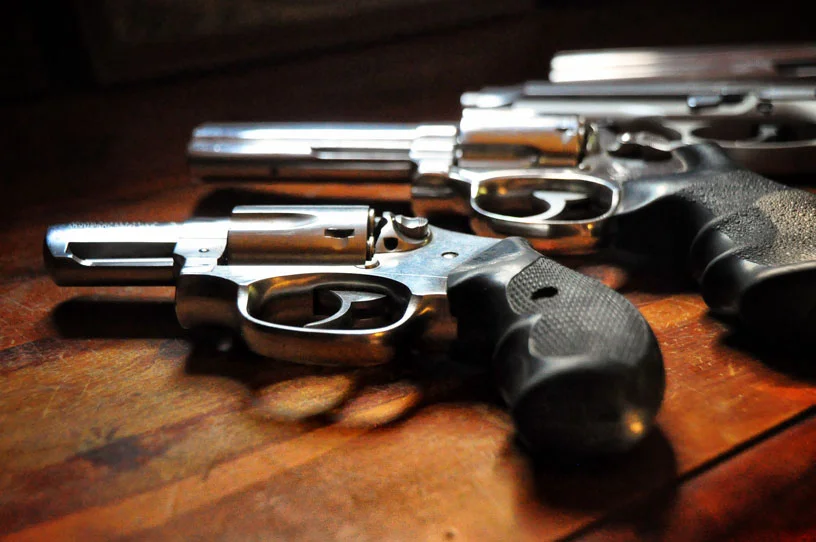
Once again the Canadian Government is changing firearms laws. It’s hard to think of any area of federal jurisdiction where we see more dramatic swings in policy and legislation than at the federal level when it comes to firearms. When the Liberals are in power, we see the tightening of firearms laws. The Liberals introduced the wildly unpopular long-gun registry after the 1989 École Polytechnique massacre. When Harper’s Conservatives were in power, we saw the abolition of the long-gun registry. The Conservatives also gave the final word in the classification of each type of firearm to Parliament.
The Liberals, now back in power are once again swinging the pendulum toward greater restrictions. The new legislation introduced March 20, 2018, creates a new de facto gun registry by requiring firearms dealers to keep records of each sale for 20 YEARS and returns the power to make decisions on firearms classifications to the RCMP.
And once again, this creates great uncertainty for gun owners.
The RCMP will be empowered to change the designation of a firearm you have in your possession to make it illegal to possess.
Great uncertainty for firearms owners
We have a number of concerns with the legislation, but the issue that poses the biggest problems for people who already possess firearms is the reclassification of firearms by the RCMP. Simply put, without notice the RCMP will be empowered to change the designation of a firearm you have in your possession to make it illegal to possess. You may have a lawful unrestricted weapon locked up in your closet. The RCMP could on their own accord re-designate the weapon as restricted or prohibited and you might find yourself committing a serious crime.
Current weapons classifications
In Canada we have three classifications of firearms with respect to the right or permission to possess the firearm under federal law. Whether a person may possess the weapon depends on what group the type of weapon has been assigned to, i.e. how the weapon is classified and of course, the particular license one holds to possess a firearm. Some firearms are off limits entirely. Others may be possessed pursuant to very stringent rules and conditions. In any event, all lawful firearms may only be possessed by a person with the correct license and moreover only when lawfully stored or lawfully used.
Non-restricted firearms
The RCMP are deliberately vague in their definitions of what constitutes a non-restricted firearm. On their website they indicate that non-restricted firearm are:
any rifle or shotgun that is neither restricted nor prohibited. Most common long guns are non-restricted, but there are exceptions.
So their official statement is “most” which is meaningless and of course they don’t tell you what counts as an exception. So in order to confirm whether a particular firearm is restricted, you need to start hunting through the Firearms Regulations to determine whether at some point the weapon in question was ever designated as restricted. Although you can call the RCMP to make enquiries, we don’t encourage this because you could get yourself in a heap of trouble.
In order to possess a non-restricted firearm, you must have a current (non-expired) Possession and Acquisition Licence (PAL).
Restricted firearms
When it comes to restricted firearms, the classification is made by the government either by definition in the legislation or by classification of the particular firearm. As of today Parliament may designate a firearm as restricted by defining it as such in the regulations. The new Liberal government legislation may grant this power to the RCMP which will allow the RCMP to define what firearms are restricted on their own initiative.
Although this may all seem vague and incomprehensible, there are a few things you can take from the provisions of the Criminal Code. For example, ALL handguns are either restricted or prohibited. Certain handguns cannot be possessed under any circumstances (see Prohibited weapons below) while others are restricted. If you have the correct status you can possess a restricted handgun. If the firearm is NOT a handgun AND it is capable of firing as semi-automatic AND the barrel is less than 470 mm in length, then it is likely to be restricted and it can only be possessed with the proper license designation. Of course, even if the firearm falls within that definition, it may be prohibited.
In the Criminal Code it defines a “restricted firearm” as:
- a) a handgun that is not a prohibited firearm,
- b) a firearm that
(i) is not a prohibited firearm,
(ii) has a barrel less than 470 mm in length, and
(iii) is capable of discharging centre-fire ammunition in a semi-automatic manner,
c) a firearm that is designed or adapted to be fired when reduced to a length of less than 660 mm by folding, telescoping or otherwise, or
d) a firearm of any other kind that is prescribed to be a restricted firearm
Again, if you’re sitting there looking at the firearm you just found in the basement and that you forgot you even had, and relying on these definitions and vague guidelines, you simply can’t be sure if the firearm in front of you is non-restricted, restricted or prohibited. Except that you can say, if it’s a pistol then it is certainly NOT a non-restricted firearm.
Once they’re in they may start searching around and it’s possible that you’ll walk out your front door in handcuffs.
Prohibited firearms
If you’re in the basement looking at that once forgotten firearm, you better hope that what you’ve got in your hand isn’t a prohibited firearm. If the firearm is an automatic weapon, it’s prohibited. If it’s a handgun with a barrel shorter than 105 mm in length, it’s prohibited. If it’s an automatic firearm that was altered permanently or otherwise to fire with one round per trigger pull, it is nevertheless prohibited.
If you possess a prohibited firearm, chances are good that you’re breaking the law and you need to get rid of that weapon in a manner that doesn’t land you in jail. There are a few exceptions, which are not tied to the classification of the firearm but rather to the status of the owner. For example, there are a dwindling few old people who may lawfully possess certain prohibited weapons, but if you’re not part of this group with this particular designation, you can never lawfully possess any firearm that is prohibited regardless of where you live in Canada.
Police firearms amnesty
From time to time, but not for many years now, local police have offered a period of amnesty for people who possessed firearms they shouldn’t or for people who had firearms that they simply wanted to be rid of, no questions asked. In principle the idea of government / police firearms amnesty is wonderful. The problem, of course, is that there are always questions, there is always risk, it can open further investigations and the actions of transporting the firearms may constitute an offence. Moreover, a promise to forgo prosecution made by one governmental organization may not restrict a different governmental organization from commencing an investigation and prosecution.
One thing is for certain and it’s worth repeating, never invite the police into your home. Once they’re in they may start searching around and it’s possible that you’ll walk out your front door in handcuffs.
Getting rid of guns – Acumen Law firearms amnesty
We deal with circumstances where our clients want to get rid of guns that they don’t want in their possession. The thing about having a lawyer deal with guns you don’t want or shouldn’t have is that the communication with the lawyer is privileged. In other words, the lawyer can’t be called as a witness for the police in any prosecution of you concerning the disposition of your guns. If you tell your partner, children or parents about the guns, they can be forced to come to court to testify against you if you’re ever charged with a firearms offence. Your best friend? Same thing. It’s risky if you possess firearms in a manner that may be an offence to even discuss the fact with anyone but a lawyer acting on your behalf.
So how do we get rid of your unwanted guns? First we determine whether the firearms in question are non-restricted, restricted or prohibited. Then we make some decisions with our clients on where the firearms can go. Prohibited firearms do not necessarily need to be marked for destruction, for example. Some historic firearms can be transferred to the ownership of a museum in certain cases. Some firearms can be made lawful with modifications. Others may be lawful to resell provided they are possessed by someone with the correct firearms license. In certain circumstances we can facilitate this because of the firearms license status of our lawyers.
If you have a firearm and you’re worried that you shouldn’t have it, give us a call. We’ll discuss your situation with you. We don’t need to know your name or where you live unless we get to the point where you instruct us to take steps to help you with this problem. We can protect you from prosecution and get rid of those guns for you. You just need to give us a call. We’ll discuss your firearms problem free of charge.
See more:
BC Government’s ICBC changes won’t save the insurer. Here’s why.
BC’s new pot laws means bad news for ‘N’ drivers
Are party hosts liable for guests who drink drive?
Distracted driving enforcement is often questionable
CBC and police exaggerate cellphone driving fatality numbers