
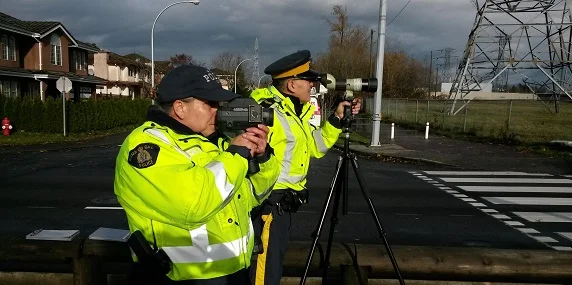
In law, sometimes you’ll see cases where it seems almost baffling that a driver was punished for what seems like a very minor offence, or a mistaken case of a crime altogether. In our view, nowhere is this more evident than in the enforcement of BC’s legislation prohibiting the use of electronic devices while driving.
The latest available traffic citation figures from ICBC suggest that up to 46,000 drivers in 2015 were penalized for allegedly using an electronic device behind the wheel. The vast majority just paid up, and many undoubtedly ended up serving lengthy driving prohibitions lasting months as a result.[pullquote]The vast majority of so-called “distracted driving” fatalities were actually due to other reasons of distraction, and not the use of an electronic device.[/pullquote]
Most of these drivers weren’t even in moving traffic. They were often stopped at a red light or other places where momentarily picking up a phone is unlikely to have an effect on public safety.
The data supports this. Thanks to statistics from the BC Coroners Service, we now know that very few fatal traffic accidents actually had a cellphone-driving component at all. And in fact, the vast majority of so-called “distracted driving” fatalities were actually due to other reasons of distraction, and not the use of an electronic device.
Since the legislation was implemented in 2010, there have been a number of examples where BC drivers were, in our view, unfairly penalized. As lawyers, we see them all the time when clients come to us looking to examine their options after being accused of distracted driving.
In some cases, these allegations have even cost otherwise law-abiding drivers their jobs. Here are just a few examples of cases we believe should serve as examples of how this ban on cellphone driving has gone too far.
Fined for having a cell phone in the cupholder
This is perhaps one of the more silly cases, and is a good example of just how overzealous law enforcement can be when it comes to cracking down on cell phone driving. The case involved a Novice driver who was stopped at a roadblock in Burnaby in 2014.
As far as the officer could tell, the phone wasn’t lit up, the driver wasn’t looking at the phone and the phone was not in use.
When the officer approached, the officer noticed the driver had his cellphone plugged in for charging in his cupholder. That’s it.
As far as the officer could tell, the phone wasn’t lit up, the driver wasn’t looking at the phone and the phone was not in use.
In spite of the facts, the driver was ticketed for cell phone driving offence, which he then had to dispute in court. At least in this case, we’re happy to say he was successful, though perhaps only due to his diligence in challenging the unfair allegation.
Fined for charging a cellphone at a red light
This case involved a driver stopped at a red light. Unfortunately for him, there was a police officer waiting in the intersection specifically looking for drivers on their phones.
There was no evidence that this driver was making a call, texting, using the phone for music or using any of the communications functions of the phone. But he did have it in his hand — apparently, he wanted to plug it in for charging since he was stopped at a light.
Unfortunately, that was good enough for the officer to determine he had violated the prohibition on using electronic devices while driving. Even though this driver was fully stopped, he was still found guilty of the offence.
The very fact that an officer was waiting at an intersection to look for drivers who touch their phones while stopped for a light is disturbing. If public safety was really the aim, why would police focus on cellphone use while a vehicle is not in motion?
Driver demonstrates officers may be mistaking wallet for phone, but is still convicted
This driver maintains he simply had his wallet in his hand when a police officer, using a high-powered optical scope, spotted him and pulled him over for allegedly using a cellphone. He was ticketed for using a cellphone while driving.
Upset, the driver decided to drive past the location again, placing his wallet to his face and pretending to talk to it. He was pulled over again, by another officer using the same optical scope. The driver then showed the officer the object in his hand was in fact a wallet, and tried to explain that the first officer had made the same mistake. This second officer was satisfied that the object he thought was a cellphone was actually a wallet.
The driver took this information to court with him. He also brought his cellphone records to show that no calls were recorded at the time of the alleged offence. The court found him guilty anyway, saying that it’s just not logical for a driver to hold a wallet to their ear, and that he hears drivers using this excuse all the time.
Even though another officer admitted the wallet looked like a cellphone (the second officer pulled over the guy mistaking the wallet for it), somehow, it wasn’t good enough.
In our view, beyond a reasonable doubt means just that. You have to be sure. It’s inherently unfair to penalize drivers for being illogical, and it’s unfair to be skeptical just because the same argument is often made by those accused of using cellphones while driving.
Public transit operator suspended for calling supervisor while pulled over
This transit operator pulled over to call his supervisor to report a concern about apparently unsafe decommissioned buses. While he was pulled over, another driver pulled up behind him and honked. The bus driver, still on the phone, moved forward to pull over even further on the side of the road.
When his community shuttle moved, however, the vehicle’s internal camera was triggered and began recording. At the end of an investigation, the driver was given three days’ suspension.
In this case, we have a driver who did his best to remain out of traffic while speaking on the phone with his supervisor about a serious safety issue. From what we can tell, the driver did not intend to break the law, did not pose a safety risk, and the whole movement of his vehicle consisted of moving even further to the side of the road from where he was already pulled over.
The idea that someone should be penalized for this is senseless and, in our view, doesn’t help enhance public safety in any way.
Truck driver fired after someone sees him on the phone
This driver had previous cellphone driving convictions when he began work, and was the subject of some complaints from the public and a customer about the driver about cellphone use while driving. After a few of these reports, the truck driver was fired.
These last two cases demonstrate that this government messaging about the dangers of using a cellphone while driving has had additional consequences — that of employers taking matters into their own hands even without proof beyond reasonable doubt that someone was on a cellphone.
It seems that in the current state of affairs, little more than a suspicion of using a cellphone while driving is good enough. Police often are not positive that the object in a driver’s hand is a cellphone, but are still likely to allege a violation despite their uncertainty. We have cases of employers dismissing employees due to a few complaints, none of which are proven beyond reasonable doubt.
While the government has been successful in convincing law enforcement and the public alike that using cellphones while driving is an abhorrent offence, cases such as these only go further to suggest that the legislation has gone too far.
The legislation is much too broad. A stopped vehicle is not a potential danger. Drivers thus penalized are essentially being railroaded in order to make government appear to be tackling what is a more complex issue.