

You’re at a bar and someone picks a fight with you. Things start getting nasty. What first began as a verbal barrage quickly turns into shirt-grabbing and shoving. Do you shove back? Are you allowed to take a swing? Is your responsibility to run away? At what point can you defend yourself against this aggression, and to what extent can you defend yourself? If the attacker was bigger, can you pick up that nearby pool cue as a weapon? Canada’s self-defence laws have been traditionally vague on precise answers to any of these questions.
Here’s how it works. If, in the course of defending yourself, you assault, injure, maim or worse, fatally wound the attacker, you may face substantial charges, from assault all the way up to murder. The question for the court is whether your actions met the threshold for self-defence, and if not, whether you’re guilty of a crime.
Defending yourself in a bar fight. Is it OK to hit a violent drunk?
Let’s use the bar fight example. You’re out at a pub, celebrating a friend’s birthday and through the course of the night, you exchange one too many drunken words with your fellow bar patrons. Now someone is upset over something you said. They want to fight. At first, you brush them off, perhaps to shoot a game of pool instead with some other people. But the aggressor is persistent. Voices are raised, and soon, the barkeeper is telling everyone involved to get out.
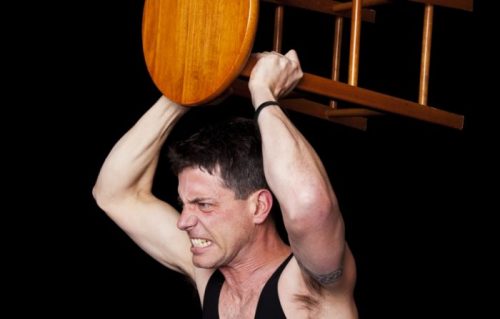
As soon as you exit the bar, the aggressor is in your face. He really wants to fight – you’re not even entirely sure what triggered him. He’s a bigger and thicker guy. Tough looking, like he’s done this before. You start getting shoved back, taking a few steps backward, but he’s still coming. You need to slow him down. You throw an elbow, then a punch, then another. To your surprise, the aggressor tumbles back, falls on the ground, still breathing and making a choking sound, but motionless. You later learn the man died in hospital, as a result of the trauma from when his head hit the ground.
The police arrive. You’re arrested, and soon discover you’ve been charged with manslaughter. In this case, should you be guilty of the offence or are you protected under Canada’s self-defence laws? Did you go too far in retaliating to what were open-fisted shoves from a bigger person? Should you have tried to run? What would someone else do in a situation like this?
This bar fight was a real case where someone died. It was decided in Saskatchewan
This was a real event that involved a young man in his 20s from Moose Jaw, Saskatchewan. The man was acquitted after a careful review of Canada’s self-defence laws by the presiding judge in the Court of Queen’s Bench, Saskatchewan’s superior court. The judge determined that his case met the threshold required for Canada’s self-defence laws s. 34(1) of the Criminal Code, which states:
a) the accused must have been unlawfully assaulted by the victim;
b) the accused must not have provoked the unlawful assault by the victim;
c) the force used by the accused was not intended to cause death or grievous bodily harm to the victim; and
d) the force used by the accused was no more than necessary to enable the accused to defend him or herself
Under Canada’s traditional self-defence laws, to qualify for a self-defence claim, someone accused of a crime must meet all the thresholds under a specific self-defence section. In this case, the judge determined that the young man met all the conditions of s. 34(1), and as a result, acquitted him of the manslaughter charge.
First, the judge determined the man was unlawfully assaulted, since the aggressor intentionally applied force to him without his consent.
Secondly, the court had to figure out whether the young man played a part in provoking the fight. Testimony from witnesses found that it was the other man who said words such as, “fight me, fight me” before pushing the young man in the chest. There was no evidence of previous provocation by the accused either. So the judge determined the accused didn’t provoke the fight.
Third. Did the accused mean to cause death or grievous harm? This is about the state of mind, whether you were defending yourself to protect yourself from harm, or whether your intention was to harm the other person. The court accepted evidence that the young man, being the smaller fighter, thought he didn’t have a chance and meant to “slow” the heavier fighter down by elbowing and punching. The court also accepted that the young man couldn’t turn away, since he was worried about exposing his back to the aggressor. He also didn’t want to leave his friends at the bar. Witnesses also said his elbow and punches were fast, almost like “glancing blows” and not attacks with the “full force of his body weight.” As for intent? The young man said he wanted to discourage the heavier man from fighting by giving him a cut lip or bloody nose. The judge accepted the young man didn’t mean to cause death or grievous harm.
Lastly, did the young man use more force than necessary? The judge accounted for factors such as the speed and apparent strength behind the strikes, how big the other man was, how far apart the two fighters were, and whether the young man should have used strikes to retaliate against pushes. The judge accepted that the young man used a proportionate amount of force.
What if I did provoke an assault? Can Canada’s self-defence laws still help?
Sure can. This time we deal with s. 35 of the Criminal Code, created specifically to deal with cases where you started the fight, but then found yourself in danger of serious injury or death. This can come up when an accused tries to rob someone, but then the victim resists with such great force that the aggressor is now fighting for his or her life. Those who rely on s. 35, however, are not often successful, especially since the condition of this defence is that an accused must have provoked an attack on himself, or committed the initial assault in the first place, before then defending themselves from the reaction. Those who rely on a s. 35 defence must fulfill these thresholds:
a) the belief that the person assaulted or provoked would cause death or grievous bodily harm in response
b) force had to be used to prevent the accused from death or grievous bodily harm
c) the initial assault by the accused wasn’t meant to cause death or grievous bodily harm
d) the accused feasibly retreated from conflict before needing to defend him or herself
In one Ontario case, a teen took out a knife in his attempt to rob a man of an iPod on a bus in Ottawa. The victim refused and grabbed for the knife. The teen robber thought he himself would get killed if he let go, so the pair struggled and at some point, the knife plunged into the victim’s heart. Unfortunately for the teen, the judge at trial determined he did not meet the thresholds of a s. 35 defence since he made no attempt to retreat from the fight. The teen was found guilty of first-degree murder and sentenced as an adult to life imprisonment. In a sad ironic twist, the teen robber was killed in a prison fight just seven years later.
Yes, you can. S. 37 of the Criminal Code is a confusing section of the Code that’s somewhat redundant. Its intention is to allow someone to use force to defend “anyone under his protection” or “himself” from assault, as long as it’s a proportionate amount of force used. This section has been dissected frequently by judges, with one view being that it covers someone who uses force in self-defence with the intention of causing death or bodily harm.
One successful application of this defence happened in Edmonton. It involved the case of a driver who, after shouting a profanity at police from his car, then tried to run over an officer who ran up to his passenger-side window. The accused’s version was that he was waiting at a traffic light just after shouting the profanity. He didn’t hear the officer speak, and felt threatened when an arm of someone with black clothing appeared at his passenger-side door. The driver said his intention was to move the vehicle into another lane so he could escape. The officer, however, said he almost slipped under the vehicle since the driver turned towards him, and had to quickly move his feel to stop himself from falling.
The judge found that the driver did not mean to cause harm to the officer. And since the officer didn’t fall over, no actual grievous bodily harm was caused. As for whether the amount of force used was proportionate, the judge found the driver was not reckless in the sense that he was trying to escape in a panic.
As a result, the judge found the driver had met the thresholds for defences in both s. 34 and s. 37. Specifically for s. 37, the court found that “as worded, the section would appear to allow some limited pre-emptive actions” if its elements are met. In this case, the officer had merely run up to the driver’s window – it was the driver’s mistake that he was being assaulted – and so his act of self-defence was one made under mistake, and a pre-emptive action, too.
The traditional version of Canada’s self-defence laws might not apply anymore
In 2013, Canada implemented the Citizen’s Arrest and Self-defence Act, which did away with all those sections previously explained and replaced them with something similar. Exactly how this will work in real-world situations is still not fully known, though the intention of Parliament is not to change how self-defence cases are decided, but to make the language more clear.
It was generally agreed that the old way of doing things was confusing. Some judges have called the previous s. 34 to s. 37 provisions “internally inconsistent” and that attempting to interpret the provisions would result in “some undesirable or illogical results.” Another judge called the previous laws an “utter state of confusion.” Yet another described their attempts at instructing the jury on self-defence law as a “source of bewilderment and confusion” to jurors. Specifically, the judiciary did not like how each self-defence section required highly specific circumstances, sometimes overlapped, and was confusing even for those whose jobs are to understand the law. This confusion meant that judges would frequently make mistakes during jury instructions, resulting in successful appeals and a more drawn-out court process for everyone involved.
What’s has changed with Canada’s self-defence laws?
The old rules, as described above, were really about defining the circumstances where someone claimed self-defence, and figuring out whether they met the requirements or “thresholds” to qualify for that section of self-defence.
For example, s. 34 allowed someone to defend themselves against an unprovoked attack. S. 35 covered those who provoked an attack without justification, but then needed to defend against the response from the initial victim. S. 37 covers people who were defending others under their protection, but also somewhat makes s. 34 and s. 35 redundent. S. 36 is a definition of what “provocation” is.
The new version of Canada’s self-defence laws did away with all that and replaced it all with a single section, the new s. 34, which states:
(1) A person is not guilty of an offence if
(a) they believe on reasonable grounds that force is being used against them or another person or that a threat of force is being made against them or another person;
(b) the act that constitutes the offence is committed for the purpose of defending or protecting themselves or the other person from that use or threat of force; and
(c) the act committed is reasonable in the circumstances.
(2) In determining whether the act committed is reasonable in the circumstances the court shall consider the relevant circumstances of the person, the other parties and the act, including, but not limited to, the following factors:
(a) the nature of the force or threat;
(b) the extent to which the use of force was imminent and whether there were other means available to respond to the potential use of force;
(c) the person’s role in the incident;
(d) whether any party to the incident used to threatened to use a weapon;
(e) the size, age, gender and physical capabilities of the parties to the incident;
(f) the nature, duration and history of any relationship between the parties to the incident, including any prior use or threat of force and the nature of that force or threat;
(f.1) any history of interaction or communication between the parties prior to the incident;
(g) the nature and proportionality of the person’s response to the use or threat of force; and
(h) whether the act committed was in response to a use or threat of force that the person knew was lawful.
How the post-2013 Canada’s self-defence laws affect the courts

While the intention of the change was to simply consolidate the previous Canadian self-defence laws, it actually created new factors that could potentially change how future cases will be decided. In the past, the Crown would have to prove that someone accused of attacking another person did not meet the “threshold” of self-defence by fulfilling a number of requirements, such as a duty to attempt to retreat, which is specifically a threshold in s. 35.
The new factors are not requirements you must meet to qualify for defence, but are rather considerations about the circumstances of an incident that a court should assess. For example, now, the legislation directs the judiciary to consider someone’s “role” in an incident, whether someone threatened to use a weapon, or physical attributes like an attacker’s gender, age, or physical size. These were things the court took into account in previous decisions, but were not technically requirements that needed to be met or even considered.
Do the changes benefit those claiming self-defence?
The changes seemed to encompass a lot. Almost immediately, judges began dissecting the new legislation to figure out whether the changes were actually just “procedural,” or if they substantively affected how self-defence cases may be decided in the future. In 2015, the Ontario Court of Appeal decided that despite Parliament’s intentions, the amendment did affect substantive rights. One Ontario Superior Court Justice, when quoted by the BC Court of Appeal in 2015, was paraphrased to say this:
“…MacDonnell J. stated in Pandurevic that ‘the amendments will overwhelmingly be beneficial to those who claim to have acted in self defence’: para. 43. By ‘beneficial’, he can only have meant there will be cases in which a claim of self-defence that would have failed under the former provisions (resulting in a conviction) will succeed under the new provisions (resulting in an acquittal).”
It boils down to this: whereas before, the Crown would have to prove that the accused didn’t meet “thresholds” of self-defence, now the Crown has to prove that the actions taken by the accused to defend themselves were not “reasonable in the circumstances,” which would likely mean a broader range of defences available to the accused.
MacDonnell’s opinion is one that generally, other judges have agreed with. With some exceptions. Fisher, J., one of the first judges to consider the amended Canadian self-defence laws, pointed out that there were some defences available in the old regime that have now been removed.
From Fisher, J. in R. v. Evans:
“For example, an accused who used excessive force may have been able to rely on self-defence under the old s.34(2) but now the nature and proportionality of an accused’s response to the use or threat of force is a factor to be considered in all cases. Similarly, there was no duty to retreat under the old ss. 34 or 37 and now the extent to which the use of force was imminent and whether there were other means available to respond to the potential use of force is a factor as well.”
When these changes were first implemented, there were a lot of applications from those already in the court system when the changes came in effect, hoping to be tried under the new legislation. However, the current prevailing opinion is that these changes only apply to cases that occurred after March 11, 2013.
How does the law determine whether self-defence was reasonable?

To answer this question, we go back to the intention of the law as it was described when first introduced in December 2011. Robert Goguen, then Parliamentary Secretary to the Minister of Justice for the Conservative government at the time, provided a plain-language explanation on what might be, and what might not be, permitted under the new law. His descriptions are below:
A drunken neighbour wandering into a wrong house:
“…the homeowner may well be reasonable in perceiving a threat to himself and his family, even though there was in actual fact no threat at all, just a tired, drunken neighbour in the wrong house.
The law must still allow people to use defensive force where they make a mistake that any reasonable person could make. Unreasonable mistakes, however, are not permitted.”
Revenge under the guise of defence:
“If a person acts for the purpose of defending himself or herself or another, the defence is available. Defensive force cannot be available as a disguise for what is actually revenge. Conduct for any purpose other than protection falls outside the bounds of defensive action…”
Whether actions were reasonable:
“The question is: would any reasonable person in the defender’s situation have done what the defender did? There is not just one reasonable response for every situation. The important thing to know is that the defender behaved in a way that the judge considers reasonable in those particular circumstances.”
The list of factors surrounding the incident:
“For instance, was the attacker threatening to break a finger or to kill? Another factor is whether weapons were present. Another factor is the relative physical abilities of the parties, such as their age, size and gender. Naturally, a petite, elderly woman and a fit, young man may have different options available to respond to the same threat. Another factor is whether there were any pre-existing relationships between the parties, including any history of violence and abuse.”
Going beyond using force against a person in defence:
“Bill C-26 (the new law) broadens the defence in order to recognize the fact that in emergency situations, a person might use other forms of behaviour in self-defence such as breaking and entering a building to seek refuge or even stealing a car in order to flee.”
What we think about the new version of Canada’s self-defence laws
Even as the legislation was proceeding through Parliament, a number of concerns were raised by other Members of Parliament. One concern had to do with removing the terms “provocation” and “unlawful assault” in the legislation in favour of the term “force,” which could potentially have a broader definition than what was previously available.
Another concern was the feeling that the changes didn’t go far enough to address the unique circumstances of those in abusive domestic relationships, where an abused victim’s perception of the threat caused by their spouse may be more intense than an average person would perceive it to be.
As for our thoughts? The unfortunate thing is that any time Parliament enacts potentially sweeping changes to legislation, how these changes play out in court often takes a long time to decide. The vast majority of cases where someone claims to have acted in self-defence have highly specific circumstances. Cases may have similarities but are rarely so alike that what happened in one case can definitely apply for another. Self-defence, unfortunately, is such an individualized inquiry that we may never know the full extent of how these changes affect people who claim self-defence.
If you have additional concerns about how Canada’s self-defence laws may affect your case, give us a call. We are criminal defence lawyers and understanding these changes to the law is our job. Let us take a look at your case today. 604-685-8889.
“…a) the accused must have been unlawfully assaulted by the victim;
b) the accused must not have provoked the unlawful assault by the victim;
c) the force used by the accused was not intended to cause death or grievous bodily harm to the victim; and
d) the force used by the accused was no more than necessary to enable the accused to defend him or herself…”
In the law the aggressor is called “the victim”???
That is plain BS. The victim is the person who was assaulted, regardless that they managed to successfully defend themselves.
Furthermore, the force used must be the minimum required to end he assault. Sometimes this IS intentionally lethal force. For example, your crazed attacker is running at you with a machete screaming that he will chop your head off.
Two shots COM is perfectly reasonable under the circumstances. No one can deny that putting two shots though a guys heart valves is in any way intended to be anything other than rapidly lethal.
As always it is the assailant who decides by his actions what level of force is required to stop him. The victim simply reacts to that decision by delivering he force the assailant has chosen.
Once again the laws get it wrong, even if they rendered the correct verdict.
The law is flawed in so many respects. Sadly, this means it will need to be sorted out by judges when these cases hit the courts. Badly drafted laws cost us all money because they need to be litigated over and over.
It would of great use to see an article that discusses how self defence laws affect people who work in private security.
Noted!
One of the problems for people defending themselves is that regardless of how ambiguous or clear the law might be, some police officers and many crown attorneys don’t appear to believe in a citizen’s right to self-defense. They will fail to exercise discretion and simply charge the person, letting the courts decide. I know of a number of cases where this happened and where the judges threw the case out, sometimes early on in the court proceedings. To the crown attorneys the loss in court didn’t appear to matter though. What mattered was putting the accused through the stressful and expensive process, which in turn sends the message to the public that exercising our rights to defend ourselves will come at a cost. The punishment is the prosecution itself.
Lawyers on both sides are required to zealously advocate for their clients. The problem is where up against the massive machine which is the state apparatus: police, Crown Counsel with relatively unlimited resources. In addiction, they hold the evidence we need to defend out clients. So it starts unfair and the only way to try and put things right is to mount the right defence. As a DIY this is an impossibility. If you luck out and succeed, it’s merely a matter of luck.
We never count on luck. You can’t count on luck. This world is striking you down every day. You need to push back by mounting a defence.
You know why?
Because it’s a conflict of interest between the police officer and the citizen.
In a nutshell, it is police officers’ job to defend the safety of their citizens; at least that is some of the police officers’ see as.
And if you are not using them, it’s a conflict of interest… If everybody is doing that, then less police officers would be needed, and it would a decrease in demand within the police force.
That is tantamount to getting them fired or laying them off…
And you know why crown attorneys also don’t believe in a citizen’s right to self-defense?
its because in the case if “Diversion”, “Restorative Justice” or “Alternative Measures” qualifies
They are able to utilize as a Workforce for the benefit of the community in the form of service.
Can someone please challenge me what I just said above is not the case?
And provide reasons and evidential facts.
Thanks
Canada’s self defense laws don’t just need to change they have to change. I am retired over 60 and have been threatened (I will kill you) insulted all the time gestured to be kicked and a large white dog asked to attack (twice) 100% of this at my own home both front of house and alley . RCMP ABSOLUTELY AID AND ABET THESE ACTIONS . (IN LEGAL TERMS IT’S THE RABBIT IN THE HAT THAT WOULD EASILY PROVE IT ALL ) .I try to grin and bear the abuse and not react knowing full well the gangstalking intention is to get me to kill myself or commit a crime …it’s hard living humiliation but the fact that I am old and don’t matter any more makes it a little more tolerable because I don’t or won’t please too many people anyway . However I still have family and children to care for so I have to protect them some way ; life limb and property .
So let me get this right. If I, a 14 year old were to be attacked by multiple people older than me behind a store complex, could I use a knife to defend myself if I believed they threatened to cause serious harm? Supposing they were actively harming me, could I use lethal force to escape?
This is Canada where the laws only allow you to be a victim. Certain types of knives are legal in this country but carrying them with you may (likely will) get you arrested. Sounds to me that a knife would be legal for defence in your home but if you’re attacked while you’re away from home, you’d be arrested. Pretty stupid since the possibility of being attacked in public places is just as likely as at home. The whole idea of personal defence in Canada is a joke. All we are really left with is trying our best to avoid bad situations. Personally, if I’m attacked I will defend myself by all means necessary, laws be dammed!
WE have god given rights to self defence. I don’t care what these laws say. If a perpetrator is injured or killed by his actions in an attempt to rob or fight someone, they are 100% at fault and accept the consequences of their actions. Governments grant privilege, god grants inalienable rights to life, liberty and security. We swear an oath on the bible do we not? Our societies are deeply rooted in biblical law and subsequently man made law which serves to augment biblical law.
One of the biggest problems with society and these man made laws is the fact we go through 12-13 years of school, and they don’t teach us jack-all about law, which dictates and governs the rest of our lives.
“(2) In determining whether the act committed is reasonable in the circumstances the court shall consider the relevant circumstances of the person, the other parties and the act, including, but not limited to, the following factors:
(e) the size, age, gender and physical capabilities of the parties to the incident”
The factors of size, age and physical capabilities are acceptable circumstances to consider, but gender is irrelevant. For instance, if a man defends himself against a woman who is younger, stronger, faster, taller, bigger, and more skilled at fighting than him, how can her gender be a mitigating factor to any of that? To use it as one would be discrimination.
And if someone argues, “well, what if she doesn’t have any of those advantages over him?”. Then you would still have to argue that her gender somehow diminished her ability to act in this situation, (i.e. she’s physically weaker because of it). That’s already covered under ‘physical capabilities’.
Gender as a distinct factor is discriminatory. It’s equivalent to saying “she’s a woman and you’re a man, which means you both can be treated differently simply due to that.”