
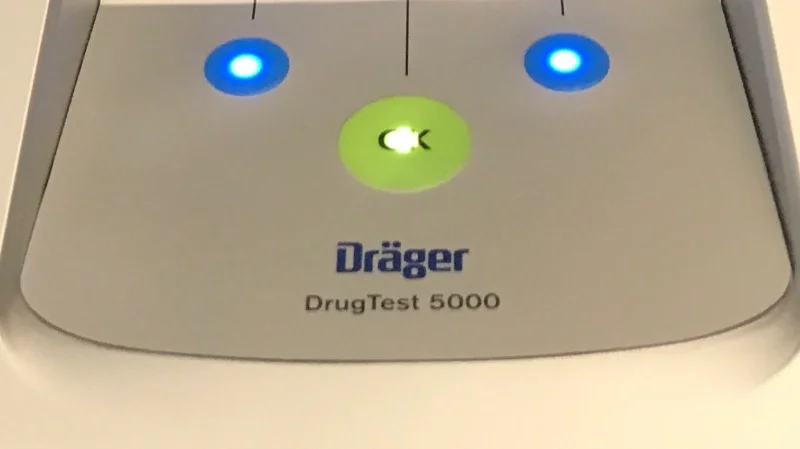
Back in May, Acumen Law Corporation made headlines after we facilitated tests of the Dräger DrugTest 5000. The device was introduced as the roadside device police would use to detect drug-impaired drivers following the decriminalization of marijuana.
We believe it is in the public interest to know if the device provides accurate and reliable results. Only transparency can ensure trust in the device and if there are any concerns whatsoever, people deserve to know about them. It’s why we invited the media to our offices when we managed to get our hands on a Dräger DrugTest 5000 last year.
Unfortunately, neither the government nor the police share our feelings about transparency. In fact, getting your hands on one of the government-approved devices in Canada is next to impossible. Nevertheless, we managed to do it.
After showing the media our Dräger DrugTest 5000, we invited a group of experts to participate in a collaborative independent assessment of the device. The group consisted of forensic criminalist Jan Semenoff, Toronto lawyer Stephen Biss, Suzanne Perry, of Salient Analytical Services Canada and Karly Richmond, Pharm.D., a student from the University of Saskatchewan. Dr. Fran Gengo, (Pharm.D.) of the Dent Neurologic Institute, helped design the experiment.
Access to any forensic technology used by the police or state-run crime labs is extremely limited and most devices only become available once the technology is obsolete. So they jumped at the chance to test out the Dräger DrugTest 5000.
They conducted tests on 20 different subjects over the course of two days to examine the performance characteristics of the device. Some of the participants were daily users of cannabis. Some were occasional users. They divided them into two groups. The first group was dosed with a marijuana cigarette while the second group was not.
Each participant underwent a Drug Recognition Evaluation before dosing and another one hour after dosing and recorded their scores each time. Following the DRE assessment, the subjects’ saliva and urine were tested on the Dräger DrugTest 5000.
Some of the early findings were reported by various media outlets, including poppy seeds generating a false-positive. Jan Semenoff is going to publish the full results of the assessment in Counterpoint The Journal of Science and the Law, which he edits. In a preview of the results, Jan said: “Dräger has identified the inherent limitations of the technology used and, as such, views the DrugTest 5000 Analyzer as a qualitative screening device. End-users of the DrugTest 5000 must keep that limitation in mind.”
Guys, this is magnificent work!
All Canadians thank you, especially me.
I use TCH for control of Stage Four cancer treatment side effects and I have significant concerns about the efficacy of this device.
Thanks again!!