
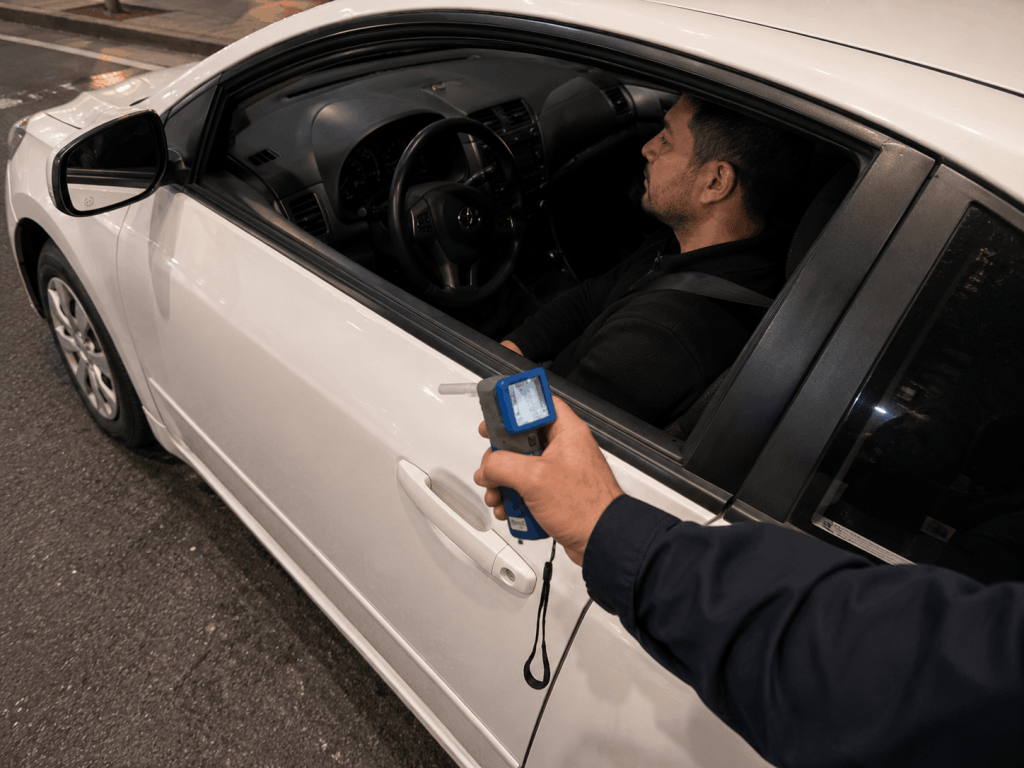
If you’re trying to understand whether an “over .08” charge or a refusal charge is worse in BC, the answer isn’t as simple as it might seem. On paper, the mandatory minimum penalties are nearly identical. In practice, the two charges are very different, and which one is “worse” depends largely on the specific facts and what defences are available.
The Mandatory Minimum Penalties: Almost the Same on Paper
Under the Criminal Code, the mandatory minimum penalties for a first offence are almost the same whether you’re charged with being over .08 or refusing to provide a breath sample: a fine. For a second offence, 30 days in custody. For a third offence, 120 days jail. Driving prohibitions are also the same at one year. The only difference is the minimum amount of the fine. For refusal to blow it is $2000. For over 80, it depends on the BAC result but could be anywhere from $1000 to $2000.
So from a sentencing perspective, there’s no inherent difference in the baseline penalties. Both charges carry the same consequences and the same ceiling on penalties. Both result in a criminal record upon conviction. Both require participation in the Ignition Interlock Program.
Where They Differ: Defences Available
This is where the two charges diverge significantly.
An over .08 charge gives a defence lawyer a great deal to work with. The Crown must prove the breath readings were accurate, that the testing was done properly, and that the readings reflect your blood alcohol level within two hours after driving. There are technical defences around the operation of the Approved Instrument, the timing of samples, the proper administration of the breath demand, and constitutional rights around access to counsel.
Perhaps most significantly, there are Charter arguments available in over .08 cases. If police delayed giving you access to a lawyer, or if the breath demand wasn’t made within the required timeframe, the evidence from the breath tests can potentially be excluded. Without the breath readings, the Crown often can’t prove the charge.
A refusal charge, by contrast, presents far fewer defence opportunities. The Crown essentially needs to prove two things: there was a lawful demand, and you didn’t comply. The accuracy of any breathalyzer machine is irrelevant. Many Charter arguments that apply to over .08 cases don’t apply to refusal charges.
The most viable defence to a refusal charge is arguing that the demand itself was unlawful, such as that the officer lacked the required suspicion or grounds to make the demand. This is a narrower avenue and often harder to establish.
From a Defence Perspective: Over .08 Is Usually More Defensible
If you’re asking a defence lawyer which charge they’d rather defend, most would say over .08. There are simply more tools available, more procedural requirements for the Crown to meet, and more opportunities for evidence to be excluded or challenged.
That said, this is not a reason to deliberately refuse a breath demand. The calculus is backward. You don’t choose a charge by refusing to comply. Refusal is not a strategy. It’s an outcome that limits your options.
What About the IRP System?
In the provincial IRP system, a refusal to comply with a roadside ASD demand triggers the same 30-day IRP as a “Fail” reading. So in the short term, at the roadside level, a refusal doesn’t save you from the immediate consequences. It just adds potential criminal exposure while taking away defences.
The Bottom Line
Both charges are serious. Both carry similar mandatory minimum penalties and can result in a criminal record. But over .08 charges typically offer more avenues for defence, more procedural requirements for the Crown, and more opportunities to have evidence excluded.
If you’re facing either charge, the most important thing is to get qualified legal advice quickly. The specific facts of your case, your readings, the sequence of events, how police handled the demand, what happened with your right to counsel all matter enormously in assessing what defences may be available.