
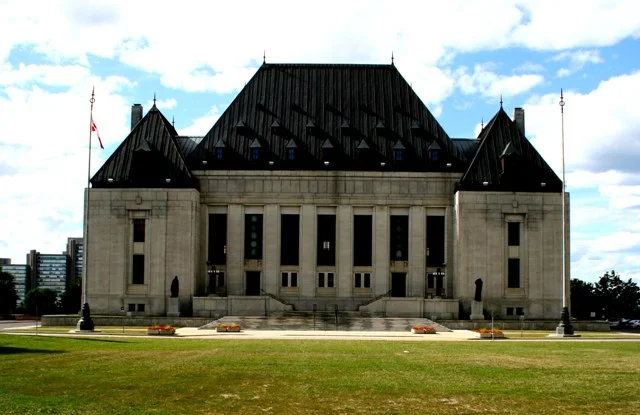
The Supreme Court of Canada is currently revisiting the standard of review in administrative law. This could drastically change the way courts review decisions made by government-appointed bodies and tribunals, such as The Superintendent of Motor Vehicles and ICBC.
Yor example, you can apply to the Superintendent for a review of a driving prohibition. An adjudicator will consider the evidence and choose either uphold or revoke the suspension. The prohibited driver may then seek a judicial review of the adjudicator’s assessment.
Even at court level, however, the standard of review is flawed.
Reasonableness standard of review
Judicial reviews often give deference to the administrative body’s decision by applying “reasonableness” as the standard of review. As Shaun Fluker, associate professor at the University of Calgary, points out:
Under the reasonableness standard, the reviewing court defers to the administrative decision-maker and limits its review to an inquiry as to whether the impugned decision is intelligible, transparent, and justified, as well as within the range of possible outcomes given the applicable facts and law in question
A reviewing court can only overrule or alter an administrative body’s decision if it is unreasonable. So even if it were to have reached a different outcome, it might not necessarily be able to enforce it.
Correctness
The other standard of review is correctness. Both were established in the case of Dunsmuir v. New Brunswick. The difference between correctness and reasonableness comes down to the level of deference the reviewing court shows the administrative decision-maker. In Dunsmuir, the Supreme Court ruled: “When applying the correctness standard in respect of jurisdictional and some other questions of law, a reviewing court will not show deference to the decision maker’s reasoning process.”
This gives the Court the power to re-examine the dispute and decide whether the decision was correct and, if not, substitute its own verdict.
When someone requests a review of a driving prohibition, they probably assume the standard of review will be correctness. That is, they believe the adjudicator got it wrong and they hope an independent third-party will reach a different conclusion. But here’s the trouble. Dunsmuir limits the correctness standard to certain cases. Only matters “of central importance to the legal system as a whole”, or where there is a question of whether or not something falls within an administrative decision maker’s jurisdiction should be considered.
The Supreme Court ruled that any case argued on the basis of the substance of an administrative outcome is disputed should use the reasonableness standard. The Court also found: “It should also be presumed that the decision under review is reasonable until the applicant shows otherwise.”
Application in judicial reviews of driving prohibition
We can see how the reasonableness standard is applied in judicial reviews of driving prohibition appeals in this case. The appellant, Mr. Alves, received a 90-day immediate roadside prohibition (IRP) after he blew a fail on two approved screening devices (ASD). He applied to the Superintendent of Motor Vehicles for a review of the prohibition. He submitted testimony that before the ASD test he had taken a shot of alcohol and used mouthwash he kept in his car. Watch our Can You Fail It video to find out if mouthwash can register an alcohol reading on an ASD.
The adjudicator dismissed the appeal on the grounds the officer’s account of what happened was more credible. The officer said Mr. Alves’ eyes were red, his speech was slurred, he was swaying and he could not smell mouthwash but he could smell alcohol.
At the BC Supreme Court review, the standard of review of the adjudicator’s decision was reasonableness. Mr. Alves argued the adjudicator was unreasonable in giving more weight to the credibility of the officer’s evidence. The Supreme Court judge, however, found the adjudicator was not unreasonable by drawing certain conclusions, such as inferring that the officer would not have been able to smell alcohol if Mr. Alves had just used mouthwash.
The judge stated: “If I am wrong in this, however, I do not see any flaw in the adjudicator’s reasoning or logic arising from this inference as serious enough to render the decision unreasonable.”
The Court was less concerned with the actual merits of the prohibition and more interested in whether the adjudicator’s decision-making process was reasonable.
What next for the standard of review?
The Supreme Court of Canada will announce its decision later this year. The eventual ruling will hopefully set clearer guidelines for courts.
People on one side of the debate argue that the current system gives administrative bodies too much power. Many of these tribunals exist to lessen the burden on courts and speed up the decision-making process. But there is a risk in treating the verdicts of adjudicators, many of whom have little legal training, with too much deference.
Is reasonableness an acceptable standard of review when your ability to drive is at stake? It can have a profound effect on your life. You can lose your job and even your ability to see your family. Should we trust administrative tribunals with so much power?
Judicial reviews of administrative decisions can be very tricky, especially if you go it alone. The burden is on you to prove your innocence, not the other way around. It is wise to hire a lawyer. Acumen Law Corporation has won countless judicial reviews for its clients. If you would like to appeal a Superintendent of Motor Vehicles or ICBC decision, call us for a free consultation on 604-685-8889.