
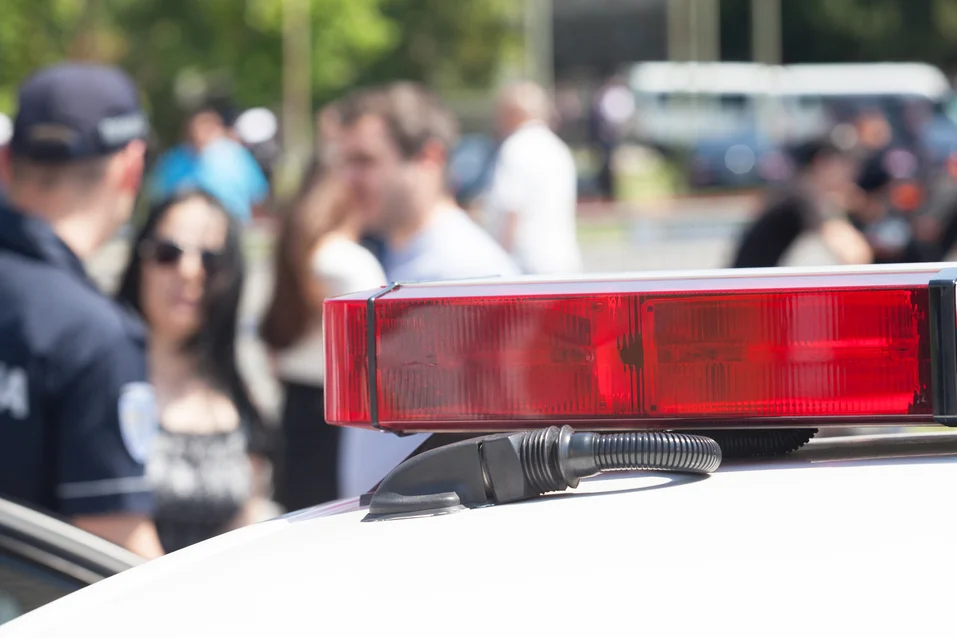
A long weekend is coming up, which means you can expect the police to set up roadblocks in BC. While roadblocks in BC are common, Courts are clear about what police can can cannot do when they pull you over.
Nevertheless, it’s easy to become nervous at a traffic stop, even when you haven’t done anything wrong. For many people, it’s their only interaction with law enforcement. Law-abiding drivers could go their whole lives without getting pulled over, but there’s simply no avoiding a roadblock.
Nerves can give rise to shaking, garbled speech which, in turn, could raise an officer’s suspicions. A lot of this stress can be avoided if drivers knew not only of their own obligations at a roadblock, but also those of the police.
What can the police do at roadblocks in BC?
While police may seem imposing at a roadblock, in actual fact their powers are limited. The Charter of Rights and Freedoms protects the public from arbitrary detention. All roadblocks are actually considered to be a form of arbitrary detention and, therefore, contravene the Charter. However, the Supreme Court of Canada considers this a reasonable breach because of the role they play, such as protecting the public from drunk, uninsured or unlicensed drivers. It, therefore, provides an exception for roadblocks, provided there are reasonable and probable grounds to suspect a crime.
The case R v. Mellenthin established that the exemption for roadblocks only applies “where the purpose for stopping the vehicles pertains to public safety concerns that arise from the regulated activity of driving motor vehicles.” So, legally, officers at roadblocks should only check for sobriety, licences, ownership, insurance and mechanical fitness of cars.
What are your obligations?
A question people often ask us is: what should I say at a vehicle roadblock. The answer is not straightforward. Being polite or jocular might help you get out of some situations but at a traffic stop, you need to ask yourself, is it worth the risk.
It might surprise you to know that you have no obligation to answer all of the officer’s questions. You know in movies when someone is arrested and the cop says: “You have the right to remain silent.” Well, it’s true. Sometimes it’s better not to say nothing than to potentially incriminate yourself. If you’re still nervous you can politely say to the officer your lawyer told you not to answer their questions.
In order to fulfill your obligations under the Motor Vehicle Act, you must do three things correctly:
- Present your driver’s licence
● State your name
● State your address
That’s it. This checklist is known as the Schryver’s Test and every police officer will know about it.
Police restrictions at roadblocks in BC
While you are only obliged to identify yourself at the roadside, it is inevitable that officers will try their luck and ask questions that the driver is not obliged to answer. Typical examples include: “do you know why I pulled you over?” or “how much have you had to drink tonight”. Often police will use roadblocks as a pretence to catch people for other crimes.
The law is clear on this matter. Police are not allowed to use roadblocks to catch any criminal activity that might be happening.
Despite this, police might notice something unrelated to the purpose of the roadblock and pursue another investigation. Under these circumstances, are police entitled to charge a person with an offence that is not related to the purpose, of the roadblock?
In this case, a woman was pulled over at a roadblock set up for the main purpose of monitoring weapons and alcohol coming into a problem public recreation area.
After the woman identified herself, police discovered that she was a prohibited driver and charged her with driving while prohibited. The judge ruled that roadblock amounted to arbitrary detention and, therefore, any evidence was inadmissible.
The judge’s reasons for doing this were that to allow the evidence would endorse the breach of the accused’s rights and encourage police officers to use such techniques in the future.
The judge stated: “This decision simply rules that evidence obtained through the use of such techniques cannot be used to incriminate people stopped without cause.”
Charged at a roadblock? Give us a call on 604-685-8889.
Good evening,
Great article. I wish this this type of discussion was more common in Canada. I’ve found the police becoming more antagonistic during checkstops and I really have no idea what to say to them. My natural tendency towards sarcasm doesn’t help.
Thanks,
Interesting article
I was stopped at a roadblock the other night coming back from the Canucks game. Cop told me they were stopping people that had been at the game. I said Oh. Cop asked if I’d had anything to drink, I said no. Cop asked when did I last have a drink? This felt weird and reaching but whatever I said I had a drink last weekend. Cop then asks if I’m doing any other drugs (I’m thinking he’s going to ask about weed). Nope he literally asked me “had I been doing other drugs…..like heroin”. What the hell?