
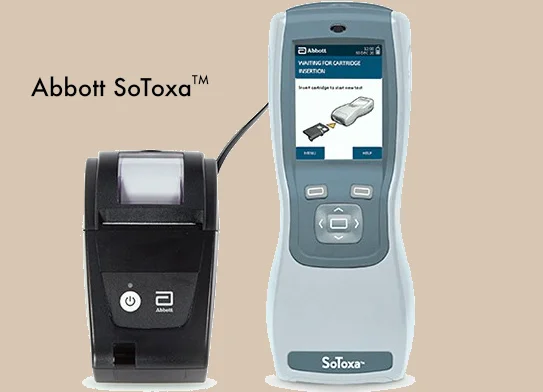
The government has just approved another saliva drug test for Canada for police use. When they approved the first device, the Dräger Drugtest 5000, there was a lot of fanfare. The government held this device out as a reliable way to screen for cannabis-impaired drivers. We got our hands on one fairly quickly and with a little testing and review of the manuals, it was clear that the fanfare was unwarranted. The Dräger Drugtest 5000, although a well-designed piece of equipment, has limitations.
Waiting in the wings was another device called the Alere DDS2. Like the Dräger, this device was tested in a pilot project by police forces across Canada. The manufacturers submitted their devices for testing in the hopes that they would win approval and sales of thousands of units to Canadian police forces would follow. But the Alere DDS2 also had problems.
Fast forward to 2019. Cannabis legalization played out as it did and despite the dire warnings of the police, the roads are just as safe as they were before legalization. It turns out that cannabis-impaired driving is hardly a thing. But that doesn’t mean that that the manufacturers of these devices don’t want to make some sales. The manufacturer of the Alere DDS2 being no different.
But something is different. The Alere DDS2 has a new name. It’s now called the Abbot SoToxa™. What’s in a name? Why would the manufacturer rename the device?
Rebranding saliva drug test device
Boeing is dealing with a trade name problem right now. The 737 Max 8 was expected to be a huge profit generator for Boeing. Now, after a couple of horrific crashes, grounding of every Max 8 plane and the consequent public perception of the aircraft, there is no way they will continue to give that aircraft that name going forward. The Max 8 brand is so badly damaged that they have no choice but to change it up.
Which brings us back to the rebranding of the Alere DDS2. Why would the manufacturer give up an established brand name after several years of marketing the device?
It turns out there were problems with this device that are fairly well known. A rebrand was probably a necessity.
For example, when tested in field studies in California the Alere DDS2 was found to have a significant false-positive rate for TCH. This is not something the manufacturer brags about in their online literature.
Worse still, when the Alere DDS2 was field-tested in Canada the police realized that at least 2 of the units gave false positives every single time.
Noteworthy, two of the Alere devices and one Securetec device began registering exclusively drug-positive results, including when tested on the police officers. Consequently, these devices were returned to the manufacturer to identify possible causes. One other malfunction pertains to the Alere swabs, as several swabs began to leak buffer fluid when placed in the mouth of the volunteer. The manufacturer has since stated that this fluid creates no health concerns and will be assessed.
With results like that, you can understand why Alere had a branding issue. If you search for bad press, you’ll find it. You can imagine that the manufacturer had a meeting with key staff one day and decided that if they were to keep the sales numbers up they needed to rebrand the device. The new name they chose was the Abbot SoToxa™.
What next?
Was the rebranding a success? Well, the Canadian Government just approved the Abbot SoToxa™ for use by the police in Canada.
When Boeing finds a fix for the 737 Max 8, even with a new name a lot of customers will be reluctant to put their lives in the hands of that aircraft. As for the rebranded Abbot SoToxa™, we don’t see that the manufacturer did anything to correct the problems identified in the device when it was called the Alere DDS2. So we understand the reluctance many will have to trust this saliva drug test device in the hands of the police.
(Another note about naming: In the Screening Device Order the Government of Canada has spelled it “Abbot” where they probably meant to write “Abbott.” It is spelled “Abbott” on the manufacturer’s website. We don’t know whether this was intentional or whether it is incorrectly identified and therefore not “Approved” for use in Canada because the government screwed up.)