
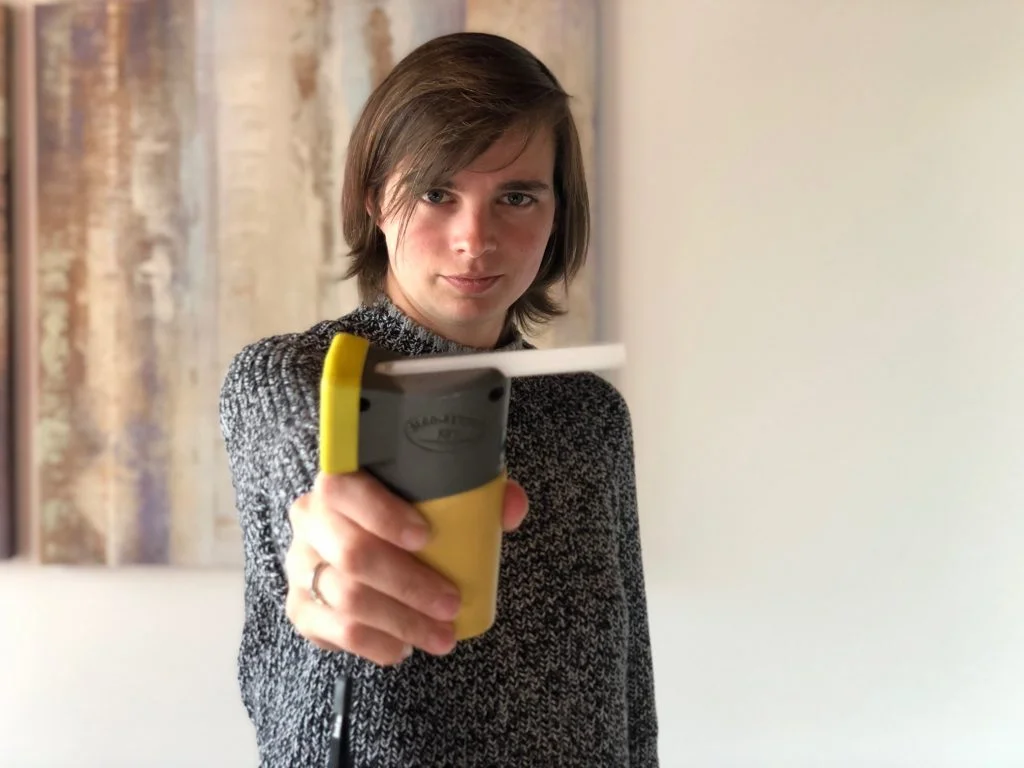
For more than 20 years I have defended impaired driving cases, but the last ten years witnessed the most dramatic developments. The last decade of DUI law in B.C. was a huge departure from previous years. The federal and provincial governments have done everything they can to claw back rights under the Charter, to take away legitimately valid defences and to rely on less reliable evidence. It’s a dangerous trend in our view. It’s time to take a look back at some of the key developments in DUI law over the last decade.
Spring 2010 – the IRP scheme comes our way
The provincial government prosecutes criminal impaired driving cases but the federal government writes the actual legislation. In the years leading up to 2010, the office of the Superintendent of Motor Vehicles had been pressuring the Solicitor General to permit a scheme that allowed for the police to issue prohibitions at the roadside that were longer than 24 hours. The problem, as many saw it, was that busy police officers were just giving 24-hour prohibitions to drivers rather than conducting full-fledged impaired driving investigations. This seemed to encourage impaired driving.
When the police did conduct full-fledged impaired driving investigations, the probability of successful prosecution was low. In criminal court, the Crown must prove the case beyond a reasonable doubt. Often, they couldn’t. The most common resolution was a negotiated plea to a Motor Vehicle Act careless driving offence, a fine and an agreed three-month driving prohibition.
Someone working in the provincial government said: “Why not just give the people a 3-month driving prohibition under the authority of provincial law?” Another person said: “Why don’t we just do it using ASD tests?” Another person said: “Why don’t we take away any way to dispute it?” Another person said: “Why don’t we make it so people have to pay a lot of money to the government but they won’t be told that until it’s too late to dispute it?”
And the Immediate Roadside Prohibition scheme was born.
I may sound cynical, but I was still a card-carrying BC Liberal back then and I got a lot of insider knowledge. We had people feeding us information including members of the government. We were told that the Finance Minister appeared before the Cabinet with the Superintendent of Motor Vehicles to reveal the idea of the IRP scheme. Some ministers were not impressed. It was presented as just an idea to think about. Within weeks the finance minister appeared again before the Cabinet and said it was going through, everyone had to vote for it and the main reason behind it was because the damage the U.S. housing crisis had wrought on the B.C. economy. The view was that B.C. couldn’t afford to prosecute impaired drivers. The government needed money. They wanted to tax impaired drivers instead.
We lost Charter rights to save some money. Now you know how damaging laws get on the books.
The IRP law heaps problem upon problem
At the time the Immediate Roadside Prohibition legislation was being drafted, we were already dealing with a crisis in impaired driving law brought about by a change to the Criminal Code under Prime Minister Stephen Harper. Mothers Against Drunk Driving (MADD) had been salivating for years to eliminate the defence of actually being innocent to driving with a blood-alcohol concentration over 80 mg in 100 ml. The Criminal Code made it an offence to drive over 80 and, of course, most of the people charged with violating this law were charged on the basis of breath-test results. But what if the results were wrong? What about cases where the results could not possibly reflect the driver’s blood-alcohol concentration because the science was clear that they did not have enough to drink to be over 80?
Under the law until July 1, 2008, you could call evidence in your case to show that based on what the driver drank, they could not have been over .08. This type of argument was called the Carter defence or Evidence to the Contrary. MADD hated this defence. Their disdain grew as the courts in this country increasingly began to see that the R. v. W(D) application of the assessment of evidence applied equally to the assessment of Evidence to the Contrary.
Breathalyzers are far from perfect
MADD is a huge and wealthy lobby group and they had a lot of influence over Harper’s Conservatives. The law eliminating Evidence to the Contrary came into effect and immediately there were Charter challenges launched across the country. Many lawyers took the view that this was a presumption of guilt. My concern was that breathalyzers are far from perfect and in fact, in my career up to that point, I had many cases where there was some evidence of faulty procedure, faulty instruments and unreliable tests. I had suspicions about a problem I had observed with the BAC Datamaster C.
The BAC Datamaster C was the big breathalyzer in the police detachments all across British Columbia and in some other provinces. If you have a criminal record for over .08, chances are it was because you blew into one of these instruments.
The idea behind them, the technology and the method of breath analysis was fairly good. When it comes to accuracy and reliability in my view, they are vastly superior to the questionable breath-testing instruments the police are using now. But they had one flaw. Increasingly I began to recognize that this flaw had played a part in the files that were coming across my desk.
To test this breathalyzer, a jar of alcohol solution with a known quantity of alcohol was connected to the back of the instrument by a couple of hoses. One hose blew air into the solution and the other hose directed the alcohol-laden air back into the breathalyzer to ensure it was working properly. The idea is to test the breathalyzer with a consistent standard. This makes sense. But there was a problem.
Inside the BAC Datamaster C was a valve that allowed the air from the pump to go into the jar of solution. It allowed the air from the jar to run back into the instrument. When that stage of the pre-test was done, the subject would blow and the breath would travel down a hose through the same valve and then into the breathalyzer. And so here was the issue: if the valve was not in the correct location, because it had jammed, breath air could be blown through the valve, to the jar, back into the breathalyzer now laden with extra alcohol and then into the instrument testing chamber.
The result would mean that any underlying alcohol concentration could theoretically be added to the alcohol in the simulator jar and elevate the results by as much as 0.1 mg%. A subject’s actual breath-alcohol concentration could be 60 mg in 100 ml and the instrument might record the readings are 160 mg in 100 ml which is twice the legal limit.
I got a breathalyzer and tested it. I tested one of the valves and confirmed that this was a possibility.
As far as I know, I was the first and remain the only lawyer in B.C. to actually buy these breathalyzers and perform experiments of any sort. The important thing in my mind was to demonstrate why Evidence to the Contrary was an essential protection against wrongful convictions.
In 2008, I posted some videos on YouTube to assist me in explaining to prosecutors the potential problem. I was aware that the RCMP alcohol lab scoffed at my concern. Then they tested it. When I knew that their testing was complete, I contacted the RCMP to get all of their research into the BAC Datamaster C that they had conducted to investigate my claims. They charged me $1,100. I think this amount was intended to discourage me. I paid the fee and got the disclosure. It was worth every penny.
The BC Government goes public with the IRP scheme
In April 2010, the BC government went public with the Immediate Roadside Prohibition law. Reporters and the public were curious about what it was all about. I was one of the more prominent Impaired Driving lawyers in the province and I had a collection of police breathalyzers. It wasn’t long before Mi-Jung Lee contacted me to get my thoughts. At that moment I had in hand the disclosure about the BAC Datamaster C for which I had paid $1,100. I gave her the most damaging document and we did a long interview.
The story was on CTV at 6:00pm. Mi-Jung Lee laid it all out and showed the email that I provided her. “How many innocent souls have been convicted with this instrument? Should I be quiet now?” written by one of the leading figures in the RCMP forensic lab.
Mi-Jung Lee’s news story made waves. Suddenly people for the first time started questioning the reliability of breath tests. Revealing that email made it harder and harder for prosecutors to succeed with the BAC Datamaster C breath tests and I can tell you now that for years afterwards I succeeded in every impaired driving over .08 criminal case that I defended. I kept this a secret because I didn’t want to encourage risky behaviour or call the justice system into disrepute. I was working the way I could for the benefit of my clients while pressuring behind the scenes for change. Ultimately the BAC Datamaster C was replaced. The media were better equipped to ask good questions about breath testing and roadside punishment and they became more interested in the story.
Getting ready to take it on
In the summer of 2010, Kyla Lee started working in my firm. She was completing law school. It was clear to us in a matter of days that she was particularly bright. She began crafting defences, thinking about problems with the legislation and preparing challenges to the law. We’ve never had anyone with a creative brain like Kyla’s and it was clear that this was a good fit.
When the law received Royal Assent on June 3, 2010, we were prepared to take it on. We wrote blog posts explaining the problems with the legislation. A number of the Impaired Driving Lawyers in BC got together to file a legal challenge. Two main arguments were to be advanced: the provincial government did not have the legal authority to write laws dealing with over .08 driving and that the legislation violated the Charter of Rights.
My view was that the argument about which government had the power to write the laws would not succeed. I was more interested with the Charter concerns. Kyla was given the job of writing the written argument on the violation of s. 10(b) of the Charter of Rights. Our argument was that roadside tests were not reliable enough, the samples obtained and used in this way constituted an untrustworthy search and seizure and in such circumstances a person must be able to contact a lawyer before being forced to blow into a breathalyzer at the roadside.
It was a smart argument. The law came into effect September 20, 2010. A challenge was filed and the hearing took place in May 2011. Then we waited.
In the summer of 2011, I sat down with Ian Mulgew from the Vancouver Sun to explain my concerns with the Immediate Roadside Prohibition scheme. The law was coming up on its one-year anniversary and many people had concerns. Mulgrew wrote a long article that was featured on the front page of the Saturday edition laying out many of the problems, from devices to testing, to the review procedure and the impacts on people who were issued IRPs. The public had become cynical. The government claimed the IRP scheme was saving lives.
On November 30, 2011, the court decision was released. As I expected the court wasn’t concerned about which level of government introduced the law. The court did, however, find that the search was unreasonable. It’s just that it wasn’t in the manner anyone expected.
The ruling struck the law down because the limited review provisions did not provide a real opportunity to defend the allegation when weighed against the type of testing and the frailty of that testing.
That was unexpected.
A remedy? You don’t get a remedy.
The court struck the law down but left it on the books saying it would remain in effect until June 15, 2012. The intention was to allow the provincial government to re-write the law in a way that would comply with the Charter of Rights. Interestingly, police in B.C. immediately stopped using the IRP scheme in cases where the driver blew “Fail” at the roadside.
The issue of whether there was a remedy available to the people who apparently had their Charter rights violated had yet to be considered. The court’s decision can be summarized as “tough luck.” All of the people who got Fail IRPs in violation of the Charter of Rights ended up being the government’s unwitting experiment subjects. From the court’s perspective governments are allowed to make mistakes writing laws and if people are hurt so be it, so long as the government was genuine in their belief of something.
It’s not a satisfying answer to us. The lesson many people came away with is that the world isn’t fair and don’t expect fairness from our institutions.
What about saving lives?
As we looked at the numbers is was clear to us that the government could take no credit whatsoever regarding the IRP scheme saving lives. If anything, the opposite seemed more likely.
During the more than six months that the Fail part of the IRP scheme was not employed, our roads in B.C. were safer than ever. During that six-month period fewer people died in impaired driving cases than in an average six-month period in the province. The IRP scheme didn’t save lives. Discussion about the problem of drinking and driving created awareness (education) about the threats and risks of impaired driving. Ironically, by striking the law down, the court probably saved the lives of a few British Columbians if you want to rely on the six-month average.
Funny that.
The Interlock and RDP
The BC Government behaved as though they were humbled when it brought in the second version of the IRP scheme. Still, they put up misleading videos about the review procedure and they never told the court the truth behind how the interlock and responsible driver program ($930 course) were being applied. The only reporter who ever investigated the $930 course was Matthew Lazin-Rider at CBC.
The first version of the IRP scheme the legislation said that the Superintendent could exercise his discretion (it was a man then) to send any motorist who got a 90-day IRP to go through the Responsible Driver Program ($930 course) and not drive until they drove for a year only with an alcohol Interlock (the “blow box”) in their vehicle (Interlock requirement).
Early on people contacted us to tell us about the RDP course. They reported back to us that when they attended the room was locked so the instructor had them all go to the McDonalds for the course. We were told that the instructor told the students he was being paid $20/hour to teach the course. That’s a big profit for the people who put on the course!
Eighteen students each paying $900 is, oh, $16,200 and the instructor is paid $160 so the profit, teaching the class at McDonalds, even if you’re paying for the French fries is still $16,000 per class.
What a great business. People have no choice but to attend if they ever want to drive again. The overhead is low. The profits are incredible! How do you get this gig?
It was either Matthew Lazin-Rider or our office who got the internal government documents showing other organizations offered to provide the same program or something similar for hundreds of dollars less than Stroh Healthcare. Still, the BC Liberals awarded the contract to Stroh.
The Interlock and RDP made me angry
In 2012 a couple of things really got under my skin.
When the arguments were made in court regarding the legality of the scheme, the government lawyers kept telling the court that the Interlock and RDP were only required for the worst offenders. In other words, the Superintendent would only force the Interlock and RDP on people who already had a history of impaired driving.
We were stunned by this at the time. There were two reasons that we were stunned. One, every single person who received a 90-day IRP was sent a letter telling them they had no option but to take the RDP and get an interlock for one year or they could not drive again. The approximate cost of the two programs was $3,600. Every person, without fail, was subject to these two requirements.
The other thing that shocked us is they told the judge this when, only moments before, they said that IRPs were not issued to anyone with a record of impaired driving. They indicated that if the person had a record of impaired driving, they would then be arrested and subject to the criminal procedure and criminal punishment.
Kyla and I were spectators in the courtroom when this argument was made. It was surreal.
We believe that the lawyers were either misinformed or they came to the conclusion that they could say this to the court and not violate any ethical duty. They may have found a way to justify it to themselves. What surprised us more is that the court didn’t pick up on the contradiction. If IRPs were only issued to first-time offenders, then nobody who ever got an IRP should need to have an Interlock or pay for and participate in the RDP. Logic does not always win the day, however.
But what could we do about it?
The value of an older lawyer?
In my early days as a lawyer there was a practice of the Superintendent of Motor Vehicles office that irked me. People were issued certain driving prohibitions for infractions on their records with no opportunity to make their case for why it was wrong beforehand. The lessons from my Administrative Law classes were still swirling in my head and I wrote to the Superintendent in about 2000 to explain that the person subjected to their decision needed an opportunity in these cases to be heard before the punishment was imposed because of the particular principle in Administrative Law. To my surprise, they agreed and changed the procedure. I assumed they spoke to one of their lawyers who laid it out for them.
As I pondered this it struck me that the Motor Vehicle Act required the Superintendent to exercise discretion and that, similarly, an individual has a right to explain why any discretionary procedure should not apply to them or they should be given certain consideration one way or the other. With respect to the Interlock and RDP the Superintendent claimed it was his discretion that everyone should be forced to go through these programs if they got a 90-day IRP. That, of course, is no exercise of discretion.
I spoke with Kyla and I formed a plan.
We decided that the best course of action was to ask the Superintendent to exercise his discretion. So, we selected 17 clients who either lost in their IRP review or hadn’t disputed their IRP but who had impeccable records aside from the IRP. In each case I had a junior lawyer or articled student write a letter asking that the Superintendent exercise his discretion and in this case, the weight of the evidence would lead to the conclusion that the Interlock and RDP were not appropriate.
We knew that they would ignore us. The government can be quite arrogant at times. That was part of our plan.
When they ignored us we filed an application to the court for a mandamus order forcing them to do their job, i.e. exercise the discretion. At this point, they capitulated quickly. You can find the news story here.
From the CTV story:
Legal challenges on behalf of 17 of those 1,200 motorists prompted the review and resulted in the decision to overturn the education and interlock ignition penalties.
Stephanie Melvin, deputy superintendent of motor vehicles, said her office decided that in fairness to the 1,137 motorists whose cases occurred during the three-week November 2011 time frame they should have their driver education penalties overturned, but not their impaired driving penalties.
“We got together all of the cases that this might apply to, did our review of them and found that it wouldn’t be fair to continue to refer those people to the programs,” she said. “Fortunately, most of the people had not yet enrolled in the responsible driver program or had the ignition interlock installed in their vehicles.”
Melvin would not fully elaborate on the process that led to the decision.
“There were some very strong arguments in the petitions that led us to believe it wouldn’t be fair to keep these drivers referred to the remedial programs,” she said.
In the end, between 11,000 and 13,000 people had their interlocks removed partway through their year with the interlock in their vehicle. Thousands of people received cheques from the government to compensate them for being unlawfully referred to these programs.
It was a victory for the regular person. Most of the people received letters notifying them of their good fortune and they had no idea that I was behind it. I still get some pleasure from that today.
Shakeup at the Superintendent of Motor Vehicles
By this time we had become well versed in the structures of the Superintendent of Motor Vehicles. We were in ongoing battles with them for disclosure of documents they didn’t want to release. We knew who was pulling the strings. In our battles to get their internal documents they refused to give us information because they said: a) we could use it to defend our clients b) we would learn about the flaws in the system c) they viewed themselves as an arm of law enforcement.
These were all disturbing positions made by this office, particularly bearing in mind its role in adjudicating disputes between individuals and the government. The Superintendent himself had essentially staked his reputation on the scheme. How could they adjudicate fairly when they had an interest in the outcome? How was it fair that people were not allowed to know the defences to IRPs? How could you trust a tribunal to adjudicate fairly between cops and drivers when they had decided that they were cops?
These were all big problems that we were working on. Kyla decided to take it on in a case called Buhr.
Kyla puts the government in their place
Kyla Lee has always been a team player in the office. Not everyone is a team player – we get that. The best team players are the ones who throw the ball to set up the team but are also willing to take a hit and run the ball. In other words, you need to actually do the work.
When the IRP scheme came out, I told the lawyers in the office that we need to appeal these decisions from the Superintendent of Motor Vehicles or the government will run roughshod over the people of B.C. Kyla picked up the ball and ran with it. She did the work.
She started filing and, more importantly, arguing the big cases before BC Supreme Court. The big IRP case that really shook cages was Buhr.
Dealing with the Superintendent back then was surreal. We had crafted so many arguments in IRP cases and collected so many important documents that we overwhelmed them when we argued for our clients, particularly when it came to the functioning of the devices.
By this point, I had the breath testers for years. At the roadside, the police use ASDs (Approved Screening Devices) and we had manuals, records and a huge collection of important documents to address problems in breath testing.
The Superintendent was a judge in the IRP case, and also the cop from their perspective. They were displeased that we had all of this information and we were succeeding in making it impossible to uphold many of the IRPs on review with our office. To deal with this the Superintendent created their own evidence to try and defeat our evidence in a document called the Superintendent’s Report on Approved Screening Devices.
You’re probably thinking that judges shouldn’t create their own evidence. We tend to agree. And Kyla felt that the legislative assembly didn’t plan this so she filed a court challenge, made her argument and the court was with her 100%.
A Buhr in your saddle
With the Interlock debacle and the Buhr decision, a shakeup at the Office of the Superintendent was inevitable. The IRP scheme has faced three big losses, two of which took place after the law had been rewritten.
We took advantage of the change to thrust upon the office of the Superintendent a new procedure for Interlock and RDP considerations. We started writing to the Superintendent for clients seeking exemptions from these programs and we succeeded again and again. Many people contacted us who had been off the road for years and we were able to help them get their licenses back.
It was clear that this procedure wouldn’t last, however. The amount of work it created at the Office of the Superintendent of Motor Vehicles was overwhelming them.
More challenges
When the second version of the IRP scheme came into effect on June 15, 2012, we looked at it and we had significant concerns. From our perspective the review process was still defective, the limited disclosure hindered a real inquiry into the reliability of the breath samples and the legislation merely paid lip service to the decision that had struck down the first version of the IRP scheme. Our concerns remained that using roadside devices in a roadside setting was simply too dangerous when weighed against the severity of the punishment. So we filed a challenge to the second version of the legislation (IRP 2.0) and started preparing for a hearing.
Overwhelming arguments
At the same time, we were getting better and better at challenging 90-day IRPs. By the summer of 2013, we were succeeding in so many IRPs that we skewed the statistics significantly. We were able to get copies of all of the successful decisions month after month and every month for which we got statistics Kyla succeeded in more IRP reviews than any other law office and in some months our office succeeded in more IRP reviews than all of the other law offices in the province combined. We kept developing great arguments. Our best estimate was that self-represented applicants succeeded less than 5% of the time and yet still many people tried the DIY IRP review. On the other hand, our success rate was fantastic, and it was starting to cause concern in the government.
Over the next few years, the IRP scheme made a series of headlines as the media caught on to its flaws. There was the story about impaired driving cases being thrown out due to mistakes with the paperwork. Our office discovered that IRPs were being issued on photocopied evidence. Then Nizer Shajani, a forensic scientist, spoke out about the error-prone breath testing devices used by the RCMP. And finally, the BC Supreme Court pulled up the provincial government for penalizing alleged drunk drivers under the older version of the IRP scheme.
For us, this was a remarkably rewarding time. We were succeeding in case after case and exposing the problems with the scheme. At the same time, we were preparing for the next judicial challenge, this one to the second version of the IRP scheme. That case was set to proceed in the summer of 2014 and our optimism grew. While this was going on, we had accumulated so much material to expose the problems with roadside testing that we could show decisively that the scheme was too risky to proceed.
The problem we faced was whether we could present that evidence in the judicial challenge to IRP 2.0. And that is where we will pick up as our story continues in another blog post in the very near future.
Thanks
Our ongoing clash with the police and government over the last decade has won us many devoted supporters and some noteworthy enemies. This has been a tough grind and looking back we often wonder why we stuck out our necks, particularly when you consider what happens to people who take on the government and the BC Liberals. We’re the little guy going up against the essentially unlimited resources of the government. We promise to keep going and we thank you for your support over these hard years.
What an incredible series of events B.C.’s IRP scheme has been. I think everyone supports efforts to reduce impaired driving, but it is apparent the government isn’t concerned whether or not an accused driver is guilty. They want to make headlines with à tough law to throw a scare into the public, and if innocent drivers are punished then that’s just collateral damage. Basically the end justifies the means in the government’s view.
Please keep up the great work you’re doing.