
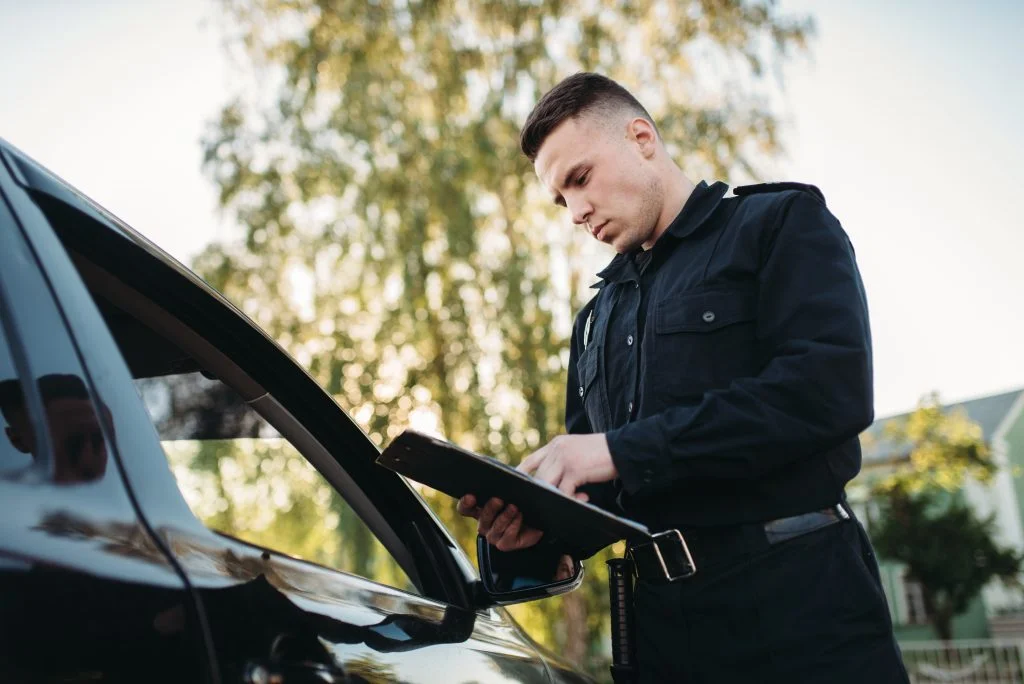
Imagine awarding police officers for the number of speeding tickets they hand out in a year.
It would seem obvious that numbers and quotas matter; that’s what it all comes down to. At least, that’s what we would be led to believe.
It is a long-standing suspicion that when you get a speeding ticket for going 7 km over the limit at the end of the month, it’s because a police officer needs to meet their quota. You just happened to be in the wrong place at the wrong time.
But that’s all it is, a suspicion. Nothing to plausibly back up our claims, except for the fact that we are annoyed we got a ticket.
However, this becomes less of suspicion and more of a fact when we look at the Alexa Awards.
Rewarding police for handing out IRPs
If you are from BC, you may have heard of something called the Alexa Team Awards. If not, it is a program that recognizes police officers in BC “who diligently work to reduce the number of drivers affected by alcohol or drugs on BC’s roads.”
In theory, the Alexa Team Awards is a nice way for the people of BC to thank police officers for keeping their roads safe and give them some recognition for doing good work.
It becomes a little less nice and a little more calculated when you realize the way for police officers to get these awards has very little to do with the integrity of the police work they do in support of the prohibitions they hand out while being compassionate and fair while enforcing the law, and more to do with the numbers.
In fact, on the RCMP website, it very clearly states:
“To be considered for Alexa’s Team, an officer must remove a minimum of 12 drivers from the road by way of a 24-hour prohibition, Immediate Roadside Prohibition, Administrative Driving Prohibition, Drug Recognition Evaluation or Criminal Code investigation in one year.”
Questionable Ethics
Immediate Roadside Prohibition laws have undergone some changes since they were first introduced in September 2010 to their most recent version, which came into effect in April 2016, in an attempt to make them more ethically structured and clear.
And while that was not the case, as the latest version has not made IRPs any fairer or concise, the Alexa Awards certainly add a whole other element of distrust and questions.
When we are awarding police officers for simply handing out a certain number of IRPs, it seems that ethics have flown out the window. It calls into question whether they are actually dedicated to cleansing the streets of drunk drivers or if they are simply after a quota, determined to reach it by any means.
How can we be okay with rewarding a number, rather than a police officer themselves, for doing good, ethical work?
A number vs. the story behind it
While to a police officer, handing out an IRP means one step closer to an Alexa Team award, to the person unfairly receiving it, it could mean dire consequences.
This is certainly what it meant for Jamie van der Leek, a nurse from Port Alberni with a severe case of Bell’s palsy, which has left her paralyzed on one side of her face. She received an IRP and had her car impounded while on vacation in Penticton because she was physically unable to blow enough air into a breathalyzer at a roadside stop.
In an interview with CBC, van der Leek said,
“She explained her medical condition to the officer, who told her she was being difficult and said she would be served an immediate roadside suspension.”
Perhaps it was because all the officer saw was a number and not the person whose life he was unfairly affecting.
Even though van der Leek says she pleaded with the officer to take her to the hospital to get a blood test and prove her innocence, he refused. Her car was impounded for 30 days, her license suspended for 90, leaving van der Leek unable to get to her nursing job.
Of course, we can not argue with the fact that there are certain cases where prohibitions are deserved, and therefore rightfully administered. However, in the case of the Alexa Awards, there is no recognition that there is a difference between a valid prohibition and an overturned one.
And because of this, it really calls into question the ethics around police officers handing out IRPs.
We don’t reward pilots for the number of planes they successfully land on any given day, just like doctors do not receive an award for how many life-saving surgeries they perform in a month.
So how can we logically defend awarding police officers based solely on the number of IRPs they hand out?
This is typical of Police Officers they do not Concern self with Medical Conditions of victims of what is now in Canada Police State. I was stopped June 21, 2021 by Port Moody Police officer but pretending to be RCMP/GRC and when Complain to ICBC my case of 90 days suspension was dismissed. Moreover I take prescription medication on daily Basis that will affect BA with “Fail Positive” Now I am refer to go thru RDP and I work at Hospital in Abbotsford Saving Lives at Sodexo Canada Ltd doing dangerous work of contaminated Waste disposal and Bio Hazards disposal. Not many people want this job as Corona-19 is now quit contagious -but with training it can be done. I was rehired to do my job even I am in December this yer officially retired but my dedication of duty despite Stage III of Crohn’s and Asthma and Cont. Allan Bewcyk Pretending to be RCMP/GRC officer was in Fact Const. of Port Moody Officer that show me no Badge either RCMP or Port Moody Police and use same device twice! Now I will be in contact with your lawyers to “Destroy” that dictatorship and I am Conservative Party Member and outspoken critic of ICBC and MVA [Motor Vehicle Act] that penalize people by their medical conditions that has noting to do with driving under influence of Alcohol or Illegal Drugs!