
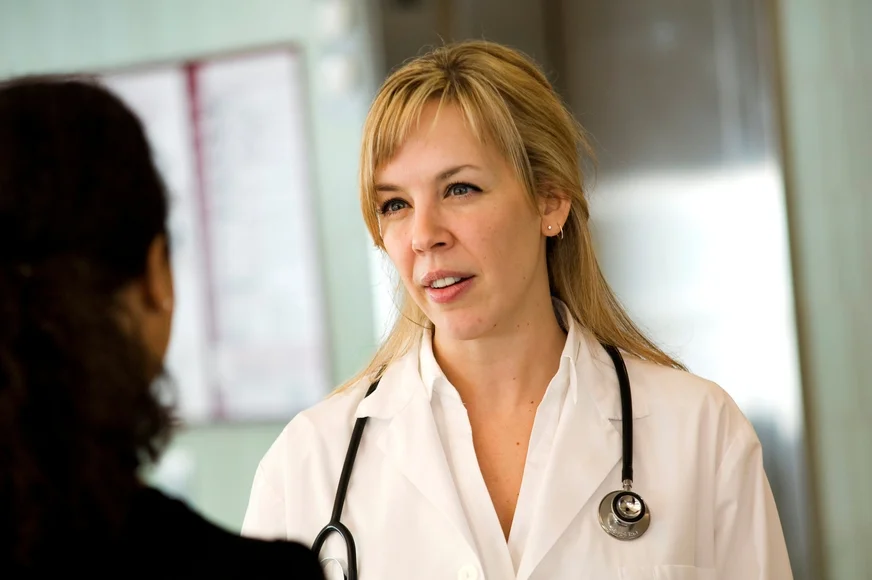
We talk a lot about driving prohibitions for traffic tickets or for drunk driving here in BC. But there’s another area not often discussed by BC’s driving community, and that’s a driving prohibition due to being medically unfit to drive. Generally, this means that RoadSafetyBC has determined that due to a driver’s health condition, they are no longer permitted to get behind a steering wheel.
Under the powers of the Motor Vehicle Act, RoadSafetyBC can prohibit a person from driving if it considers doing so may be in the public interest, a term the courts have generally determined to mean public safety. There are a few ways RoadSafetyBC can determine whether a driver is potentially a danger on BC roads. When it comes to medical fitness, RoadSafetyBC relies on a medical assessment called a Driver Medical Examination Report, which must be conducted by a qualified health professional.
There’s a huge list of medical conditions that can result in RoadSafetyBC determining someone is medically unfit to drive. Heart disease, brain tumours, hearing problems, musculoskeletal conditions, vision impairments, sleep disorders, even kidney disease can cost you your ability to drive.
Ultimately, it will be a driver medical fitness adjudicator who determines whether a driver is medically fit or unfit to drive.
What do health professionals look for to determine medical fitness to drive?
Generally speaking, these medical professionals are trained to look for five things:
- Diagnosis of a relevant medical condition
- Associated symptoms, or the presence of multiple conditions
- How bad is the condition? Is the patient stable, does the condition have a sudden onset, or is the condition chronic?
- Is the patient following a treatment path?
- Other relevant information, such as assessments, tests, specialists’ reports, reports from family, police reports
There’s also the question of whether a driver’s medical impairment is cognitive or physical. If the potential impairment is cognitive and has to do with a driver’s ability to think and process information, health professionals are told to include:
- Results of a cognitive test
- Any associated medical history
- Education level and learning disability
- Language barriers
- Family concerns
For physical medical impairments that involve a driver’s range of motion, medical professionals are told to include:
- A diagnosis
- Specifics of the event that led to the loss of physical ability
- Extent of loss to driver’s range of motion
- What limbs are affected
- How severe is the impairment
- Is the impairment going to get worse? Is it temporary? Or is the impairment stable?
How you fare on this Driver Medical Examination Report is up to the opinion of the medical professional. Section 230 of the Motor Vehicle Act identifies that every “psychologist, optometrist, medical practitioner or nurse practitioner” must report to RoadSafetyBC any patient they believe to be should not be driving a vehicle. How and whether you will end up in front of a medical examiner, and whether the results of the exam cost you your ability to drive, however, are other matters.
Ways RoadSafetyBC can order an examination for being medically unfit
There are a few ways RoadSafetyBC can choose to order a driver for a medical examination. A few of these ways happen automatically:
- A driver turns 80, and every two years after
- A driver applies for a commercial class licence or is required to attend a routine commercial class screening
- A scheduled reassessment due to previous assessments
There are also a number of ways RoadSafetyBC can order a medical examination that are triggered by reports or disclosure:
- RoadSafetyBC receives an unsolicited report of concern from police, a family member or the public
- RoadSafetyBC receives an unsolicited report of concern from a medical professional
- A driver discloses a medical condition to RoadSafetyBC
What does RoadSafetyBC do with the medical exam information?
Ultimately, it will be a driver medical fitness adjudicator who determines whether a driver is medically fit or unfit to drive. These adjudicators do not solely rely on a medical examination report, however. They may also conduct a functional driving evaluation.
One of these tests is called the DriveABLE test, which focuses on assessing cognitive skills that could affect driving ability. It’s somewhat similar to an eye or hearing test. One of the tests are performed via a touch screen, and asks those being tested to complete a series of tasks such as identifying the location of an object on the screen.
Drivers who fail the in-office touch screen test are allowed an opportunity to take a road test evaluation. If you fail the road test, you will have to turn in your driver’s licence and may have your driving privileges reduced. Check out the video below for more information.
I’ve been found medically unfit to drive. Now what?
So you’ve completed all the medical examinations, the DriveABLE assessment and the road test, and the decision was not what you had hoped for. There are still options. The first step a driver can take is to request a review of the decision by the Superintendent of Motor Vehicles at RoadSafetyBC.
This is an opportunity for the driver to submit any additional documents and medical records that could assist their case to get their driving privileges back. Having a lawyer help you to prepare these documents for review is extremely helpful. We have experience challenging driving prohibitions for medical fitness, and can assess your case to determine how to increase your chances of success. If you are not successful at your review, we can additionally challenge the review decision in BC Supreme Court.
If you have suddenly been stripped of your driving privileges because RoadSafetyBC said you were medically unfit to drive, you should consider the services of lawyers experienced in challenging driving prohibitions. We have protected the driving privileges of thousands of British Columbians, and may be able to keep you behind the wheel for years to come.
Getting rid of the Simard-DriveABLE protocol would be a way to do good while saving money.
Researchers are busy and about 2.5 million studies are being published globally every year-about five a minute. Many of those studies are inconclusive and some contradict each other. Science has to start somewhere, but the public can’t be impacted by every preliminary study. The Knowledge-to-Action-Framework provides guidance for proper knowledge translation, for translating research results into action. You can find the Knowledge-to-Action Framework everywhere from the Canadian Institutes of Health Research to the Centers for Disease Control and Prevention:
https://www.cihr-irsc.gc.ca/e/40618.html
https://www.cdc.gov/pcd/issues/2011/mar/10_0012.htm
The way that the Simard-DriveABLE protocol came to B.C, contradicted The Knowledge-to-Action Framework completely. There was no scientific consensus, no other participants, no sharing of information, no synthesis of studies, no debate, and nothing set up for monitoring and feedback. There has only been protest. The Simard-DriveABLE protocol was single sourced from one married couple backed by a venture capital fund. We have had the opposite of a system for monitoring and feedback: after the decision was made, the contracts were signed, the infrastructure was built, and the staff was hired, RoadSafetyBC didn’t want to know how it had worked out. One researcher called their continued defense of the Simard-DriveABLE protocol “dogma, or a refusal to admit they had taken a wrong turn, or both.” Any organization that could at first be so gullible and then so obdurate needs a reorganization. An organization like RoadSafetyBC needs to be given authority, but not the authority to deny reality.
About half way through this article, you will read about the Knowledge-to-Action Framework, and how it applies to this issue:.
https://pdfs.semanticscholar.org/89c2/5c9205e1af4db3e839677d26c66e29d9d8f3.pdf
In order to understand the older driver issue, one should have some understanding of the statistical issues that are associated with systematic medical screening. It isn’t as simple as just rummaging through a population with tests looking for a problem, especially when the tests are inaccurate:
http://www.bbc.com/news/magazine-28166019
The Simard-DriveABLE protocol starts with the Simard MD cognitive test which is administered in the doctor’s office. Even with little statistical understanding, the Simard MD would defy our common sense. Any test that is indeterminate 50% of the time, which can mis-classify a significant percentage of safe drivers as being unsafe and a significant percentage of unsafe drivers as being safe, and which then sends patients to another expensive test that is also indeterminate 46% of the time, and which is equally inaccurate, has to be discarded. It isn’t a screening tool because it doesn’t screen. It is a net: it sends 50% of seniors who try it to the author’s husband’s business.
Canadian gerontologists have discovered that was “no association between the Simard MD scores and the geriatricians’ clinical decision regarding fitness to drive….” This test is more than inaccurate: it is completely useless, except for profitability:
https://www.ncbi.nlm.nih.gov/pmc/articles/PMC4038537/
Other researchers have expressed concern:
From Dr. Michel Bedard, a researcher associated with Candrive, which is funded by the Canadian Institutes of Health Research:
1) the proportion of people who fail the Simard (and may lose their drivers’ licenses automatically) but pass the on-road is 17%
2) the proportion who pass the Simard but fail the on-road (and really should not be driving) is 14%
3) the proportion requiring further testing (driveABLE) is 50%
4) from a statistical point we require a likelihood ratio of at least 5.0 for the tool to be useful – it is only 3.95 here.
In any other situation a test with such properties would be discarded quickly.
From Dr. Jim Langford, from the Monash University Accident Research Centre:
The experience which you have described is alas, only too apt an example of what can happen when licensing decisions are based on inadequate and/or unproven assessment tools. Many of us in the research community have strong misgivings about many aspects of the Simard/DriveAble knot – and I know that Michel has written several papers describing some commonly held concerns. But unfortunately the procedure allows an easy and convenient strategy for assessing fitness to drive which seems to appeal politically – and probably will lose its appeal only if there is a widespread community-led reaction to what appear to be some severe injustices. …
The DriveABLE is equally problematic.
Because of his stature, and because of his interest, Dr. Jim Langford, at the Monash University Accident Research Centre, got the only opportunity to test the DriveABLE independently. The report,The AUSTROADS Research Report AP-R259-04 (Monash University Accident Research Centre) reported on page 64 that “DriveABLE is more likely than the other test options to mis-classify drivers as unsafe when they are in fact safe (only 51% probability of a fail on DriveABLE being truly unsafe.)” Dr. Jim Langford had also warned Allen Dobbs in a paper that the research wasn’t complete because “until the instrument has a demonstrable and quantifiable strong association with crash risk/crash rate reduction, it should not have a critical role in licensing decisions.” That would have required a trial, which still hasn’t been done. Instead of heeding that advice, Allen Dobbs took the DriveABLE straight to market. After the Monash University report, Allen Dobbs kept the DriveABLE hidden away as proprietary information, unavailable for independent study. Secrecy isn’t the path to scientific consensus.
Aside from marketing, information about the DriveABLE was subsequently repressed for years until Allen Dobbs published his retrospective study. You could call that peer reviewing himself. In his retrospective study he compared the DriveABLE scores to the results of his on-road test, the DORE. He concluded that the error rate was only 1.7% for pass predictions and 5.6% for fail predictions, which allowed him to assure physicians that the test was highly accurate and that they could trust the results for a diagnosis. According to his own data, 13.7% passed, 40% failed, and 46% got an indeterminate score. Only 13.7% passed, but when he calculated the percentage of incorrect passes, he divided the number of incorrect passes by the passes, the fails, and the indeterminates. He calculated the percentage of incorrect fails in the same way. This can’t be a mistake, not for a researcher trained in statistics, this has to be fraud. This provoked outrage from Canadian researchers, as you will see from the responses, but it caused no loss of support from RoadSafetyBC.
………………………………………………………………………………………………………………………………………………………………………………
http://www.cfp.ca/content/59/3/e156
· Published on: (30 May 2013)
In-office DriveABLE cognitive assessments fail to predict on-road results with high accuracy: A re-analysis
· Michel Bedard, Director
· Other Contributors: Sylvain Gagnon, Isabelle Gelinas, Shawn Marshall, Gary Naglie, Michelle Porter, Mark Rapoport, Brenda Vrkljan, Bruce Weaver
·
·
We read with interest the article published by Dr. Dobbs (2013;53:e156-61) and disagree with his interpretation of the findings. Dr. Dobbs’ conclusion that the DriveABLE in-office cognitive assessment is highly accurate in identifying drivers with suspected or confirmed cognitive impairment who would pass or fail the DriveABLE On-Road Evaluation (DORE) is based, incorrectly, on overall cell percentages. To quote him, “For the total sample, only 1.7% of the patients who received an In-Office pass outcome received a mismatching DORE outcome of fail. The errors for the fail outcome were somewhat higher but still low (5.6%).” (p. e160)
Rather than presenting overall percentages, Dr. Dobbs should have reported the actual cell counts and the row percentages, as these are far more relevant (a revised version of Table 1 is available from the corresponding author). The row percentages show that 62 of the 504 individuals who passed the in-office assessment (12.3%) failed the on-road test; and 204 of the 1474 who failed the in-office assessment (13.8%) passed the on-road test. These numbers are very different than the 1.7% and 5.6% presented in the article.
Finally, the overall raw agreement between the in-office assessment and on-road tests is only 50.4%. The two approaches would agree by chance alone 33% of the time and a statistic to denote “chance-corrected” agreement should have been presented. We calculated such a statistic (Cohen’s weighted Kappa with quadratic weights) and it is also far from impressive. The Kappa value for these data is .432 (95% CI: .406 to .459), which based on accepted guidelines represents only fair to moderate agreement, well below the required minimum value to support Dr. Dobbs’ conclusions.(1,2) Landis suggests that Kappa values of 0.61-0.80 represent substantial agreement, while values of 0.81-1 designate almost perfect agreement.(1) Fleiss characterizes kappa values over 0.75 as excellent.(2)
Therefore, the correct interpretation of the data is that there is only fair to moderate agreement between the in-office and on-road outcomes. We do not agree with Dobbs’ conclusion that these “findings provide the evidence physicians need to be confident in using the recommendations from the DriveABLE In-Office cognitive evaluation to assist them in making accurate, evidence-based decisions about their patients’ fitness to drive.” (p. e161) The author’s interpretation and the Editor’s Key Points need to be revised to accurately reflect the results.
1. Landis, J.R.; & Koch, G.G. (1977). “The measurement of observer agreement for categorical data”. Biometrics 33 (1): 159-174.
2. Fleiss, J.L. (1981). Statistical methods for rates and proportions (2nd ed.). New York: John Wiley.
Conflict of Interest:
The authors are members of Candrive, a CIHR-funded research team to support safe driving in older adults. One of the team’s major objectives is to develop a tool to aid clinicians in assessing older drivers’ fitness-to-drive.
Show Less
Competing Interests: None declared.
· Published on: (12 May 2013)
Study does NOT show that DriveABLE assessments are highly accurate
· Robert Gifford, Professor
· University of Victoria
In my opinion, the conflict of interest in this study appears to have coloured the interpretation of the results to an unacceptable degree, and the manuscript’s conclusions should have been totally revised, or the manuscript rejected. Table 1 clearly shows that the in-office test had about 69% accuracy when it gave drivers a “pass,” about 75% accurate when it gave a “fail” and about 24% accurate when it said a driver was “indeterminate.” Using the diagonal percents as the measure of accuracy across all cases, the in-office test matched the on-road test in 50% of all cases. A 50% accuracy rate is far from the tenor of the conclusion the author tries to depict (“highly accurate”), and far from a standard that one would consider to be an overall “good” test. In sum, the “savings” provided by the in-office test amount to wasted funds if half of its conclusions about driver ability are wrong. “Just test drivers on the road” should be the conclusion, in my opinion. It is good that the conflict of interest was reported, but in this case the conflict appears to have colored the conclusions so much that this article’s conclusions are severely flawed and should not have been published as is. This shows that merely reporting a conflict of interest is not enough; a manuscript’s interpretations and conclusions need closer scrutiny when there is a conflict. One wonders what the peer reviewers were thinking.
Conflict of Interest:
None declared
………………………………………………………………………………………………………………………………………………………………………………
After the retrospective study fiasco, Allen Dobbs retired from DriveABLE. Kerry Brown, the President and CEO of Foundation Equity Ltd, which is the majority shareholder, took over as DriveABLE’s Director. Every member of the Board of Directors is a financial type associated with Foundation Equity Ltd. DriveABLE is now pure venture capital fund.
DriveABLE has become involved in Fleet Management. This is very serious because commercial drivers could be hired, monitored, and terminated according to their DriveABLE scores. This is what can happen when you give a venture capital fund a gizmo for testing drivers:
http://www.driveable.com/index.php/products/excelerate
http://advantagefleetservices.com/go/tag/driveable/
http://advantagefleetservices.com/company/map/
Not only did RoadSafetyBC adopt the Simard-DriveABLE protocol in a most amateurish manner, they made DriveABLE their partner and they hired Bonnie Dobbs, the author of the Simard MD, as their consultant. This has created a most egregious conflict of interest. They gave older driver policy to the Dobbs, dismissing their consulting physician, Dr. John McCracken, while ignoring pleas from Dr. Ian Gillespie, BCMA President.
Bill Bears,
Maple Ridge, BC
DriveABLE is very contentious and from our perspective it needs to be revisited for the reasons you outline as well as other concerns brought to us by our clients.
Unfortunately it’s one of those government programs that, once in place, seem to stick. This has also been our complaint regarding the Responsible Driver Program run by Stroh.
I’ve taken the Medical Road-test for Cannabis Trichome Therapy and passed.
Thank You Acumen Law for this story as it Will help in these trying-times Folks are finding themselves in.
Really Good Stuff here !
We’ve decided to dig a little further into the background of some of these issues – not just the legal aspect which we deal with daily, but the impact of the laws on British Columbians.
Glad you enjoyed the post!
Thanks
Roadsafetybc has now had the governments Administrative Justice departments place under their control?
How can they be allowed to get away with what they are doing? I thought that the Canadian Charter ruled supreme over any provincial policies in the end. How can they be allowed to break the federal law without something being done about it?
Thankyou for exposing hasty shoddy work of gummint.
I see it as pandering to scapegoaters, some like a ‘Young Drivers’ organiztion trying to deflect attention from accusations that young drivers are bad.
I see the accident risk in middle age groups, I observe these demographic/psychographic categories:
– 50 yo males who do not care, they are already at their limit of penalty points, may not even have insurance, may not even have a license (many drunks continue to drive after license yanked)
– 40+ fems racing their bloated SUVs out of downtown Sictoria at 4pm.
– Quite young persons with hopped up cars and deliberately noisy exhausts
– Many motorcyclists
– Many bicyclists, usually with fancy gear
Please support more funding for police feet on the street to re-educate bad drivers.