
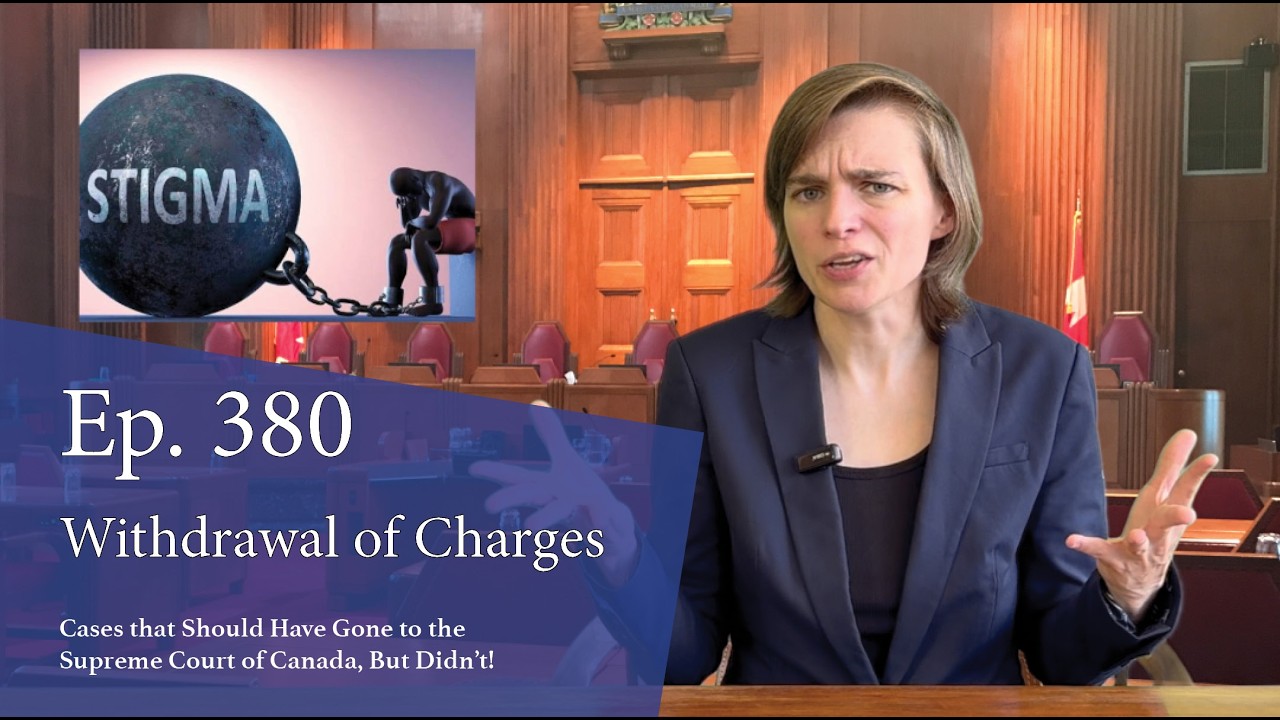
Welcome to “Cases That Should Have Gone to the Supreme Court of Canada, But Didn’t!”
In this episode, Kyla Lee from Acumen Law Corporation examines a case involving the withdrawal of criminal charges and whether an accused person should have the right to insist on a trial to clear their name. After the Crown sought to withdraw the charges against Mr. Lefond, he objected, arguing that he wanted a judicial determination of his innocence rather than having the case simply disappear. The case raised important questions about the lasting reputational impact of criminal allegations and whether the justice system provides an adequate path to vindication when charges are withdrawn.
Key Points Discussed
– The Crown sought to withdraw the charges against the accused
– The accused objected and wanted the case to proceed to trial
– He argued that a withdrawal denied him the opportunity to clear his name
– Criminal charges can continue to affect a person’s reputation long after they are withdrawn
– The case raised questions about who controls the termination of criminal proceedings
– The issue highlights the lasting impact of online reporting and public allegations
Why This Case Matters
Withdrawing charges often serves the interests of justice where there is no reasonable prospect of conviction or where prosecution is no longer in the public interest. However, for an accused person, a withdrawal may not provide the public vindication that comes with an acquittal. In an era where news articles, court reports, and social media posts remain searchable indefinitely, unresolved allegations can continue to affect employment, relationships, and reputation long after a case has ended.
Missed Opportunity for a National Standard
The Supreme Court of Canada could have clarified:
– Whether an accused person should ever be entitled to insist on a trial after the Crown seeks to withdraw charges
– How reputational harm should factor into decisions to terminate criminal proceedings
– Whether there should be a mechanism for obtaining judicial vindication after charges are withdrawn
– The balance between prosecutorial discretion and the interests of the accused
Need for Clarity and Accountability
The Crown has broad discretion over whether to initiate and discontinue criminal proceedings. This case raised an important question about whether that discretion should have limits where an accused person faces ongoing reputational harm despite never receiving a determination of guilt or innocence. Clear guidance could help ensure that the justice system reflects the realities of permanent online records and public reporting.
Topics Covered
– Withdrawal of criminal charges
– Prosecutorial discretion
– Reputational harm
– Criminal procedure
– Acquittals and withdrawals
– Access to justice